
Filed under: 2026, A Bit Of Inspiration, Agency Culture, Apathy, Attitude & Aptitude, Brand Suicide, Brands, Career, Cliches, Colleagues, Communication Strategy, Conformity, Consultants, Corporate Gaslighting, Creative Development, Creativity, Egovertising, Logic, Loyalty, Management, Marketing, Marketing Fail, Marketing Practice, Marketing Science, Mediocrity, Privilege, Professionalism, Reputation, Resonance, Respect
So, this is the last working day of October and on Monday, we’re in November.
NOVEMBER?!
Thank fuck because I’ve found this year very, very difficult and November means it’s almost over.
I don’t really know why I have such a problem with 2026 … let’s be honest, I’ve had another year that many people would love to have experienced – not to mention the fact that compared to last year, my health has been in a much better state than it has been for the past few years.
And yet this year has felt a struggle.
Like walking through treacle.
Struggling for oxygen.
A difficulty to ignite energy and enthusiasm for stuff.
Not for everything … but given the one thing I’ve never struggled to have is energy to do stuff that excites me, it’s quite the revelation.
So why is this the case?
Who knows …
I do think the state of the World has a lot to do with it.
As has the almost shameless irresponsibility of the tech companies to destroy the future for all of us.
And then the equally repulsive behaviour of so many leaders in our industry who love acting like business pioneers while acting and behaving like the spoilt, greedy, selfish psychopathic children they are.
And yet despite my incredibly privileged and fortunate position, I am being deeply affected by it.
Not just for my personal situation – which is admittedly far better than most – but also for the millions of talented people who are either being discarded by the industry or are walking into it with high hopes and wide eyes.
Thank god, there are still some good people, companies and clients out there.
Who value quality rather than easy.
Who want to grow through standards rather than shortcuts.
Who care about the people who work for them rather than see them as an annoying cost.
But it feels like there are less of those than ever before … though that could be because the momentum of the industries publicity seems to be focused on the promotion of bullies and loudmouths, which makes me angry as anyone who doesn’t subscribe to their point-of-view ends up feeling there is no place for them and start to questioning if the industry is for them.
I’ve talked to so many of these people this year.
Struggling to work out where they fit in.
Wondering if there is a future they can grasp.
Confused why the standards they’re being asked to work to are so low.
It’s really that bad for so many and while it would be easy to say they’re complaining – the issue is with us, not them.
Which leads to this week’s posts.
I appreciate anyone who has read them may ask “is Rob OK?”
And the reality is I am … but I’m tired.
Tired of the hypocrisy.
Tired of the exploitation.
Tired of the pundits and theory pushers.
Tired of the gaslighting where everyone says nothing is wrong.
This industry used to be full of different voices, backgrounds, experiences and ideas. But now? Well now it feels everyone is adopting the same methodologies and approaches pushed by the same few people.
Worse, the same few people who either have never done the work they are so loud in criticising or have a self-interest in wanting others to adopt their ‘system’.
Earlier this year I spoke at the Berlin Strategy Conference.

At the beginning of my talk, I said how I keep hearing people talk about how we can make the industry better, but no one ever asks what I think is the critical question:
Are we having fun?
Not for superficial bullshit reasons but because if we’re not having fun, why are we doing it and – even more importantly – why do we think we’ll get paid and respected for it.
I appreciate not everything is going to be fun and frolics, but given our job is to use creativity to help society not just know about a brand or product, but to give a shit about it, means if we’re not enjoying making the work, you can be sure-as-fuck people won’t enjoy being exposed to it.
I appreciate systems, processes, formats and rules have an important role to play, but when they end up dictating WHAT we do and HOW we do it, then it’s hardly surprising the work we make isn’t just increasingly the same but is lacking the energy and intrigue that can deeply connect and motivate society at large.
That the value of creativity to inspire, encourage, motivate and engage people has been replaced by the ability to fire-hosing of the public with whatever self-serving, monotone message a company says all you need to know about the rise of consultant-think.
Add to this the fact companies spent over ONE TRILLION DOLLARS on media over the last 12 months and surely someone should be asking just how smart all these supposed smart systems and formats actually are.
Again, not because they don’t have any value, but because they definitely don’t provide all the value they love to claim.
So, here’s to the end of month 10 of 2026 … we’re much closer to [hopefully] ending a year of big egos and small thinking.
On the bright side, it’s the perfect conditions for a truly scary Halloween.
Always a silver lining … ahem.
Filed under: 2026, A Bit Of Inspiration, Ambition, Apple, Aspiration, Attitude & Aptitude, Comment, Delusion, Empathy, Finance, Generosity, Money, Privilege, Reputation, Technology
On Tuesday I wrote about how we have our priorities messed up …
If you haven’t read it, you can see it here.
The underlying point being we seem to accept the shitty behaviour of the super rich, but are hyper-critical of the humble – even though we know the former are making choices to become even richer whereas the latter are simply trying to survive.
In the post, I highlighted a valuable lesson I learned when I was starting out in my career from my then client – and now mentor – the wonderful Lee Hill.
He told me:
“There’s nothing wrong making lots of money, it’s how you do it and what you do with it that counts”.
It would be easy to think that in this Trumpian, authoritarian World, the ability to be ‘decent and rich’ is a pipe dream.
But I remember many years ago, George interviewed a bunch of wealthy people for a project we were doing at Cynic and came back saying he had discovered a group he called ‘the reluctantly rich’.
Basically, these were people who had made a lot of money but never felt they deserved it.
Maybe they inherited it, maybe they were in the right place at the right time … maybe they were just lucky … but they didn’t connect to it so did all they could to be generous to others with it.
Some to that was because it helped offset their guilt a little bit.
Some was their way to let others experience what they were going through.
But most of it was simply because they wanted to help others who hadn’t been blessed with the good fortune they’d received.
Often this was done quietly and privately because the goal was never about recieving gratitude, they just wanted to do some good with it, helped by the fact they never felt connected to the cash, so giving it away was easy … even though they were perfectly aware of what it offered and could do.
Admittedly there weren’t masses of people who felt this way, but there were more than a few.
Still are.
I say this because recently I saw a video of Steve Wozniak – Woz – the co-founder of Apple.
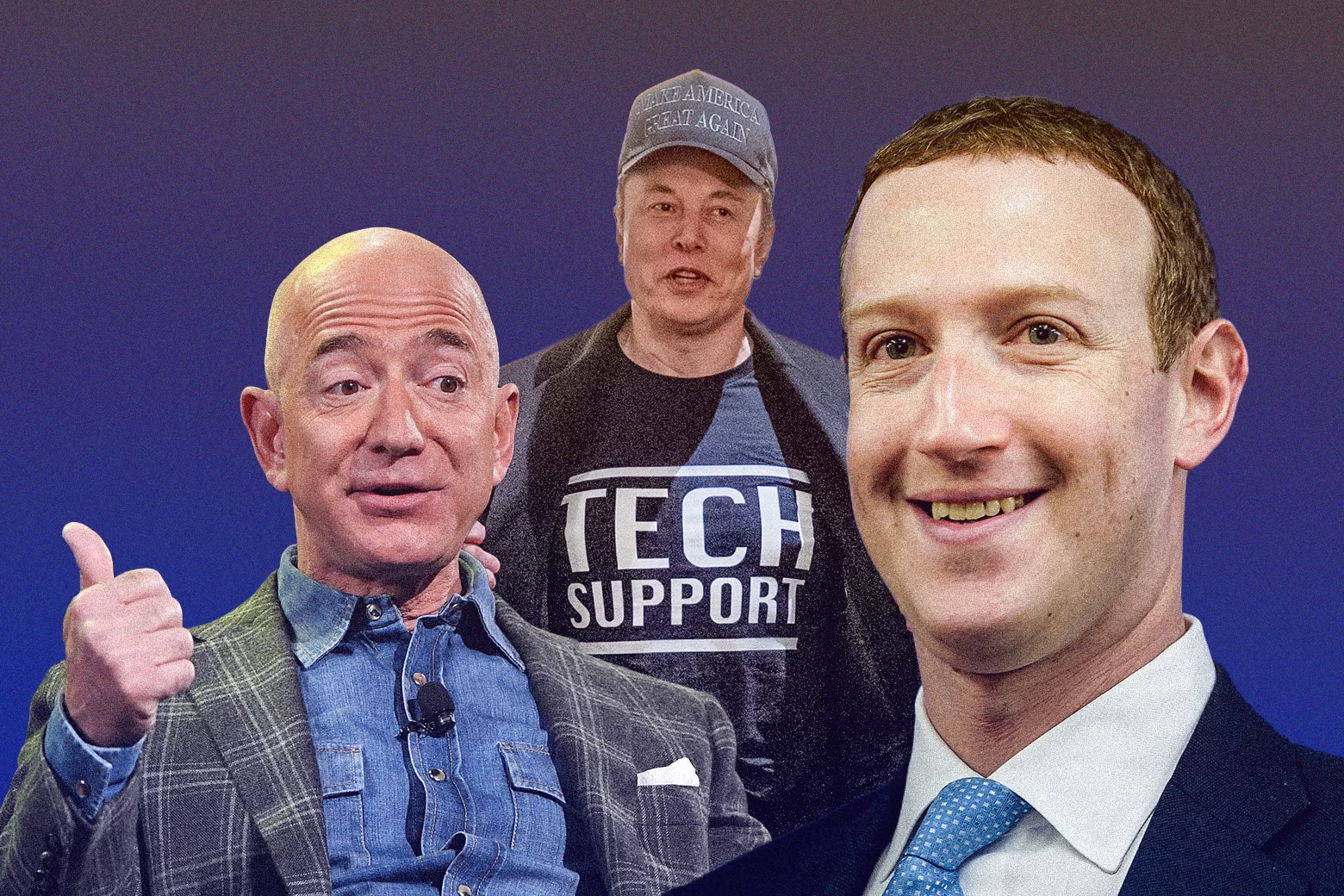
At a time where Musk, Bezos, Zuck and countless other ultra-wealthy tech and finance bros revel in their elitist, vulgar, arrogant lifestyles, he is a reminder of when the tech industry consisted of a few people trying stuff they hoped could help millions grow, express and explore their lives … which is a world away from where we are today, where the tech industry seems to be a few people designing products that enable them to control, contain and restrain millions for their own, fucked-up benefit.
So thank you Mr Woz, you’ve just proved you don’t have to be a prick to be rich.
It just feels that way.
Filed under: 2026, Advertising, Airports, Attitude & Aptitude, Birthday, Brand, Brand Suicide, Creativity, Culture, Customer Service, Effectiveness, Experience, Loyalty, Management, Marketing, Marketing Fail, Privilege, Professionalism, Reputation, Travel, Trust, Uncommon, World Cup
The next few weeks are big for me.
My birthday.
Jill’s birthday.
Paul’s birthday.
The World Cup starting.
Trips to LA, Milan, Berlin, London and Amsterdam.
Meetings and dinners with legends of film, fashion and music.
And a bunch of lovely planners in Germany, hahaha.
I’d love to pretend I’m nonchalant about it all, but that would be a massive fucking lie as I’m exited to fuck about it all – bar my birthday.
But this post isn’t about my impending weeks of mega-madness, it’s about the madness of dealing with British Airways.
I am in the incredibly lucky situation of having someone pay for all my flights.
Better yet, they are paying for them to all be Business Class.
I booked on Air New Zealand, who – because of the flight itinerary – also scheduled some of the flights on BA.
So far. So good.
Having chosen my seats on Air NZ, I went to BA to do the same with them … except my booking reference didn’t work.
I then tried logging into my British Airways Frequent Flyer account, but got the same response.
No problems, maybe they use a different booking reference, so I contacted Air NZ to ask – and they told me, they use the same number and so it should work.
So I tried again. Nothing.
So I tried calling. No answer.
So I tried their chatbot. No reply.
It was getting frustrating so I went on the website to see if there was another way to contact them and there was.
A customer service contact button. So I clicked on it and what did I find when I did that …

A postal address.
A fucking postal address!
They want me to write – from New Zealand – to work out why my booking reference number doesn’t work. Mind blowing.
But it gets worse …
You see, I went back to Air NZ and told them the situation and they said they would talk to BA on my behalf. And they did.
So after 3 attempts for the website to accept my login details, I go on there to choose my business class seats and what do I find?

Yep, they want to CHARGE ME for choosing a seat.
This on top of the fact it has already cost a fuck-ton of cash.
Now I appreciate this is a first world problem.
I totally get I’m incredibly fortunate to be able to experience this.
But it blows-my-fucking mind that BA wants to charge me even more money to choose which seat I fly in – especially when airlines like Air NZ, let you do it when you fly economy.
Now I should point out BA have said once check-in is open – ie: 24 hours before the flight leaves – I can choose my seat for free, but apart from that still being bollocks, I am pretty sure when I try to do it, they’ll tell me I have to mail in my request by post.
Uncommon have done some amazing work for British Airways.
They have elevated their standing and prestige with some beautiful work.
And the line they created – A British Original – sounds great, until you remember that the British Leyland Mini Metro and also one of those and was a fucking shit experience as well.

Filed under: A Bit Of Inspiration, Advertising, Apple, Attitude & Aptitude, Auckland, Brand, Brand Suicide, Clients, Clothes, Communication Strategy, Content, Context, Craft, Crap Campaigns In History, Creative Development, Creativity, Culture, Design, Details, Effectiveness, Egovertising, Emotion, Empathy, Entertainment, Fans, Fashion, Film, Management, Marketing, Marketing Fail, Marketing Science, Media, Mediocrity, Metallica, Netflix, New Zealand, Premium, Privilege, Relationships, Relevance, Reputation, Respect, Standards, Steve Jobs
For 50 years, I never dressed particularly fashionably.
I had a ‘style’, but it was never one people looked at and thought, “I want to dress like that”.
Questionable t-shirts, ripped jeans and a pair of birkies tend to have that reaction.
Part of this is because growing up, I was never exposed to anything ‘fancy’. Despite my Mum being Italian and going to Italy a lot … my version of designer clothing was stuff from Burton’s and C&A and nothing more.
But over the years, I got more and more exposed to the high-end fashion houses.
Projects with Prada and Chanel introduced me to people, stories and experiences that taught me there was far more to who they were than big prices and even bigger pretentiousness. But even that was not enough to convince me this was something for me.
Hell, I still remember the utter shock I felt when I heard a mate tell me they’d spent 70 quid on a t-shirt.
Sure, this was a 1000 years ago, but back then I didn’t know how that was even possible.
T-shirts were 3 for a few quid from Asda so what on earth could justify 70 pounds for a single tee???
And that was how things carried on for decades until 2 events happened in my life:
I got healthy and I started working for the most successful and influential luxury and street-fashion investor on the planet.
And with those 2 things, everything changed …
I got to go behind the scenes of the highest level of the industry.
I got to talk to the creative directors of the houses and labels who define global fashion.
I got to meet the people who create, curate and craft the experiences that define how fashion makes us feel.
But most of all, (1) I could now actually fit in their clothes and (2) my client sent me shitloads of them for free.
Of course, I appreciate how lucky I am for that – and I massively appreciate that they were doing it to ‘keep encouraging me on my health journey’. But – and I say this with utter love and respect for them – I can’t help the real reason is because they didn’t want me turning up to their big meetings and fancy events dressed like a trainwreck. What maybe triggered this was the time I found myself sitting next to Phoebe Philo, ex-creative director of Celine and founder of her own label, who – on seeing my t-shirt, featuring a cat logo – said:
“I love this, who is it by?”
To which I replied:
“My son made it, and that’s our cat”.
To be fair, she was brilliant but I can’t help but imagine she was also thinking, “who the fuck is this nutter I’m next to?”
Bit like the time I was in the lift with members of the Prada family.
They were – literally – the best dressed people I had ever seen in my entire life.
Me? I was wearing ripped jeans, some Nike’s and a hoodie probably from Asda.
Again, they were kind, warm and welcoming – and never once did I feel judged, in fact the opposite – but it was not long after that I started receiving a lot of fancy clothes – hahaha.
But the point of this post is not that I am more fashionably dressed person than I’ve ever been in my life.
Nor is it that I am one of the luckiest bastards on the planet.
No, it’s that the last few years have completely changed my perspective of the industry.
Where once I may have just seen it as pricey and poncy, I now have a deep appreciation, understanding and respect it..
The creativity, the craft, the inspiration, the statements, the history, the details, the obsession.
Put simply, the belief that EVERY detail matters, no matter how big or small.
Steve Jobs once talked about the importance of ‘painting behind the fence’ – the belief that even if no one ever sees or recognizes the care and consideration you have put into your work, you know and that matters – and in many ways, he could have been describing the luxury fashion industry.
You only has to watch the Netflix Documentary ‘7 Days’ – specifically the episode about Chanel’s couture catwalk show – and you’ll see how much thought goes into how every single detail is presented.
Not simply because image is important to them, but because they want to honour the work they have created.
Make sure it is represented, seen and felt exactly as intended and created.
It is a similar approach Metallica have to their music.
It’s why they bought the best vinyl printing plants in the World.
It’s why they invested in the best live concert sound-system in the World.
It’s why they own the rights to all the music they create and have ever created.
It’s not ego. It’s not hyping. It’s about ensuring they honour the work they’ve made so everyone experiences it exactly as intended, versus letting someone else determine that.
So where the fuck is this all going?
Well, it’s because recently I saw this.

Yep, it’s a billboard for the movie Devil Wears Prada 2.
BUT WHAT THE FUCK IS GOING ON WITH THAT IMAGE???
How is a movie centered around the world of luxury fashion and media using such a badly designed, stretched and distorted billboard like that?!
Looking online, I can tell you that’s not the official image – at least as far as I can tell – plus I should point out the image has accentuated the lines of the digital billboard, which weren’t visible to the human eye.
But that aside, the image used looks like someone at the local distributor, media agency or billboard company decided, for reasons I don’t understand, to create – or adapt – their own version of the official artwork; the result of which is a visual that makes Devil Wears Prada 2 seems more Poundland than Prada.
Which highlights two very important reminders:
1. Everything communicates who you are and what you value.
2. For the best result, make sure all who work for you – or with you –know who you are and what you value.
I’m not saying price or speed doesn’t matter, of course it does … but what price does sloppiness, misunderstanding or a need-for-speed end up costing?
And to those who say that doesn’t matter, because no one cares … I say this in return.
Not only do you not understand marketing …
Not only do you not care about your company …
You sure as shit don’t understand your customers.
Which gives us one final thing to remember …
For all the systems, processes and marketing practice methodologies you can use … if you forget who its for and what its for, then you’re truly wasting your money.
Filed under: Agency Culture, Attitude & Aptitude, Colleagues, Confidence, Contribution, Creativity, Culture, Easter, Leadership, Management, Mischief, My Fatherhood, Parents, Perspective, Privilege, Process, Professionalism, Provocative

Today is the last post until the 7th April, thanks to Easter.
As many of you know, I’m not religious in the least – but if there’s a holiday in it, especially a holiday with a justification to eat the stuff I don’t allow myself to consume at any other point of the year, I’m all in on it.
So before I get on with today’s post, I wish you all a happy chocolate eating period … let’s be honest, with the shit going on in the World right now, we deserve whatever can make us happy for a few minutes.
Right … so let’s get on with things shall we>
There’s a term that states:
“Ask for forgiveness rather than permission”.
I get why … because however open minded a company may claim they are, most only want to operate within the narrow guidelines they’ve always followed.
That’s why, if there’s something you want to do that you know challenges convention – it’s better to do it and apologise later [regardless of the outcome] than ask first and likely lose the chance forever.
I have decades of experience of doing this – and have the written warnings to prove it [haha] – but what enabled me to get away with it was this:
1. I always had/have a logic driving my actions. Even if others didn’t/don’t quite agree with it – there is a reason that drives my desire to do something commercially and creatively original, interesting and/or different.
2. Whatever I did never crossed any legal, moral, financial or commercial line. I may be a nightmare at times, but with a family of lawyers, I’m not a total idiot.
3. Regardless of the outcome – good or bad [and more often than not, it was good. Eventually – haha] I always came clean to my boss. The reality it I knew they’d always find out eventually and it was far better to own it than be owned by it.
4. For most of my career, I’ve worked with/for bosses who I deeply respect and who I knew not only understood who I was – and had hired me because of it – but shared a similar belief of pushing things to explore new things. Not for wreckless or egotistical reasons, but out of pure creative, cultural or commercial curiosity. [Albeit they tended to be more considered, deliberate and discerning in their choices than me]
And it’s this last point that I’ve come to realise is one of the most important and valuable things any employee could ask for. In fact I’d go one further, I’d say I regard it as one of the most important factors when looking for a job.
Right now, it appears too many managers are more focused on managing up rather than lifting their people up. Caring more about how they look to their bosses than enabling their teams to develop, grow and lead in such a way that their worth to the organisation is blatantly apparent.
On one level, I get it.
Times are tough out there and you don’t want your future placed entirely in the hands of others actions and behaviours – except that’s the whole point of being a manager. Or at least in my book it is.
As I’ve said many times over the years, I believe the role of a manager is to help their people embrace and grow their talent in such a way that when they leave – as we all do at some point – they have more opportunities than they ever imagined having and that when someone wants to hire them … its as much for who they are and what they do as it is there’s a role that needs to be filled.
Does that always happen? No.
Has it happened more often than not? Yes.
Now I should point out I am not claiming any credit for what people have gone on to achieve – they did it with their own talent, experience and work – but I am saying that is the driving force behind how I approach my job … how I’ve always approached my job … and how I hope my colleagues see me approaching my job.
Put simply, working towards what they’re working towards or putting them in positions of opportunity where they have the right to say “no” to something rather than it being decided for them by someone else.
And if that sounds selfless, it’s not.
Because fundamentally, if they do well, I do well.
It’s how I demonstrate my worth to the people who are evaluating my worth. Because I believe there’s more value in liberating my teams potential than supressing it so only I look good to the powers-that-be.
To be honest, I’m worried this is all coming out the wrong way. I’m not trying to big-up my management skills – at the end of the day, the only people who can evaluate if I’m any good are the people who work with me. The point of this post is more about the commercial and professional importance of elevating people’s potential rather than simply focusing on elevating their productivity.
Sure, everyone has a job they have to do.
Sure, everyone has standards and ‘quotas’ they have to hit.
But my view is you achieve much more than that if you let your team grow rather than just makie them work more. And faster.
It’s why I passionately believe my job is far less about giving the team permission, and far more about giving them protection.
Protection from others judgement.
Protection from others attempts to control.
Protection from others formulaic approaches that never led to anything great.
All underpinned in the knowledge you’ve set the right values, standards and rigor that will guide their choices and decisions for every challenge or opportunity – even if things don’t end up going quite as anyone hoped or planned.
In some ways, it’s a bit like being a parent.
Where your role is to teach your kid how to think about handling a situation, rather than what to specifically do.
Or said another way … trusting their judgement, rather than trying to control it, even if they do something differently to how you would have approached it.
Of course people need to earn that trust – as I need to earn it from them – but believing in their ability has to be the starting point, because if you don’t, not only are you failing to create the conditions where they will even ask for permission, you’re creating the conditions where they’ll be too frightened to do anything different in the first place.