
Filed under: A Bit Of Inspiration, Advertising, Agency Culture, Attitude & Aptitude, Australia, Authenticity, China, Confidence, Creative Brief, Creative Development, Creativity, Culture, Emotion, Empathy, Experience, Insight, LaLaLand, London, Management, Nike, Paula, Perspective, Planners, Purpose, Relationships, Relevance, Resonance, Shanghai, The Kennedys Shanghai, Wieden+Kennedy

I recently read an amazing interview with the actor Ethan Hawke.
There’s many reasons he’s a fascinating person, but one of the main ones is that despite being hyped up to be as big as Leonardo DiCaprio and Matt Damon, he didn’t get there.
However this is not because he failed or came off the rails … it was because he made an active choice not to go down that path.
There are many reasons for this.
One is because his Mum pushed him “towards a British understanding of acting as a craft and away from American ideas of celebrity” and the other is seeing what happened to his friend, River Phoenix.
And while many would deviate from their resolution the moment they saw the benefits available to them, Hawke has been steadfast in his resolve.
One of the ways this manifested itself was him never moving to LA.
Having lived there, I get it.
On face value, it’s a spectacular town.
A stunningly beautiful place where dreams can literally come true.
And there’s a bunch of truth in that. Kinda.

Because while it makes you feel more welcome than almost any place in the World, it comes at a price. And once it feels it has gotten its value out of you … or had all its fun with you … or simply got all the benefits out from you, then it will spit you out, forget you were there and move on to the next in the blink of an eye.
For me, you go to Las Vegas to gamble with your money to make it big.
But in LA – at least to a certain degree – you go there to gamble with your life.
I know that sounds dramatic, but it’s true.
What’s more, it’s all there in plain sight. The issue is people – especially those chasing the Hollywood dream – like to ignore it because, let’s be honest, people like feeling special or lucky or smart enough to not let that shit happen to you.
And that’s why the way Ethan Hawke sums up LA is – as much as I enjoyed my life there – pretty damn perfect.
People think getting what you want will make you happy, but a sense of self, purpose and love don’t come from the outside. You can’t get distracted by this culture that celebrates things that sometimes aren’t what they seem”.
So why am I saying all this.
Well, contrary to how I’ve made it sound, it has nothing to do with my respect for Ethan Hawke. Or my cynicism to Los Angeles. It’s because recently, someone sent me this and said it reminded them of me.

I have to say, when I read it, I felt a bit overwhelmed.
Overwhelmed because it really did capture how I think about things.
Overwhelmed because it meant someone got me, rather than believed I was just a nosy prick.
OK … so there’s a selfish element to why I’m like this.
You see, if my colleagues or team mates have issues or worries, then it means they’re not able to perform as brilliantly as they usually do. Which means the work they do won’t be as brilliant as I want, need and expect from them. So wanting to give them an environment where they can feel safe to be open and vulnerable while also actively wanting to help, listen and change situations for them, has as much to do with my needs as there’s.
I know, what a selfish prick eh?!
But it’s not all for self-serving reasons.
Because ultimately I am a big believer people should be able to express how they feel.
That we all have good and bad days and you should never feel bad for how you are.
I was incredibly fortunate to be brought up in a house that followed this belief and I will continually advocate it.
Even when people think I am being a nosy prick.
But it does have benefits beyond just personal, emotional wellbeing.
It means you can connect better to others.
It means you can be open and honest rather than political and wary.
It means you can disagree in ways that never become personal or destructive.
It creates something special.
A bond where deep trust is formed.
It doesn’t happen every time.
It doesn’t always happen in the same way.
But if you’re lucky, you will meet some people on your professional journey who this approach will end up having a profound affect on both of you.
Not just in terms of how well you click. Or work together. But a deep understanding and acceptance of who you are without criticism or ridicule.
They will make you better and be someone you want to be better for.
United by a deep respect and belief in what each other brings to the table while still allowing you to argue, debate and challenge without it ever being personal or destructive.
When that happens, what you can create together – either in collaboration or just through each others support – is amazing.
You feel a real honour to know them, work with them and understand them.
I’m very fortunate I’ve had a few people in my life, but one of them is the brilliant Paula Bloodworth … who I first had the privilege of working with at Wieden+Kennedy Shanghai.
And that’s why receiving that quote from her was so, so special to me.
I hope you all have a Paula in your life.
Someone you deeply connect with and yet disagree with all at the same time.
Because not only does it make your work better, it makes you a better person.
Filed under: A Bit Of Inspiration, Advertising, Agency Culture, Attitude & Aptitude, Authenticity, Brand, Brand Suicide, Business, Chaos, China, Colenso, Comment, Communication Strategy, Creativity, Culture, Deutsch, Diversity, Emotion, Empathy, Experience, Family, Imagination, Innovation, Insight, Jill, London, Management, Marketing, Martin Weigel, Metallica, Nike, Otis, Planners, Planning, Point Of View, Purpose, R/GA, Shanghai, Singapore, Social Divide, Sport, Technology, The Kennedys, The Kennedys Shanghai, WeigelCampbell, Wieden+Kennedy

When you’re my age, you get to look at your career and see the different phases that it passes through.
I remember one year at Wieden, we seemed to make more beautiful, highly-crafted physical books on culture than we did ads.
Now I’m a huge fan of these – and still do them – but that year I think we made about 10, which was frankly ridiculous.
Then there was the year I got told I’d spoken at more conferences than anyone at Wieden.
It wasn’t said as a diss, more a fact – though I do remember Luhr looking at me with the face of someone who couldn’t work out why anyone would want me to talk at their event.
He wasn’t wrong.
Then there was the year I seemed to be in every bloody Asian marketing book or article and then of course, The Kennedys.
It happens. It’s rarely an intentional thing, but the nature of the business means it can be like that … and while I’ll always prefer to be involved in creating stuff, it does let you feel things are evolving and that’s a good feeling.
Well this year is another one of those years.
Part of this is because of the situation the World is in and part of it is because of the situation I have found myself in.
However, whereas previous years have seemingly had singular focuses, this year has had two.
Icons of culture and podcasts.
Both have been pretty awesome.
Musicians … Fashion superstars … Gaming Royalty … Billionaires.
Frankly people who should know a lot better than to ever want me to work with them … and yet, for reasons I don’t understand but am utterly grateful for, they have.
It’s certainly very different to the work I’ve done in the past, but it not only is introducing me to a whole new world of creative expression – from developing new concert experiences to video game design to stuff that is genuinely almost impossible for me to describe as it’s just plain beautifully bonkers – it’s letting me work with people who are recognised as being the best in their field so to be in this position … and to have Colenso to look forward to in addition … feels like winning the lottery.
I know this all sounds like humble bragging – but that’s not the intent.
To be honest, it’s more about me writing it down so I never forget this feeling.
This moment.
Because as tough as it is for people all around the World, I am very, very fortunate so many good things have come my way.
But that’s not what this post is about, it’s about the other thing I’ve been doing a lot of.
Podcasts.
I’ve done a ton this year.
[Here and here and here for example]
Why people want to hear from me – especially when I write so much bollocks about my life on here – is another thing I don’t get … but it’s been fun.
Recently the lovely/stupid people at Colenso had chat with me for their Love This podcast …
We cover all manner of subjects … from running a planning gang to developing creativity in a pandemic to how to be a fucking idiot … so if you’re bored, an insomniac or are jealous of Colenso’s brilliance and are looking forward to the pain they’ll experience with me in the building, you can listen to it at one of these places.
Filed under: A Bit Of Inspiration, Advertising, Agency Culture, Attitude & Aptitude, Authenticity, Brand, China, Chinese Culture, Comment, Context, Creative Brief, Creative Development, Creativity, Culture, Differentiation, Embarrassing Moments, Insight, Management, Marketing, Planning, Point Of View, Relevance, Resonance, Shanghai, The Kennedys Shanghai, Wieden+Kennedy

I have always loved pitching.
I love the drama, the nervousness, the tension, the creativity.
I also love that it’s a chance to reinvent how the agency is seen every single time.
Because of this, I’ve always embraced using a pitch to try new ways to present your work.
I’ve done a lot of stuff over the years.
Some has – without doubt – been an unmittigated disaster, but far more often, it’s been successful.
Not because we’ve used gimmicks or theatre, but we’ve found an interesting way to get our point across without [hopefully] repeating what every other agency they’ve seen has said.
Some of my favourites have been when we won the launch of Disneyland Shanghai when we were the 18th agency to pitch and I had inadvertently insulted the head of procurement when I accidentally wrote ‘retards’ instead of ‘regards’.
Mind you, they got their own back when they fired us after 2 years – and just before some truly amazing work was going to be made.
Then there was the time we won the SONY global business based on a photo I’d taken of a sign they had in their HQ.
It was an arrow pointing to the right to show you where reception was … and I used that as the basis for our pitch which basically said SONY spent so much time looking at what their competitors were doing, they’ve forgotten the need to forge their own path.
And then there was our winning pitch to Virgin when they were going to start their F1 team.
The reality was they were unlikely to ever win a race – or maybe even a point – given the gulf in investment and technology between them and their competitors.
So our strategy was to model themselves on tennis player Anna Kournikova … because even though she never won a grand slam, she was one of the most recognised, supported and wealthy tennis players in the tournaments.
That was fun.
But recently I found a photo that reminded me of a time we were pitching for BEATS by Dre.
I was at Wieden Shanghai and we had a meeting to talk about the China market.
Instead of a presentation about culture or music or fashion, I had one slide that said, “If You Don’t Define Who You Are, Someone Else Will’ and then I gave them all a set of the fake headphones that are the photo at the top of this post.
And we won.
Some say what we did was ballsy … but it wasn’t really.
When you realise the client is going to be sitting through a bunch of meetings that often say the same thing – or worse, just talk about the agency rather than the client – you realise having a strong POV that can form the foundation for work that will resonate with culture is the most sensible thing you can do.
Of course it takes just as long to come up with that as it does writing the 1000 page decks of boredom, but when it comes to delivery … it not only helps you stand out, it helps ensure they remember your point of view rather than get confused with countless pitches that talk a lot but say nothing.
Filed under: A Bit Of Inspiration, Advertising, Agency Culture, Apple, Attitude & Aptitude, Audio Visual, Comment, Content, Context, Craft, Creative Brief, Creativity, Culture, Design, Emotion, Experience, Imagination, Innocence, Innovation, Insight, Marketing, Music, Planning, Presenting, Professionalism, Relevance, Resonance, Standards, The Beatles, The Kennedys, The Kennedys Shanghai, Unexpected Relevance, Wieden+Kennedy
One of the things I love about this industry is our way of re-writing rules.
I don’t mean that in terms of post-rationalisation.
I don’t mean that in terms of rebellion.
I mean it in terms of letting creativity take us to new places.
That said, I think a lot of people forget this.
Clients and colleagues.
Specifically the one’s who encourage work to go where others have gone before.
Or where the brand has previously been.
Or just killing ideas before they’ve had a chance to start to evolve.
Of course I appreciate what we do has a lot of implications on our clients business.
That to get it wrong has serious ramifications.
But – and it’s a big but – doing the same thing over and over again doesn’t move you forward.
The opposite in fact.
They know this.
We know this.
And yet I hear words like ‘optimisation’ far more than I do ‘creativity’ these days.
Now I get it, you want to get every bit of value from something that you can, but our obsession with models and processes just limits our ability to invent and move forward.
Please don’t think I’m discounting the value of experience.
There’s a lot to be said for it.
But basing the future purely on what has happened in the past – specifically your individual past – is not experience, it’s blinkered.

Case in point.
Mouldy Whopper.
Here was a campaign that was attempting to do something differently. But rather than be curious about how it would be received, industry people – the same folks who are supposed to be pushing for creativity – were violently writing it off from the beginning. And when I pointed out that no one really knew what the campaign was trying to achieve – I copped it too.
Hell, I didn’t even like it very much, but I appreciated they were doing something different and evidence showed it was getting people to talk about preservatives in food – which was a positive for BK – so at the very least there were something positive in that. But then a senior industry person challenged me – said it was only people in the bubble of adland doing that – so when I proved he was wrong, he just disappeared. Happy to throw out personal opinion but not happy to be shown it was just his personal opinion. And that was my issue, we didn’t know how it would go. We had thoughts, we had opinions but we didn’t give it the time to see how it played out and apparently, it did pretty well by a whole range of metrics.
Of course, the great irony is that when you do have a brand that believes creativity can move things forward in unexpected ways, then you get accused of your job being easy.
I can’t tell you the amount of times people said to me, “it can’t be hard working on NIKE, they love being creative”.
Of course, the people who say this have never worked on NIKE and tend to be the first to criticise anything they think is ‘too creative’.
My god, when Da Da Ding came out, the wave of, “I don’t get it”, “it’s indulgent” was amazing.
But not as amazing as the fact that a lot of the abuse came from white men not based in India.
But I digress.
I love creativity.
I use that word specifically as I see it as being much bigger than advertising.
At least in terms of where the inspiration can come from and how it can be applied.
I am in awe when I see ideas taking shape. Things I never imagined coming together in the aim of changing something rather than just communicating it.
One of my greatest joys was running The Kennedys, because I saw that in possible its purest form.
From making takeaway coffee cups into dog frisbees to re=programming Street Fighter to represent the lessons they’d learnt over the previous year … was epic.
Sure, sometimes it was scary, frustrating and painful.
Sure, there were arguments, walk-outs and moods.
But as I wrote before, great work leaves scars and while that doesn’t mean it can’t be an exciting journey to be going on, it will have many twists and turns.
Or it will if you are pushing things enough.
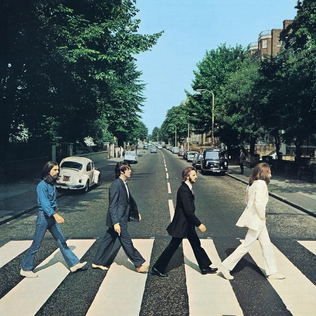
And that’s what this post is about, because recently I read a story about John Kosh.
John was the creative director of Apple.
Not the tech company, but The Beatles.
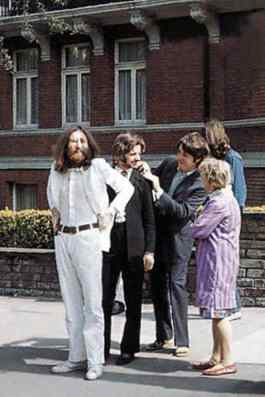
John Lennon loved him and at 23, he found himself art directing the cover of their iconic album, Abbey Road.
What many people fail to realise is the band name was no where on the cover.
And while John had logic behind that decision, many in the industry thought differently.
Especially at their record company, EMI.
In fact, the only reason it ended up happening is that timing was so tight that it was allowed to slip through before anyone else could stop it.
Another example of chaos creating what order can’t.

What a story eh?
And before anyone starts saying I’m wrong …
I’m not saying the decision to remove the bands name from the cover made the album successful. This was The Beatles after all – the biggest, most successful band of all time – so it was always going to sell by the bucketload. However I am saying the decision to remove the bands name from the album cover helped make it iconic … which arguably, helped make it even more successful.
Not to mention make the zebra crossing on Abbey Road one of the busiest in the World.
Filed under: A Bit Of Inspiration, America, Anniversary, Attitude & Aptitude, Birthday, China, Cunning, Embarrassing Moments, Family, Goodbye America, Goodbye China, Home, Hong Kong, Jill, Legend, Love, Otis, Shanghai, Singapore, The Kennedys, The Kennedys Shanghai, Wieden+Kennedy

So today, Rosie is 13.
THIRTEEN!!
Yes, she’s slower than she was.
And definitely more bad tempered.
But overall, she’s in pretty awesome nick for someone who was once a Singaporean street cat.
Of course, part of this wellbeing is she got the best adoption ever.
Her life, since that day we got her back in 2007 has all been first class.
Not just in terms of the life she has gets to enjoy – which has seen us do all manner of things, from building her penthouses for the home to importing her favourite snacks – but also in the fact that she has lived in 5 countries and has entered each one in pampered luxury.
Hell, I even did freelance jobs just to ensure she moved to countries in more style than any other pet could dream of.
And you know what? I don’t begrudge a second of it.
Since the moment we got her, she’s given us nothing but joy.
OK, there have been a few headaches …
When she almost strangled herself to death with an elastic toy.
When she was so dehydrated they thought she might die.
When I turned down an amazing job in New Zealand because immigration wouldn’t let us bring her due to being based in China.
And when she broke my lamp and my X-Box all at the same time and I wanted to kill her.
But overall, she has been nothing but an absolute joy … which is pretty amazing when you remember she’s a cat.

Let’s be honest, cats are assholes.
They are the masters of manipulation.
They can become the cuddliest bundle of fluff when they want something and can be the coldest fuck when they don’t.
And yet you come back for more because you want their acknowledgement … which only encourages them more.
Which is why they end up thinking they can sit wherever they want because they think everywhere is theirs.
They’re not our pets, we’re there’s … and I hope we have many more years of being her servant because while many may regard her as an animal, I see her as family.
So happy, happy birthday my dearest Rosie … and to sign off I thought I’d show you a video I made when I was running The Kennedys.
I had given everyone an assignment to ‘make a video on their smartphones about a family member and their dirty little secret’.
I could have done one about Jill.
I could have done one about Otis … even if he was months old.
But no, I did it about you. THAT’S how much I love you.