
Filed under: A Bit Of Inspiration, Attitude & Aptitude, Childhood, Colenso, Creativity, Culture, Emotion, Empathy, England, Friendship, Humanity, Jill, London, Love, Loyalty, Martin Weigel, Mercedes, New Zealand, Otis, Paul, Paula, Perspective, Planners, R/GA

So I’m back.
Did you miss me?
Nope?! Don’t blame you to be honest.
But the past 10 days have been very special for me.
There was a couple of very hard moments, but being able to be there for it, was also special.
Another reminder that while I don’t have many mates, the ones I have are top drawer.
And our presentation appears to have gone down well.
I’m so happy about that … mainly because I got to do it with Paula and Martin and I adored it.
That was a very special feeling. Something I hope we can do a hell of a lot more of, very soon.
It was also so good to catch up with so many old faces I’d not seen in years.
While I actively stay in touch with people, I’m not the most social of humans … so seeing people in the flesh [so to speak] was pretty wonderful.
As I’ve said before, COVID was good to me.
I absolutely loved staying at home with my family and having breakfast, lunch and dinner with them every single day.
Of course, I appreciate we were very privileged in our situation … but that still doesn’t take away the specialness of the times.
At least for me.
But seeing all these people I knew … and hanging out with the people I love … acted a bit like a reset to me.
A reminder of how I feed off the energy of others. That it makes me feel better and happier and hungrier to do good stuff.
To be honest, that was one of the reasons I wanted to come to Colenso.

Yes, part of it was because they are one of the great creative agencies of the times.
And yes, it meant I could finally repay Jill for her generosity in following me around the World by bringing her closer to her Mum after all these years.
But another part was that the idea of being surrounded by a talented team was so enticing.
Put simply, I love it.
I love building a gang.
I love creating our own strategy identify on how we see the world and create for it.
You see after I got made redundant from R/GA, … I was fortunate to be given work that immediately made up the salary I had lost. Better yet, I could do that without having to leave the house as the clients funding me were mainly based in China and America.
I was, as they say, sorted.
But working on your own, is hard.
Even more so when you live in a village surrounded by nothing.
And even more so when you live in a village during COVID so you can’t meet anyone even if you wanted to.
Yes, I get compared to the issues many people face, it’s nothing – but it doesn’t mean it’s not real. At least for me.
Of course I could work on my own if I needed to. The reality is I’ve always done side projects through my career, so there’s been lots of times where I’ve done just that. But moments of working on your own is very different to always working on your own … so when Colenso reached out – knowing I’ve always loved them as I almost joined them in 2016 – the idea of being a member of something was immediately appealing.
Trouble was I loved the projects I was doing … working directly with music, gaming and fashion royalty.
Basically, doing stuff I’d never done before that was incredibly exciting, challenging and creative with people who were incredibly exciting, creative and demanding.
So being a greedy bastard/only child, I asked if they’d be open to me doing both.
And they said yes.
There are many reasons for their decision – from knowing there would never be a conflict with the day-to-day work Colenso do through to knowing the timezones I’d be working in, would require my time at night, not during the day – but I am eternally grateful to them for being so open-minded and encouraging, because right now, I feel I have the best of many worlds.
To be honest that’s been a rare feeling for me.
My life seems to have either been great personally or professionally but rarely both at the same time.
And right now, I’m having that.

This is all coming across like I’m a smug-bastard and that’s the last thing I wanted to do.
It was more a reminder that if you want to do something, you should ask rather than assume and being with people – whether friends, family or colleagues – is a special thing.
Yes, I appreciate that should be obvious, but it wasn’t for me … and this past few weeks, similar to the year before … has reminded me of that.
Of course it highlights what an idiot I must be, but I’ll take that for the lesson it’s just given me.
Which is why I both understand and am confused by those who actively don’t want to work in an office again.
I get it from a balanced life or health perspective – especially if you’re spending a lot of time and money on commuting – but I don’t from the benefits of people and connections.
Of course there are a million reasons that can influence this, but while technology does allow us to be close when we’re not … physical space enables happy accidents and incidental conversations to happen which aren’t just sometimes great for the work, but also the soul.
And mine is full for now.
So thanks to all who helped remind me – and refilled me – over the past couple of weeks.
Let’s see how long it lasts before the grumpiness comes back.
Though, sadly, the long posts are definitely going to remain.
Filed under: A Bit Of Inspiration, Anniversary, Attitude & Aptitude, Birthday, Cannes, Creativity, Culture, Dad, Daddyhood, Emotion, Family, Friendship, Holiday, Jill, Love, Martin Weigel, Metallica, Mum, Mum & Dad, My Fatherhood, Nottingham Forest, Otis, Parents, Paul, Paula, Planners, Planning, Queen, Shelly
So let’s start with the good news …
This is my last post until the 26th June.
That’s over 2 weeks of peace and quiet!!!
You lucky people. [Though who knows if anyone reads this now comments have stopped]
The bad news is this post is going to be loooooooong. Proper long.
And possibly ‘jealousy inducing’ … or at least insult igniting, given the blagging I’ll be acknowledging.
But there are valid reasons behind it all. Honest.
First up is that I have a bunch of birthday’s to acknowledge …

First of all is mine, because on Monday, I turn 53.
FIFTY FUCKING THREE!
This means I am closer to 70 than 30 …
Normally that would be depressing as fuck, but I was recently given the best present ever when Metallica’s management said I was, “immune from maturity”.
Of course, I appreciate under normal circumstances this would be a big diss, however at my age – and when they represent genuine Rockstars – this may be the best compliment ever.
Let’s be honest, it’s going to have to be because there’s not many more reasons to be happy.
But 3 days later, it’s my darling Jill’s birthday.

Whereas I get more immature with age, she gets more wonderful.
I wish that was simply my attempt at being a romantic husband … but she really is.
I would love to detail how, but as I’ve mentioned before – she hates the attention on her, especially on this blog – so just know it makes me very happy to see because she’s the best thing that has ever happened to me and is more than I deserve.
Happy birthday my darling Jill, I hope you have a wonderful, wonderful day.
Now you may think I have suddenly become a soppy-sod – and I am OK with that – but you may feel a bit differently when I tell you that on the night of Jill’s birthday, where most people would be having a celebratory dinner – I will be waving goodbye to her, getting on a plane and flying to England because the next day it’s …
Paul’s birthday.

That’s right, for the first time since 2020, I’ll be spending Paul’s birthday with him and seeing him and Shelly for the first time in over a year.
I’m so, so happy I can do that. I’m also so excited to see them.
The older I get, the more I want to be closer to them – even though I appreciate how ironic it is to say that when I have chosen to live just about as far away from them as I possibly can.
Who knows what will happen in the future to change that [actually, I do, I just don’t know when] but I’m thrilled I’m going to get to spend Paul’s special day with him and hang out with him and Shelly for a few days.
That I get to be with 2 of my most special and treasured people on their birthday .. means that however hard 2023 is, it is going to be a great year for me.
Thank god for horrific timezone difference between NZ and UK.
Which all leads to the final journey of my blog silence …
And that is me leaving Nottingham to fly to Cannes to present on stage with 2 more special and treasured people – Paula Bloodworth and Martin Weigel.
Like Paul, the last time I saw them in person was a year ago, so to not just see them … but present with them … is an utter thrill.
I say that, but at the time of writing this post, we have only written 4 slides so unless we pull our finger out, it may be a case of being happy to see them but a total nightmare to present with them – hahaha.
And finally, as much as Cannes can drive me nuts, it gives me an opportunity to see a bunch of old friends from my past which will be bloody wonderful – especially as George and Lee will be there and so it can feel like I’ve let comments back on this blog, haha.
So there you have it.
That’s why I’m not writing any posts for a couple of weeks.
And while some of you will claim its a massive holiday, it’s actually me reconnecting to life.
That’s honestly how it feels.
I appreciate that sounds overly dramatic … after all, it’s not like I don’t talk to them all pretty much every week.
And obviously, in the case of Jill, I get to see here every single day.
I also appreciate the privilege of being able to fly over there to see the rest of them – not to mention I am the one who put myself in the position of being away from them.
But this is more than just being in their physical company – which will be special in itself – it’s about the undivided time.
No zoom time limits … or snatched moments before the next interruption … actual time.
Time to go on endless tangents.
Time to go down multiple rabbitholes.
Time to enjoy the pregnant pauses.
Time to talk shit … rather than maximise the time allocated. Or allowed.
Time to be cocooned away from the other stuff that likes to interrupt and dictate.
And while many may think they get this every day, I’m not so sure.
Yes, being physically close to people you care about does – in theory – make this easier to do.
But proximity doesn’t automatically equate to intimacy.
You have to want it. Demand it. Not be satisfied with a different version of it.
And most of the time that’s not the case …
We don’t even realise it’s happening because we get so caught up in the whirlwind of life.
Dealing with the pressures, demands, expectation and – for some – the self-importance of our own lives.
And that’s why there is something to be said about living away from those that matter.
I know … that sounds the opposite of what I’ve just written … but hang in there.

You see I used to think the benefit of living around the world was that you could discover and explore possibilities you never knew even existed … let alone were actually possible.
And it’s true.
I’m not exaggerating when I say everything I have in my life – outside of Paul and Shelley – is because I chose to explore the world rather than stay in Nottingham,.
Every. Single. Thing.
That doesn’t mean people who stay where they are from can’t also discover new possibilities, but it’s definitely going to be harder which is why I will be forever grateful for the opportunity – and my naivety – to go and explore what life was made of, despite not having the faintest idea of what I was doing.
It’s why I always tell people who have been offered the chance to live overseas that they shouldn’t let the things they’ll miss, hold them back … instead, they should think about all the things they may discover.
And I still stand by that.
But of course, missing the people you love is a big thing.
A huge thing.
I definitely missed my parents every single day and I went through a lot of emotional challenges on that journey.
But I was also extremely lucky my parents wanted me to explore.
Of course they missed me.
Of course they would have loved me to be closer.
But they wanted me to forge my own life, not be restrained by theirs, which is an act of love that still takes my breath away.
Even more so when they could have – and maybe should have – asked me to stay, given my Dad’s health situation that happened 6 weeks before I was due to leave for Australia.
I offered.
I meant it.
But they said no … and I swear it’s because they knew if I didn’t go then, I may never go at all.
That’s just so typical of my parents … always wanting the best for me while also understanding the reality of me.
And while part of this was them having faith in the values they’d taught me – for example, chase a life of fulfillment, not contentment – I think another part is they realised something I’ve only just started to discover.
Distance doesn’t make the heart grow fonder, it makes your relationships more present.
Greater focus, awareness and understanding on what makes you work together. The confidence to dismiss the differences that stand in the way of your connection. The willingness to be vulnerable – not just to enable greater intimacy – but to acknowledge their desire to want to help you, even if you feel they shouldn’t need to. And an openness to the uncomfortable in the knowledge, you’re not being judged … you’re reaching out.
I appreciate this all sounds like a post-rationalisation for being away from the ones I love and care about.
And maybe a bit is.
But as I’ve said before, creating space so the people who matter get the best of me rather than what is left of me is important.
It’s not easy.
It comes with challenges and sacrifices.
But while proximity keeps you near, maybe – just maybe – distance helps close the gap.
See you in a couple of weeks.
Filed under: Advertising, Agency Culture, Attitude & Aptitude, Brand, Business, Communication Strategy, Confidence, Craft, Creative Development, Creativity, Culture, Effectiveness, Egovertising, Marketing, Marketing Fail, Perspective, Planners, Planning, Strategy

Not too long ago, Campaign – in the UK – asked me for my point of view on Byron Sharp and the obsession with brand assets etc.
Specifically, they wanted to know if I felt he was hindering creativity as well as making it harder for small business to ever stand a chance of breaking through.
Now I have some issues with Mr Sharp’s character, but if I put that aside to answer the question, I said this:
First of all, I don’t think Mr Sharp wants to kill creativity.
From my perspective, he recognises its value far more than others in his position. If I’m going to talk about who is undermining the power of creativity, I’d say it can be aimed far more at the companies who outsource all their training needs to the same few individuals because it’s easier and cheaper for them to do.
God, that’s started off controversially hasn’t it?
The reality is what Mr Sharp says isn’t wrong, it’s just not the one-size-fits-all approach that so many seem to have interpreted it as.
And that highlights what the real problem is for me: conformity over possibility.
Or said another way, the modern equivalent of ‘no one got fired buying IBM’.
Look, I get it … marketing is expensive, complicated and influenced by a whole host of factors that you can’t control, so if someone say’s “this will stop you making stupid mistakes”, it’s pretty compelling.
But the reality is not making stupid mistakes doesn’t mean you are ensuring success. Worse, blindly following these rules creates a real risk you will commodify yourself … looking, talking and behaving just like everyone else. Let’s be honest, you don’t have to look too hard to see that already happening …
And that’s my problem with terms like ‘brand assets’ … they’re talked about as if you can buy them off the shelf.
Simply choose a single colour, add a logo and some category cues … then sit back and count your billions.
But people are confusing visual distinction with brand value.
Sure, being recognised in some way helps … but it only becomes an ‘asset’ if it has meaning built into it and to do that requires distinctive and deliberate acts, actions and behaviour over time.
Or said another way, you don’t ‘create’ a brand asset, things become a brand asset.
The industry is continually looking for shortcuts.
I get it … I really do … but the irony is the thing that can deliver so much of this, is the thing the industry continually tries to diminish or control.
Creativity.
At its best, creativity rewrites rules and changes the odds in your favour.
Creativity helped Liquid Death get men to want to drink water.
Creativity helped Gentle Monster become the fastest selling and growing eyewear brand across Asia.
Creativity helped Roblox go from niche player to the single most played game by kids and teens across America.
Creativity even helped Metallica use a 30 year old album to attract more fans resulting in them becoming the second most successful American band of all time.
They didn’t achieve this simply because of smart distribution of their brand assets. Nor did they achieve it by placing their logo as a watermark throughout their TV commercial [which has to be the laziest and most misguided attempt to achieve ‘attribution’]. They achieved it by allowing creativity the freedom to push forward in ways that – as a by-product – meant their voice created value in their numerous assets.
I get it’s not easy.
I get it requires real energy and openness.
But little can achieve what creativity can do when you commit to letting it loose.
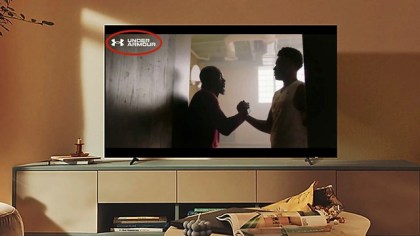
My problem [and I appreciate this may just be me] is that many seem to have interpreted the words of Sharp [and others] in a way where they see creativity as simply the ‘wrapping paper’ to execute their rules and processes.
But creativity isn’t the wrapping, it’s the fucking present.
A gift that offers value to brands that goes far beyond the fulfilment of singular commercial objectives and goals.
There are countless examples of brands achieving incredible success and growth following different rules so much of the industry feel is the only way to progress.
That’s not meant as a diss to Mr Sharp, he is obviously very good – though I note he and his peers choose to not highlight that many misinterpret and misuse their guidance, which suggests there is an element of complicity and profiteering from the one-size-fits-all blandification that is happening all around us.
But even then, the real blame should be aimed at the industry for fetishising the learnings and viewpoints of the same few people, because however good they may be – and they are good – it means we’re literally choosing to narrow our own potential and future.
Don’t get me wrong, brand assets are definitely a thing. But they don’t make creativity valuable … creativity makes them an asset.
Filed under: Advertising, Agency Culture, Attitude & Aptitude, Colleagues, Context, Craft, Creative Development, Creativity, Culture, Cynic, Friendship, Music

I recently read an interview with the members of 80’s art-pop band, Soft Cell.
Sure, I liked their song ‘Tainted Love’ but that was about it.
I thought they were try-hard and much preferred my heavy metal bands.
But as I’ve got older, I’ve realized how blinkered I was … how judgmental … and this interview rammed it home.
I love so much about it.
Their attitude to music.

Marc’s phenomenal and ferocious attitude to the frankly, horrific homophobic rumours that I remember hearing way back in my college days.

And their approach to their working relationship.
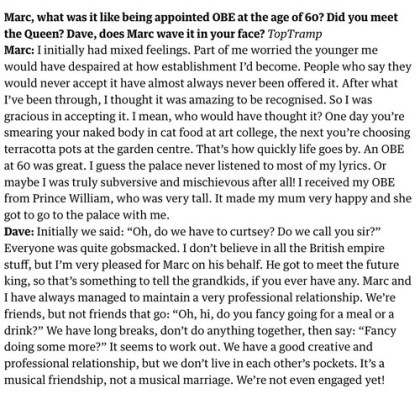
It’s funny with bands … you expect all the members to love each other. Have deep bonds that last a lifetime.
Of course part of that is cultivated by the record companies, but you still want them to be mates who hang out together … but often, they’re not.
It’s not that they don’t like each other – though that can happen too – it’s more their chemistry works in one environment and they’re good with that.
It was funny seeing it in print because it kind-of captured how I felt with Cynic.
While Andy, George and I talked every day … we weren’t close friends.
We didn’t socialize much together. In fact, we probably do it more now we’re not in a business together than we ever did then.
But it worked.
We liked each other.
We trusted each other.
We valued each other.
But it never really extended beyond the work environment.
And this probably helped us because unlike family – where the focus is not to cause upset – this situation allowed us to always tell each other the truth.
We would be considerate. We cared about each other. But we would never hold back.
And when I think of the best work experiences I’ve ever had, this has been the constant dynamic.
Blunt truth wrapped in visceral respect.
Where you felt you were better at your job when you were together, but had other enjoyable lives when you were apart.
And the joy of the working experience meant you kept coming back.
Not because you had to, but because you wanted to.
Or to paraphrase David from Soft Cell, a creative relationship rather than a creative marriage.
I didn’t realise how special that was.
It certainly doesn’t happen often.
And while you may ask why some of those relationships still end, the bigger question is why do so few ever begin?
For me, it’s all about trust and belief.
That you got together because of how you all see the world, not because you found yourselves in the same room or office.
And while you may share the same philosophy, you have different ways of embracing and executing it.
And that’s thrilling.
That’s the tension that drives both of you to be better.
That lets you say stupid stuff because it’s part of the trust you have of each other.
Part of the standards you hold each other to.
While I have some of that still, I miss some of the stuff I had.
And why I still feel a great privilege for having lived it .
But here’s the good news … because while many of those relationships are no more, the experiences, lessons and ambitions that were born from them remain and blossom.
So thank you to all of you who had – and have – that impact on me.
You know who you are.
And thanks to Marc and David for waking me up to it. Again.
Filed under: A Bit Of Inspiration, Advertising, Agency Culture, Attitude & Aptitude, Confidence, Content, Context, Creative Brief, Creative Development, Creativity, Culture, Management, Marketing

A while back I was in conversation with a very successful football team manager.
In many ways, they’re the managers, manager.
When I asked how – or who – they used to look to for guidance, inspiration or technical advice, they immediately responded with:
“Learn from winners, not players”.
And when I asked why only winners … they replied:
“Because winners face greater challenges than players and still come out on top”.
Interestingly, later in the conversation, they indicated their definition of ‘winner’ was more than simply someone who has achieved success in a league or a tournament … but someone who has achieved success in multiple league or tournaments, because – to paraphrase an old Nike campaign I did – it’s easier to get to the top than to stay there.
Which made me think about my industry …
Because when I look at who we can turn to, to evolve the standards, abilities and skills of our people, I feels there’s more players than winners.
Of course, being ‘a winner’ is much harder to define in our industry …
+ Creativity is as subjective as fuck.
+ Awards have become as much about how you enter as what you enter.
+ Success is defined by more factors than simply scoring more goals than the opposition.
+ The environment we operate in – and who against – is always changing at rapid rates.
+ You can be respected for your opinion without ever having made work that is respected.
+ Blah blah blah blah.
What bothers me most is how much of the industry outsources its training to people who are good players, but often not great players. And by that, I mean people who never made great things, even if they have great opinions on things.
Some may question why it’s important to have actually made things …
Well it’s simple. Anything is easy when you don’t have to do it, so those who have, have better advice than those who don’t.
That doesn’t mean they don’t have things of value to teach, but to paraphrase the manager I interviewed – those who have made work of note, have better lessons to give than those who have simply an opinion on making good work.
That said, it’s not players fault they’re being paid by companies to train their staff. What is far scarier are the reasons why they’re being asked:
One. It’s cheaper for companies than investing in on-going, personalised training for staff.
Two. Few companies have their own philosophy towards work, so having broad training schemes work for their needs.
Three. You are only as good as the people you are exposed to, and many companies confuse billings or popularity with craft and quality.
I know our industry faces many challenges from clients who value different things. But fundamentally, this issue was caused by our industry selling the value of creativity and understanding society down the river. By focusing on ‘players rather than winners’ to drive our standards and knowledge … we’re not moving putting ourselves back in contention, we’re just delaying our downfall.
To leave this post with a final football punditry reference.
We need to get back to playing to win, not playing not to lose.