
Filed under: A Bit Of Inspiration, Advertising, Agency Culture, Attitude & Aptitude, Complicity, Contribution, Creative Brief, Creative Development, Creativity, Technology

It’s Brian May’s birthday today, so given it has been 4 days of slightly seething posts, I considered ending the week on a positive.
And then I realised that sometimes, ‘seething’ is my version of positive so I wrote this.
Obviously, right now there is a lot of talk about AI.
And in our industry specifically, a lot of that conversation revolves around how it will destroy advertising.
Taking jobs, destroying creativity, devaluing craft and breaking production.
All that may or may not be true .. only time will tell … though I tend to believe it won’t be as black and white as so many in the industry love to present the reality.
But I tell you what I’m far more frightened about …
Something that has proved its disastrous impact on the industry.
And the brands, business, communities and customers we’re here to serve.
And that’s the individuals who are making decisions about creativity who don’t know what good creativity is, how it works or how to create and enable the conditions for it to happen.
Individuals who hide their ego, delusion, ignorance, lack of experience and/or desire for control behind the justification of process, procurement, prices, timelines, qualifications and/or marketing practice.
In blaming AI for the death of the industry, we’re in danger of becoming like those people who blame powerpoint for every bad presentation ever written … conveniently ignoring that while the tools play a part, the real blame – and issue – needs to be aimed at the people who choose it, write it, prefer it and demand it.
And while AI will no doubt have a bigger and bigger impact on what we do – of which, let’s not forget some will be really good – if we want to fight for our lives, then it may be better to acknowledge who is the real problem versus who we feel is more convenient to blame.
_________________________________________________________________________
Last thing …
Despite this blog having basically posted the same 7 stories for the last 20 years – which means it would be VERY easy for AI to replicate the rubbish I post on here each day – I’ve decided to give anyone who has accidentally found themselves coming on here TWO WHOLE WEEKS OFF off as I’m flying to China tonight, then off to the US. I’m not even travelling for the whole 2 weeks … which means this gesture demonstrates a level of generosity that highlights while AI may have the productivity, humans have the generosity.
Have a great one. Let’s be honest, with a fortnight of silence from me, we all know you will. That is except Andy, George and maybe even Billy … who all stupidly said yes to having dinner with me. And I can’t wait. Except when they expect me to pay.
Filed under: A Bit Of Inspiration, Advertising, Apathy, Attitude & Aptitude, Brand, Brand Suicide, Communication Strategy, Complicity, Content, Context, Corporate Evil, Creative Brief, Creative Development, Creativity, Culture, Distinction, Effectiveness, Egovertising, Emotion, Film, Loyalty, Management, Marketing, Marketing Fail, Point Of View, Provocative, Queen, Reputation, Success, Succession, Television

This is a long post.
Proper long.
And given I overwrite everything, that is probably a scary thought.
But I hope you hang in there, because it’s something important – at least to me. And who knows, it may trigger some thoughts – or hate – and I’ll consider that a win. Maybe, ahem.
So I don’t know about you, but I miss the TV show, Succession.
I miss the characters … the writing … the inconvenient truth how companies – and some families – work.
And while there are many articles and reports dedicated to explaining what ‘worked’, I recently read something that captured how it worked.

I love that write up.
I love it for a whole host of reasons … of which one is acknowledging that to make something that can capture so many people’s attention for so long, is an act of creative magnificence.
And while we may all nod our heads in agreement, the thing is we forget that.
We forget the challenge of keeping millions engaged and interested over a period of time.
Or maybe more specifically, we have forgotten HOW to do it.
Let’s be honest, the attitude of many brands is ‘keep things the same’ or ‘don’t fuck it up’ … while not realizing the biggest risk to achieving what they want to achieve is literally doing the same thing, in the same way, over-and-over again.
Of course, a big reason for their attitude is their quest for attribution.
Where the brand is synonymous and attributed to what they do/say/communicate.
However, rather than achieve this by doing interesting things that audiences value and can engage in – which is literally, the fastest, most effective way to build active, interested, engaged and committed attribution – we see more of the lazy approach. An approach sold by people with methodologies that mistake repetition as reputation.
Hence, we see countless campaigns featuring ‘consistent fictional characters’ doing variations of the same thing no one really cares about or relates to as if they’re trying to do a homage to the ‘Gold Blend’ coffee ads from the UK. WHICH CAME OUT IN THE 1980’S!!! Or the modern equivalent, where every element of every piece of communication is plastered with cues of whatever colour a brand is associated with. All the while ignoring the fact what it actually does is pull people out of their engagement with the communication because they’re questioning/wondering/laughing what sort of person drives a red car, lives in a red house – with red wallpaper – and only eat red vegetables. But even that isn’t the lowest of the low. No … that belongs to the work that shoves a watermark of the brand logo/name into the top left-or-right-hand-side of all their work … as if acknowledging their communication is so boring that the only way to know who it is from is to literally shove it in front of their faces.
I’m not saying ‘brand assets’ aren’t a thing … but they only become that with creativity.
Over time.
Continually reinforced … expressed … added to.
Without that, you end up with things that are more like weights than rockets.
And that’s the problem I have with so a bunch of the marketing practice being peddled …
Because they fail to appreciate the difference between recognition and value.
Or meaning.
Or resonance.
Or connection.
As I said to a client recently, just because I know what the swastika is, doesn’t mean I want to be a Nazi.
But that’s where we’re at right now … repeat, repeat, repeat.
Which is why that comment on Succession is so important.
Because they understand the importance of constantly adding to the narrative, not repeating it.
Keeping viewers not just interested … but on their toes.
Which leads to them engaging with the show, even when they’re not watching it.
Talking, discussing, sharing, commenting, deducing, arguing.
A program where none of the characters had many redeeming features, kept millions around the world coming back to them.
To learn. To listen. To grow. To hate. To debate.
Is that hard to do?
Of course.
Is it impossible to do?
Nope … especially when you hire proper talent and let them do what they’re great at, rather than value talent on how little they cost and then tell them what to make. Even though you don’t have experience in knowing how to make things people want to engage with.
But as a friend said to me recently, there were no conversations about ‘attribution’ with Succession were there!?
Nope. Not one. Not even from the first episode.
And maybe that was because they didn’t start the show with the intent of creating the lowest common denominator of recognition … then repeating it over and over and over again. No … their intention was to make something interesting … and then keep adding to that so their audiences would keep giving a fuck.

Look, I have no problem with marketing practice.
It is important and has a real role and value in building brands and driving effective marketing.
But that role and value is only released when it is done well and honestly … and right now, it feels there’s a lot of soundbites and not a lot of depth.
Selling systems that promise simplicity but ultimately are outsourcing responsibility.
Outsourcing responsibility to people who can profit from it, despite having no experience in actually creating it.
The irony is we all want the same thing.
Hell, we all need the same thing.
But there’s a major difference between playing not to lose and playing to win so maybe there needs to be more conversations about that, rather than blindly follow people who present themselves as business liberators when really, they’re good insurance salespeople.
Of course, the reality is that, despite what some may say, there’s not one ‘all encompassing’ answer to all this.
I get how expensive everything is so the temptation to stick and stay with what you know and what is working for you, is high. But regardless who you are, it will not last forever and it’s far better to own the change than be left behind by it.
Just ask the Disney execs how they’re feeling as they watch their Marvel universe start to implode.
Building anything is a journey that goes through highs and lows along the way.
But it’s the people who think – or say – they can stop that, who end up creating branded mediocrity.
Or should I way, ‘mediocrity attribution’.
Which is why there is one final example of the commercial value of adding to a story rather than repeating it and that’s Queen.
Specifically their recent sale of their back catalogue for ONE BILLION POUNDS.
Whether you like the band or not, you can’t say that is not an impressive number.
And while even I – a massive Queen fan – accept that in 1986, they stopped being musicians and became entertainers [aka: ‘turned crap’] … it’s the music they made until that point that gave them their legacy, fans and economic value.
Because rather than basically repeat their first hit over and over again … they kept taking people to different and interesting places.
Filed under: A Bit Of Inspiration, Advertising, Airports, Art, Attitude & Aptitude, Australia, Authenticity, Childhood, Comment, Content, Context, Creative Brief, Creative Development, Creativity, Culture, Empathy, Fake Attitude, Humanity, Imagination, Marketing, Marketing Fail, Mediocrity, Point Of View, Provocative, Qantas, Relevance, Reputation, Resonance, Respect
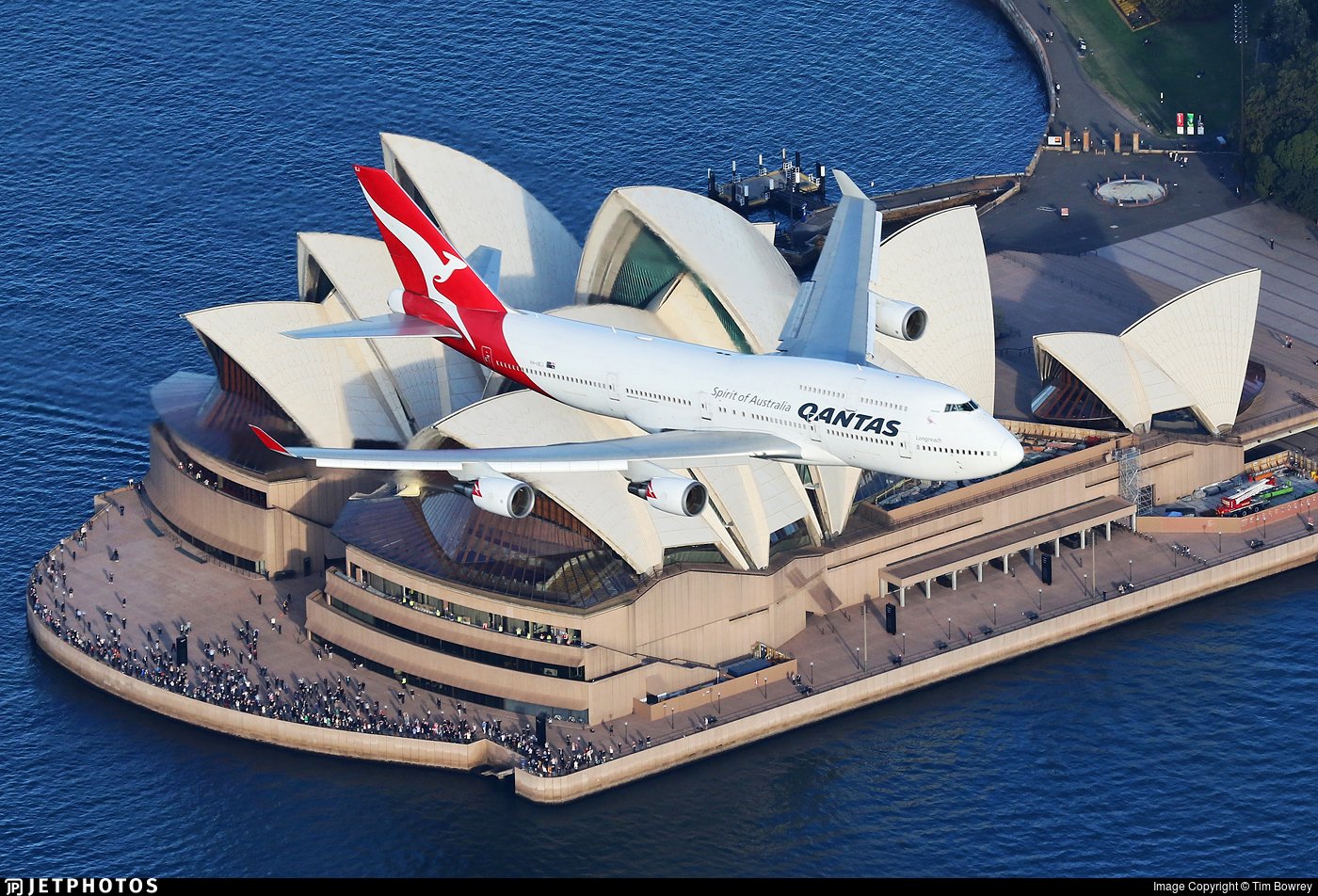
Many years ago – 2009 to be precise – I wrote a take down of Qantas, the Australian Airline.
It wasn’t about their experience or service which – back then – were pretty good, certainly much better than they are today. No, it was about the lyrics to their ‘iconic’ song, ‘Still Call Australia Home‘.
Now I appreciate I’m a Brit.
I appreciate that, at the time, I had an agency called Cynic, so was full of piss and vinegar.
I even appreciate – as my Aussie wife reinforced to me in no uncertain terms – that the song and Qantas’ advertising was pretty special for Aussies so maybe I should shut the fuck up.
And that is good advice. Except 15 years later, I’ve decided to come back with a comeback.
You see recently I saw an ad for another Australian icon …
The difference being this one is worthy of that label annnnnnd – even more significantly – they’ve made a piece of advertising that ignites all the emotion, pride and Australian spirit that Qantas would possibly sacrifice their ‘never had a crash’ reputation, to achieve.
[Please note, this is simply to emphasise the point. I get it’s not a great turn of phrase. And I obviously don’t mean it. So if you prefer, simply replace it with: “… that Qantas would allow themselves to be embroiled in even more financial scandal, to achieve”. Better? Oh god … there’s no pleasing some people is there!]
Anyway, if you’re wondering what I’m talking about, it’s this from the Sydney Opera House for their 50th anniversary.
[Though while it’s being shared a lot at the moment, it actually came out about 8 months ago]
I love it.
I love it so much it made a cynical Brit emotional.
Sure, I have an Aussie wife … a ½ Aussie son … Australian residency and was even a member of the audience in a couple of the historic scenes they show in the film … but I’ve never, ever felt that way about a Qantas ad.
Not once.
Hell, I don’t even like Tim Minchin – the guy who leads every thing in the ad – and yet I still felt connected to the spot.
Part of it could be because The Opera House was to me, a symbol of Australia, decades before I moved there.
I still remember how overawed and overwhelmed I was when I first saw it for real. This incredible place whose image had been burned into my mind from years of seeing it on TV shows, in magazine articles or just everyday imagery.
But it’s more than that, it’s what the place signifies.
The story that underpins the whole film.
A true story.
One where the quest to do something different triumphs over the demands to control and conform. An ode to the majesty of imagination and art rather than the adherence of tradition and regulation.
It all feels – ignoring the fact the Opera House was designed by the Dane, Jørn Utzon – much closer to the ‘Aussie spirit’ than anything Qantas has ever done.
A salute to those who wish to push and challenge rather than seek the comfort of being back ‘where they’re comfortable’.
Now I appreciate that maybe that spirit is more confined to the past than the present.
One look at how the vote for ‘The Voice’ turned out reveals comfort, convenience and control are the words of the day.
But that aside, it’s a very special film.
Helped by the fact the Opera House is a very special place.
Not just for Australia, but for anyone who hopes for something a bit more.
A bit more personal.
A bit more emotional.
A bit more wonderful.
And if you need any more reason why you should love the Opera House far, far more than Qantas … let me tell you, even the Opera House’s cheapest seats offer more leg room than pretty much anything you’ll get on that airline.
Filed under: A Bit Of Inspiration, Advertising, Agency Culture, Attitude & Aptitude, Brand, Business, Comment, Corporate Evil, Creative Brief, Creative Development, Creativity, Culture, Dad, Effectiveness, Loyalty, Management, Marketing, Marketing Fail, Perspective, Professionalism, Relationships, Relevance, Reputation, Research, Respect, Stupid

One of the things I find fascinating is how everything these days is ‘a sprint’.
The urgent need for an immediate solution to enable a brand or business to move forward.
Except it’s not true is it? Not really.
I mean – I get that there are occasions where circumstances demand an extremely quick response.
A terrible event.
A moment of opportunity.
An act forced by an aggressive client.
But in the main, these ‘sprints’ have nothing to do with that.
They’re for a new product launch.
A brand campaign.
An annual event.
If they need a sprint for those, then surely that means they haven’t [or just as likely, their bosses, bosses haven’t] got their shit together because those things don’t ‘just happen’ do they? It’s not like the Paris authorities are going to wake up on the 1st of July and suddenly realise they have to hold the Olympics in a few weeks time so need construction companies to engage in ‘a sprint’ to knock up a few stadiums in time.
Now if my Dad was alive and found himself in this situation he would say – as I often heard him tell clients who had failed to plan appropriately – “your emergency is not my problem” … however in adland, we tend to jump in and try to help.
Yay us!
Except quite often, when we do this, we’re made to feel like we’re the reason they’re in this mess and so rather than see us as someone trying to help, we’re seen as someone holding them back.
It’s so weird.
Even more so when they then question our hours and fees.
Which is why my attitude is that unless there is a real reason for the urgency – and a respect for what you’re asking people to do – you should probably say no. I get it may be unpopular, but you’re not going to win in this situation.
And don’t get me started when companies brief agencies before a major holiday.
OH MY GOD.
I used to see this in China a lot … and we [as in Wieden Shanghai] would always say no.
Sure, if it was a client of ours who was in a pickle for legit reasons, we’d do all we could to help them … but if it was about ego or mismanagement, we’d politely decline.
And yet, from what I see and hear from others – and occasionally experience – this situation seems to be happening more and more often … the defecto rather than the exception.
What’s even more bizarre is that the supposed urgency for a solution gets more and more delayed as additional contexts, mandatories, and approval processes get added to the list of deliverables … resulting in you wondering how urgent this really was as a supposed ‘sprint’ turns into a marathon.
Of course, the reality of these situations is it’s actually about money and time.
Or said another way, the desire to reduce it.

I get it, developing work can be time-consuming and expensive … but here’s the thing, shortening the time doesn’t automatically mean it makes it the work better.
Cheaper, maybe.
But not better.
In my experience, there are 3 main reasons this situation continually and persistently occurs:
1. The client doesn’t value creativity.
2. The client doesn’t understand creativity.
3. The client doesn’t actually know what they want or need.
For far too many, creativity is seen as expressing what you want people to know about your brand/product before adding ‘some wrapping paper’ around the messaging to make it ‘creative’.
I’ve talked about the folly of this ‘wrapping paper’ analogy before … but that perspective continues to grow. Worse, some agencies actively reinforce it in an attempt to show ‘they get the client’ or they ‘get business’, all the while undermining their single most valuable asset.
Which means that maybe they don’t know business as much as they think.
Don’t get me wrong, it is entirely possible to spend too much time on something. But there sure-as-hell can be too little. And when you’re dealing with someone who doesn’t know what they want – so use creativity to try and work it out and then judge it as if its your fault – then any length of time is too much time.
And yet it feels like ‘quality’ has now become defined by the speed it takes to create rather than the effect it creates … often reinforced, as I said a couple of days ago, by ‘for profit’ research companies and gurus who focus on clarity not interest.
No wonder so many clients are asking agencies about what their AI approach is.
Now as I said at Cannes, I think AI – and tech as a whole – offers a whole world of possibilities and opportunities for brands to evolve, grow and connect. Hell, we just did it with our Pedigree Adoptables campaign that literally wouldn’t be possible without it. But that’s not what a lot of clients mean when they ask that, they’re looking for cheaper and quicker output. Optimising the optimized.
The great irony of this is that when you talk about AI affecting their business – especially if the competition embrace it against them – many react like you’ve just tazered them.
They’ll say there’s no comparison.
That their product price-point is based on the value of their expertise, craft and innovation.
And for some, that’s true. But it’s some … not all.
Which is very similar to the post I wrote a while back about how many brands like to think of themselves as premium, but their actions and values are all about how cheap they can be.
A while back I spoke to someone who is one of the most influential luxury expert in the world.
They own, invest and consult with the best of the best … new and old, classic and innovative.
And they said to me they believe the future of luxury will be about recognizing the value of humanity.
The custom, craft and care.
Because in a world that is increasingly about speed, scale and optimization, the brands who will command the greatest value, influence and price will be the ones who offer their customers the most human interaction, engagement and service experience.
It’s a fascinating thought … one that could separate the real from the wannabes.
Or, said another way, the companies who those who talk about valuing their brand and audience and those who actually do. Because one only cares about the sprint, where others appreciate the jog.
Filed under: A Bit Of Inspiration, Advertising, Agency Culture, Alcohol, Apathy, Asia, Attitude & Aptitude, Authenticity, Beer, Campaign Magazine, China, Chinese Culture, Content, Context, Craft, Creative Brief, Creative Development, Creativity, Culture, Distinction, Effectiveness, Empathy, Environment, Fake Attitude, Marketing, Marketing Fail, Mediocrity, Perspective, Planning, Point Of View, Relationships, Relevance, Reputation, Research, Resonance, Shanghai, Singapore, Strategy
I have a history of working on clients I don’t really have a right to work on.
Sport.
High Fashion.
Female Haircare.
OK, so I have a real relationship with sport, but I think the reason I have been able to [even though I say it myself] be so successful with the other categories is that I get so into what I am working on. I get kind-of obsessed with learning and understanding everything about it and throw myself into reading all I can about the culture, history and category before I then interview everyone I can meet who is authentically connected to it.
No outsourcing to superficial focus groups … it’s about graft. Working with the people who create and push the category rather than those who simply buy the product.
It’s served me well – underpinned by clients who care about their audience rather than just see them as walking wallets and me being being self-aware enough to know my perspective is from an outsiders point of view, so I need to explore everything while assuming nothing.
I say all this because one of the other categories I’ve worked on that I shouldn’t, is alcohol.
Why shouldn’t I?
Because the last sip of booze that passed my lips was in 1985.
NINETEEN EIGHTY FIVE … so 39 years ago!
And yet over that time, I’ve worked on everything from Heineken, Guinness, Johnnie Walker and the development of Blackened, for Metallica.
Beer advertising in particular is fascinating because there tends to be 2 states:
Sponsored jokes or pretentious bullshit.
Now I get why it falls into these 2 states because client/agencies tend to either want to reaffirm their beer is ‘fun and social’ or ‘important and crafted’.
But for every Guinness Surfer, Carlton Draft Big Ad, John Smiths No Nonsense, DB Export Brewtroleum or going right back, Heineken Refreshes … there’s a whole heap of contrived, lifestyle rubbish.
Lazy headlines placed over generic Getty image photography.
One I saw recently was this from Tiger.

Now I appreciate the photo does not do it justice, but the headline reads:
Tiger Crystal.
Ultra Low Carb.
Extra Refreshing.
The reason this does my head in is two-fold.
First is you have to understand Tiger is very close to my heart.
Not only was it one of the first brands I worked on when I first moved to Asia, I also won the worldwide account – literally on my own – against 4 network agencies back in the early 2000’s.
Apart from that allowing me to work with some brilliant people on some brilliant assignments, it also resulted in Campaign Magazine featuring me on their front page in all my sweary glory, which is obviously a career high, hahaha.
But the other reason is that copy makes no fucking sense.
What the hell does ‘extra refreshing’ mean?
Oh I know how they’ll justify it …
With less carbs, the beer tastes even better to the drinker. Not literally, but emotionally.
And while there may be an element of truth to that … it doesn’t make it EXTRA refreshing. More drinkable maybe, but not extra refreshing. But here’s the thing, if it’s that good, why don’t they make ALL their beer like this?
Why don’t they bring their ‘extra refreshing’ premise to all their products?
I’ll tell you why, because it’s bollocks.
It’s lazy marketing … another example of vacuous superlatives being churned out to sound exciting without any thought, consideration or any excitement. An act of arrogance, demonstrating how important the brand thinks it is and how little they think – or understand – the audience they literally serve.
Now I appreciate some may say, ‘why does it matter, no one will pay much attention to it’?
And I get that … except that’s the point really.
Our job is to try and make people pay attention.
To give a shit.
They’re not going to think it changes their life, but they shouldn’t blindly ignore it.
It’s this sort of arrogance that demonstrates the lack of self-awareness that has permeated the industry. A blind belief that everything we do is great simply because we did it … despite the fact in the real world, all we’re doing is adding to the social landfill and social pollution of shit advertising.
Where is the pride in who we are, what we do and the intelligence of who we engage?
Where?
We’re so much better than this. And just to be clear, I’m not solely blaming whoever did this awfulness, it’s also the clients, procurement and ‘for profit’ research companies who created the environment where this ends up being deemed ‘worthy’.
I swear the biggest problem the industry has is every department and discipline has its own agendas and metrics for success.
There’s no alignment.
No agreement on what we want and need to make.
Just distain, distrust and self-interest.
Of course not everyone is like this – thank god – but if clients want to see the potential of their brand and agencies want to push the possibilities of their creativity, there has to be a moment where we stop hiding awfulness under the blanket of marketing justifiable rationales, because for all the NPS, system 1, best-practice approaches we may proudly shout about, there are two questions that trump all.
Is it true and does it make us give a shit?