
Filed under: Advertising, Authenticity, Comment, Crap Campaigns In History, Crap Marketing Ideas From History!, Creativity, Marketing, Marketing Fail, Packaging

Today we’re [finally] moving into our house and so to celebrate, I thought I’d end the week with a smile.
Unless you are a Colgate brand manager.
Or packaging designer.
You see I recently realised that their packaging looks awfully similar to Canesten – the thrush treatment.
HAHAHAHAHAHAHAHAHAHAHAHAHAHAHA.
Mind you, if you brushed your teeth with Canestan, I’m pretty sure it would still leave less of a horrible taste in your mouth than the Colgate ad I’ll be writing about next week.
Yes, that really is my attempt to try and make you come back.
Have a great weekend.
Filed under: Advertising, Agency Culture, Apathy, Attitude & Aptitude, Authenticity, Brand, Brand Suicide, Colenso, Comment, Communication Strategy, Confidence, Crap Campaigns In History, Crap Marketing Ideas From History!, Creative Brief, Creative Development, Creativity, Differentiation, Distinction, Emotion, Empathy, Equality, Experience, Fake Attitude, Focus Groups, Honesty, Imagination, Innovation, Insight, Management, Marketing, Marketing Fail, Only In Adland, Perspective, Planners, Planning, Point Of View, Relevance, Resonance, Stubborness, Uncommon, Wieden+Kennedy

So many ads today end up just being fancy sales brochures.
A nondescript, stylish image that either has some meaningless line thrust upon it or a literal lift of the proposition from the brief to become the headline.
Clients love it because they think there’s no wastage.
That there’s no ‘thinking’ that the audience has to do to ‘get the message’.
I remember years ago – when I was working on SONY – the client kept referencing Mr Bean.
No, I’m not joking.
They kept saying Mr Bean is understood by all. Loved by all. Communicates a message without saying a word. They were really trying to push this until I pointed out that while that’s the case, no one would spend thousands buying a TV made by Mr Bean.
Then Balls got made and undermined my argument for years. Hahahaha.
And while I hate looking backwards, I can’t help but think the past was far more interesting creatively than where we’re at today.
These days Audi talk about ‘Future is an attitude‘ when once they talked about Vorsprung Durch Technik.

We have Chivas Regal going on about ‘every taste is an experience’ when once they talked about ‘giving Dad an expensive belt‘.

Heineken now ‘open your world‘ when they once ‘refreshed the parts other beers can’t reach‘.
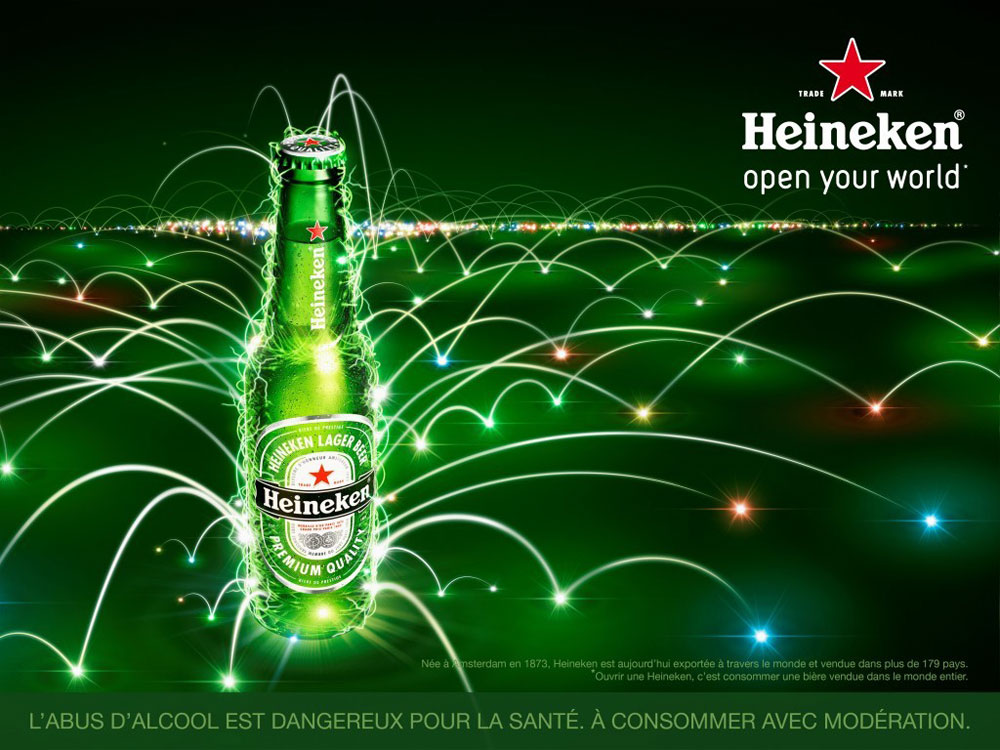
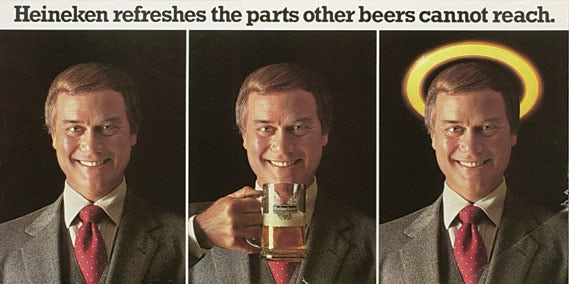
We have countless other brands who were once so powerful with their brand voice who have now become bland.
[Nothing sums it up like this Audi ad for the same car with pretty much the same line]
What really gets me, is we have the talent in the industry to change this.
We have the hunger as well.
But while there are exceptions – and I mean it in terms of agencies who consistently bring the work rather than the odd bit of work getting through – somewhere along the line, we seem to have chosen a path of complicity.
Without doubt the research techniques becoming more and more favoured by companies plays a part in this. As our clients who are more focused on not making a mistake than making an impact. But it cannot be ignored that agencies have a lack of desire to stand up for what they believe is right. Preferring to be complicit rather than respected.
Which may explain why so few of them believe it is worth investing in finding out what is really going on in culture – preferring instead, to either outsource it or just accept the viewpoint of whichever ‘paid for’ 3rd party the client has hired to do the work for them.

What brought this all up was seeing an old Honda ad from the late 70’s/early 80’s.
OK, so Honda have a long history of doing great work – especially from Wieden London – but it’s always been a brand that has run to its own rhythm with its own idiosyncrasies. But even they – these days – are falling into the trap of rubbing off the edges that defines who they are to become like everyone else.
This ad – like so many of the truly great early 80’s ads – came from Chiat/Day.
My god, what an agency they were.
Sadly I say ‘were’ because as much as they still have great people in there and pull off the occasional truly interesting bit of work, when you compare them to what they were like decades ago, there is no comparison.
Brave. Honest. Distinctive. Creative as hell.
Hell, even when they lost, they did it in a way where they would win.
Every single person in adland – especially at C-Suite level – should read this brilliant article by Cameron Day, son of Guy Day … one of the founders of Chiat.
‘How Big Till We Go Bad’ is a fantastic guide on how to build a truly great agency. And then destroy it.
Anyway, I digress.
The Honda ad I saw of theirs was this …

No, your eyes are not deceiving you.
Once upon a time, car manufacturers – or at least some of them – understood equality.
No cliches.
No pandering.
Just treating their audience as adults and equals.
It’s not really that hard is is, but if you compare it to what we see today, it feels we’ve regressed. [Read more about car ad devolution – with a few exceptions – here]
I do not want to look in the past.
I believe my best creative work is ahead of me.
Or at least the potential of it.
To paraphrase Death of a Salesman – or the equally brilliant Nils of Uncommon – we shouldn’t be interested in stories about the past or any crap of that kind because the woods are burning, you understand? There’s a big blaze going on all around.
But the problem is, people have to see the woods are burning and I worry a bunch of the fuckers think it’s a sunset. Then again, it will be … because if we don’t push forwards, it will be the sunset on our industry and that will be the ultimate insult, because the past should never be more exciting and interesting than the future.
Filed under: A Bit Of Inspiration, Advertising, America, Attitude & Aptitude, Authenticity, Brand, Brand Suicide, Comment, Communication Strategy, Context, Crap Marketing Ideas From History!, Creativity, Culture, Cunning, Design, Distinction, Diversity, ECommerce, Entertainment, Fake Attitude, Marketing, Marketing Fail, Racism, Relationships, Relevance, Resonance, Social Media, Unexpected Relevance
I’ve written a lot about the ‘hijack’ strategy.
Where a brand pushes itself into a cultural event or topic to either attempt to change the narrative or leverage the narrative.
Some brands do it brilliantly … Nike or Chrysler for example.
However some are a bloody car crash.
At its heart, the difference is simply whether your hijack ‘adds to culture’ or just ‘takes from it’ … however given this approach is now so common among brands, I have to ask whether it can even be considered ‘hijacking’ anymore when most of society expect someone to do it.
That said, it is still a powerful strategy when done right … the problem is, most brands aren’t doing that.
Case in point … social media GAP during the US election.

What the hell?
I know why they did it.
I know what they hoped would happen from it.
But all I can think about is when your own brand of clothes don’t know who they are for, you’re pretty fucked.
And that kind-of sums up GAP’s problem.
Who are they for?
It’s no surprise they are facing incredible pressure in the market these days, to the point there’s talk of them pulling out the UK altogether.
They’re not distinctive enough for people to want to pay a premium for. They’re not cheap enough for people to use them as a foundation for whatever fashion they want to express that day.
In fact, the only thing they have going for them is a collab with Kanye.
It could be amazing.
Reimagining the future of what e-commerce is and how it works.
Combining it with art, not just functionality.
Though whether it will end up making GAP’s clothing range look even older and blander is anyone’s guess.
If they want to learn how to really hijack a moment, they should look at the Four Seasons Landscaping company in Philadelphia.
This is the place where President Trump’s team recently held a press conference, mistakingly booking it thinking it was the Four Seasons hotel.
With all this global attention, they’re leveraging it by selling merch that mimics Trump’s messages.

This is real cultural hijacking.
This is done by adding to the experience rather than just taking it.
Making a landscape company a brand of culture. Albeit for a short period of time.
But let me say this, it’s still more fashionable than the stuff GAP are making right now.
You can buy it here.
Filed under: Advertising, America, Attitude & Aptitude, Brand Suicide, Comment, Communication Strategy, Corona Virus, Crap Marketing Ideas From History!, Culture, Management, Marketing, Marketing Fail, Pepsi, Walmart

Covid.
A virus that has – at time of writing – affected 7 million people worldwide and killed 220,000 in the US and 43,000 in the UK.
Given brands pathological fear of being associated with anything negative, this blows my mind.
Now, I must admit I don’t know if this is real.
It looks it, but who knows.
However, assuming it is, there are so many questions that need to be asked.
First is ‘what the hell are they thinking’?
Seriously, what’s going on?
Did Walmart offer the tie-in with Pepsi?
Did Pepsi ask Walmart to sponsor the signs?
Is the COVID-19 testing centre anything to do with either of them?
Could anyone please explain the rationale for doing this?
Now … I’ve been in this industry long enough to know that if it is indeed true, some of the justifications will likely read as follows:
1. We’re providing hope and happiness to people at a worrying time in their life.
2. We’re removing the stigma of COVID by embracing it with positivity.
3. We’re about American families and nothing is more American than Walmart and Pepsi.
[Please note, I haven’t even considered that Pepsi or Walmart deny the existence of COVID]
And while I accept this tie-in may say more about the people who enjoy those brands than the brands themselves, it still seems shockingly bad taste to try and make it sound like a family event when over 200,000 people have died from it.
But then, as we have seen from the past, Pepsi’s have a lack of judgement in terms of what is good for their brand.
No doubt we can expect a Pepsi/Walmart tie in at cemeteries in the near future … justified by targeting ‘a captive audience’.
Filed under: Advertising, Attitude & Aptitude, China, Comment, Communication Strategy, Crap Campaigns In History, Crap Marketing Ideas From History!, Creative Development, Creativity, Egovertising, Fake Attitude, Focus Groups, Management, Marketing, Marketing Fail, Nike, olympics, Planning, Pretentious Rubbish, Relevance, Resonance, Respect, Shanghai, Wieden+Kennedy
Toothpaste.
It’s all kind-of the same isn’t it.
OK, so the manufacturers would disagree – which is why they keep launching different variants with all manner of ‘secret ingredients’ – but to the average person on the street, not only is the product pretty much the same, so is the advertising.
I get it, toothpaste ads must be hard … but even that doesn’t justify this shit from Colgate.
Cop a load of this.
Yep … ‘Made for greatness’.
Not made for great teeth, but greatness.
Hmmmmn … that’s not an over-claim whatsoever is it?
It’s a toothpaste.
For teeth.
TEETH.
And while teeth have a big role in our lives – and culture – THEY HAVE FUCK ALL TO DO WITH YOUR ABILITy TO CLIMB A MOUNTAIN.
Or a flight of stairs for that matter.
Now I appreciate I’m biased because in 2012, we did Greatness for the London Olympics … but have a look and tell me which you think is better … more resonant and more appropriate?
Yes, exactly.
And that’s before you have been reminded about the two lead NIKE Olympic ads from 2012.
Find Your Greatness.
Jogger.
God, even now Jogger gives me chills.
As I said, I get how hard toothpaste ads must be, but if Colgate want to do something right and interesting, they should give me a call – as I literally have 3 great ideas they can have. For a price. On the bright side, I promise you that whatever the price we agree on, you wont have to pay with your dignity like you have had to do with this.
Oh god how I’d love it if they did that, even though we all know it’s not going to happen.
So I’ll leave you with this.
Colgate … I am sure this passed all manner of internal research tests.
I am sure you this makes you all feel you’re doing something really important for humanity.
And while healthy, bright, strong, clean teeth are important – and Colgate plays a big role in that – it would be so much better if it helped make the brains of the people who approved this, as bright as their teeth, because maybe they wouldn’t have churned out the advertising equivalent of a root canal without anaesthetic.
Call me Colgate. Seriously. Please call me. I can put a billion dollar smile on your face.