
Filed under: A Bit Of Inspiration, Advertising, Agency Culture, Attitude & Aptitude, Authenticity, Comment, Consultants, Content, Context, Creative Development, Creativity, Culture, Distinction, Emotion, Empathy, Experience, Friendship, Happiness, Insight, Linkedin, Loyalty, Marketing, Membership, Relevance, Resonance, Social Commentary, Social Divide, Social Media
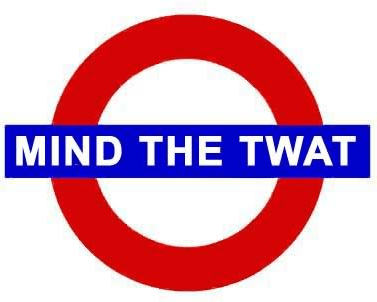
Many years ago, Toby Young wrote a book by the name of this post.
It was a journey through his bad decisions, bad timing and bad acts.
And while there was a lot of genuinely funny moments in it, you couldn’t help think he was a bit of a twat – which was confirmed with many of his later actions, decisions and behaviour.
I say this because recently I had a dalliance with someone who could best be described as Toby Young, without the humour.
Look, I work in advertising so I’m used to working with twats.
There’s actually a lot less of them than people like to think, but the ones who are there are generally stupendous at twatdom.
But this interaction was not someone I work with … it was someone on Linkedin.
Yes … Linkedin. The platform that is to community what Boris Johnson is to leadership.
Now even though this person and I are not ‘connected’, I do kind-of know him.
He was in Asia when I was there and had a reputation for grandiose statements that rarely could be backed up.
Anyway, I hadn’t heard about him or seen him for literally years, so I was surprised when a few weeks ago, he suddenly came into my life.
He did this by writing a comment under a Linkedin post I’d put up about one of the biggest mistakes a planner can make.
He asked:
What’s the difference between thinking and planning according to you? And is there a difference? And how do you see modern day account planning influencing business and corporate strategy which is really what CEO’s want to see – they’re not interested in ads or creativity unless its making them money?
I answered as best I could … saying I felt he was implying some planners didn’t care about the impact creativity had on the clients business, just their ego and if that’s the case, maybe he’s spending time with the wrong planners, clients and creatives.
In the blink of an eye, he responded with these 2 gems:
First this …
“I’m not implying anything- I’m asking a question. I be;lieve that’s valid on a social media platform. What I’ve foudn theough Experience s that sometimes it’s better to just answer instead of reading too much into it.”
[Spelling mistakes were his, not mine]
And then this …
“You really don’t get social, do you? You can’t be focused and social at the same time. I’ve been studying clinical psychology and the mind for 7 years. It’s two ends of the same frequency . Planners are focused (head) creatives are social (HEART). Open your heart my friend before a surgeon does the job for you. Good luck. You’re mucking around with someone with a lot of medical knowledge and experience.”
That second comment was bizarre.
Judgemental. Condescending. Patronising. Almost threatening.
I have to be honest, I was quite impressed. It’s been a long time since I’ve come across such a prick who can get so personal and so insulting so quickly.
But then it got weirder, because he then sent this:

Seriously, what the fuck?
From slagging me off to interrogating the most stupid shit [like my bloody camouflage background????] to then asking me to give him free information and advice so he can win a client and charge them money for his ‘help’.
I guess I shouldn’t be surprised because Linkedin is full of people who think they can just ask or say whatever they want as long as it benefits them. I’m sure we’ve all had headhunters contact us for names of people they should talk to – when they’re literally being paid by clients to know people who they should talk to.
But there’s something about this persons manner that pisses me off.
Maybe it’s the contradiction between acting superior but still wanting stuff.
I can’t help but feel he is someone who read Neil Strauss’, ‘The Game‘ [who also wrote Motley Crue’s, admittedly great, The Dirt … which tells you a lot] and saw it as a philosophy for how to live rather than the exploitative, manipulative and destructive book it actually was.
Part of me really wants to name and shame him.
If he’s doing that to me, what is he like to others.
Women. Or juniors. Or anyone to be honest.
But I won’t because who knows what he’s going through however – as I mentioned in my final response to him – for all his alleged expertise in clinical psychology and social platforms, he sure hasn’t got the faintest idea how to communicate with people.
So I’ll leave him be but if he does comes back [again] I’ll simply point him to this post and hope he understands the responsibility for clarity of communication is with the communicator, not the recipient. Something tells me, he wouldn’t.
But what all this shows is a mistake that companies, platforms and agencies continually make with the idea of community.
I get why it’s so interesting to them, but the problem is – what they think is a community, isn’t.
A community isn’t where you go to continually satisfy your own needs.
In essence, that’s the total opposite of a community.
What a real community is something built on shared beliefs and values … where you want to work together to help push or achieve a common goal. It absolutely isn’t about personal benefit at others expense, it’s about something much, much bigger.
And while it’s power and influence can be enormous …
Linkedin doesn’t get this.
Agencies flogging membership and community doesn’t get this.
And this ‘competitive strategist’ doesn’t get this.
Because the key rule for a real community is about adding to it, not just taking.
Filed under: A Bit Of Inspiration, Advertising, Apathy, Attitude & Aptitude, Authenticity, Brand Suicide, Comment, Consultants, Content, Context, Creativity, Culture, Differentiation, Distinction, Egovertising, Emotion, Empathy, Honesty, Innovation, Insight, Loyalty, Management, Marketing, Marketing Fail, Membership, Perspective, Planners, Planning, Point Of View, Positioning, Relevance, Research, Resonance, Virgin Atlantic
When Phil Spector died, I went down a rabbit hole of his life.
On that journey, I spent some time looking into the life of Lana Clarkson, the woman he murdered.
Which led me to this …

Find the perfect Lana Clarkson death photos!!!???
Seriously, what the fuck?!
I know they don’t mean to be so disrespectful.
I know it’s a standard Getty Image response to any image search – except I was looking for Lana Clarkson, not Lana Clarkson death photos – but this is what happens when you automate a process to maximise your profit potential.
And while I get Lana’s photos were topical given the death of Spector so many media outlets may be looking for them … it doesn’t make them look good. And god knows how it would make Lana’s family feel, if they saw it.
For all the talk about brand experience, it’s amazing how much bullshit is said.
Do I think experience is important? Absolutely.
Do I think experience is done well? Not that often.
For me, there is one overarching problem.
Brands would rather be OK at a lot of things than stellar at a couple.
Before people have a meltdown, let me just say this.
I am not questioning the value of experience.
Believe it or not, it is not a new concept … it has been practiced by great brands and strategists for decades.
However experience loses its impact when the goal is to be OK at everything rather than amazing at some things.
Oh I know what people are going to say …
“But every interaction should be an experience of the values of the brand”.
Yeah … maybe.
It’s great in theory but doesn’t seem to be realistic in practice.
I mean, how many brands really have achieved that?
Let me rephrase that.
How many brands that have a clear, desirable position in culture have really achieved that?
I would say it is a handful at most.
Now compare that to the brands who have focused on doing some things in a way that is exceptional and memorable?

I’ve written about the Virgin Atlantic Lounge before.
Imagine if Branson had said, “Create an experience that is commensurate with the values of the brand for the business class customer” versus, “Create a lounge people will want to miss their plane to stay in”.
Do you think they would have got to the same place?
Do you think the former would have helped drive the brands economic and repetitional success as well as the latter?
Don’t get me wrong, Virgin Atlantic have a lot to do to improve their experience.
Their booking and loyalty schemes are a fucking mess for a start. But while I appreciate I am biased, I would gladly sacrifice that for the lounge experience that makes me look forward to every trip.
An experience that is distinctively memorable, not just corporately comfortable.
The reality is there are more highly profitable, highly desirable brands who offer an inconsistent brand experience than those who offer a consistent one.
More than that, brands that offer a consistent brand experience across all touch points do not automatically become a brand people want to have in their lives.
Part of this is because their version of consistent tends to be using their name or colours or slogan everywhere.
Part of this is their version of ‘brand experience’ is the absolute opposite of what the word experience is supposed to mean.
[Seriously, can you imagine the sort of parties they would have?]
And part of this is because they want to talk to everyone which means their experience appeals to no one.
Because while it might not be fashionable, great brands are built on an idea.
Something they believe, stand for, fight for.
This is very different to ‘purpose’.
Purpose – at best – is why you do something.
Belief is how you do it.
The sacrifices you make. The choices you make. The people you focus on.
Don’t get me wrong, this doesn’t mean great brands shouldn’t want to ‘fill the gaps’ that reside in their experience eco-system, but it does mean it should only be done if each element can be done brilliantly and distinctively.
Anyone who has read the book ‘Why I Hate Flying’ will know the vast majority of brand values are basically the same – which means the vast majority of brand experience strategy ends up being predominantly the same.
However the brands who command the most consistently vibrant cultural interest and intrigue are the one’s who have a point of view on what they do and what they believe. They have a real understanding of who they’re talking to rather than a generalised view of them. They have values that step out of the convenient blandification that so many companies love to hide behind – where the goal is to look like you care without actually doing something that shows you care. And they absolutely know it’s better to do some things that will mean everything to someone rather than lots of things that mean little to everyone.
The obsession with 360 brand experience is as flawed as the 360 media approach from a while back.
Frankly conveying the same message everywhere felt more like brainwashing than engaging.
Experience is a very important part of the strategic and creative process.
Always has and always will be.
It can make a major difference to how people feel about a brand and interact with a brand.
But like anything strategic, sacrifice is a vital part of the process.
While in theory it is nice to think every interaction will be something special and valuable, the reality is that is almost an impossible goal.
Different audiences.
Different cultures.
Different needs.
Different times.
Different budgets.
Different technologies.
Different interactions.
So anyone who thinks experience should be executed ‘down to a level that allows for mass consistency’ rather than ‘up to a standard that allows key moments to be exceptional’ are creating another layer to get in the way of making their audience give a shit.
Or said another way, you’re adding to apathy rather than taking it away.
OK, I accept that for some categories unspectacular consistency can be valuable – hospitals for example – but the reality is in the main, audiences care less about consistent brand experience than brands and their agencies do.
That doesn’t mean you can’t make them care by doing something great – like Tesla did with their ‘dog and insane’ modes for example – but you need to understand you’re playing as much to your audience standards, as yours.
Now I appreciate I’ve gone off on one, given this post was originally about a search engine response to a murdered woman’s photograph rather than brand experience … but while they’re very different in many ways, there is one thing that is the same.
They’re all focused on satisfying an audience need … and while standardised processes can help ensure we are ‘dumbing up’ with our approaches to the challenge, when that manifests into a standardised experience, then you are dumbing down the value of who you are and who you can be.
For the record Getty, this is what Lana Clarkson looked like.
There’s no ‘perfect’ photos of her death.
But there’s plenty to signify the person she was.

Filed under: A Bit Of Inspiration, Advertising, Agency Culture, Attitude & Aptitude, Authenticity, Comment, Confidence, Creativity, Culture, Cunning, Devious Strategy, Egovertising, Emotion, Empathy, Food For Thought, Health, Honesty, Influencers, Insight, Management, Marketing, Marketing Fail, Perspective, Prejudice, Relevance, Resonance, Social Commentary, Social Divide, Social Media, Standards

I’ve been watching a lot of movies that made a big impression on me in the late 80’s/early 90’s.
What a massive mistake.
Apart from Die Hard, Terminator and Point Break … everything else has been pretty horrific.
Seriously, either we had really, really, really low standards back then, or someone was putting something in the water.
Face/Off, Bad Boys and The Rock are particularly bad.
I LOVED those movies when I was younger. I thought they were amazing … but zoom forward 30 years and you want to scrub your eyes and brain with a wire brush.
It’s not the bad effects – I can understand them being rubbish – it’s everything else.
The lack of subtlety. The horrific dialogue. The insane levels of over-acting.
It is obvious that directors back then thought audiences were as thick as shit because the way they signpost every moment in the movie with overt ‘clues’ is insane.
From clunky dialogue that attempts to explain the implausible, to off-centre camera angles to highlight the ‘bad guy’, to music that blatantly tries to communicate how you’re supposed to feel or what you should be ready to experience.
One of the worst of all the moves I’ve seen recently is the 1991 Julia Roberts movie ‘Sleeping With The Enemy’.
I remembered this movie as one that tackled domestic violence at a time where it was hardly ever discussed.
That might be the only bit of it I remembered correctly.
Quite simply, it’s pants.
Filled with more holes than Edam cheese and more over-acting than an episode of ‘Crossroads’ from the 70/80′ … the only positive elements are the name of the film, Julia Roberts amazing smile and the house that features heavily in it.
What makes it all worse is the trailer doesn’t give any of that away.
I know trailers are designed to do exactly that, but the difference between what they set up and what you get is dramatic.
Here’s the trailer.
OK, so you either have to trust me this is setting you a false experience or you have to watch the movie for yourself and know it with all certainty … but none of this is actually the point of this post.
You see when I watch movies, I have this annoying habit of having to investigate their history while watching it.
The thing that caught my eye when I was watching Sleeping with the Enemy was that house.

Look at it.
So grand. So imposing. So much a symbol of wealth.
And while I saw places like that when I lived in the US, I was surprised to learn it was made just for the movie.
Of course I know this happens, but they tend to be on a set, not on a real beach … but here we were, with that exact situation.
And while it looks the home of the wealthy from the front, when seen from behind – it left a different impression.

That’s right, it looks like the sort of rubbish they used to make on Blue Peter with some cardboard and sticky black plastic.
And while this shouldn’t surprise me, it does highlight how much of life is an illusion.
From the social media we read to the pitches we embark on to the relationships we forge to the jobs we covet.
Of course, not everything or everyone is like this.
Some are like the famous Steve Jobs quote, “paint behind the fence”. … where their standards, values and attitude means they will do things others may not ever know or see, but is important to them as it not only gives them confidence of a job well done but let’s them feel they’re working for a company they can believe in.
However they are sadly the exception, even if they should be everyone’s ambition.
So as we enter 2021 with our hopes and dreams, it may be worth remembering so much of life is like the Sleeping With The Enemy house. Where what we are asked to see is not a true indication of what it going on.
And while that doesn’t mean it’s all bad, it does mean you can go into things with open eyes, you can avoid disappointment, you can set some boundaries, you can identify the real opportunity that will excite you, you can stop feeling bad if you have questions or doubts and you can be OK if you’re not living up to what others claim they’re living up to.
Because when we talk about a healthy work/life balance, it’s worth remembering it’s not just about time, it’s about attitude.
Filed under: Advertising, Agency Culture, Attitude & Aptitude, Brilliant Marketing Ideas In History, Colenso, Comment, Communication Strategy, Creativity, Culture, Imagination, Insight, Point Of View, Relevance, Resonance, Wieden+Kennedy
This is an unashamedly big plug for the agency I am going to work at.
The wonderful Colenso.
And the best way to do that is to talk about a client I had when I was at Wieden.
When I was getting to know her, I asked why she had come straight to us rather than pitch the business like every other client seemed to do.
She said it was easy, if we could find a way to make people interested in butter [Lurpak] and milk [Cravendale] then she wanted to work with us.
What’s funny is when that piece of business first came in, it was not something that stoked the interest or passion of the creative department.
Butter? Milk? Pah!
And yet, because of the way they saw the creative opportunity for the brand, the openness of the client towards doing something new and the incredible way the idea was shot, it changed … to the point it is one of the campaigns people are hungry to work on.
I say this because Colenso recently did a campaign for Pedigree about dog adoption.
Now I get dog adoption may be more favourable to work on than butter or milk would be, but it probably would not be the first choice for many creatives.
And yet, like for Lurpak, it has become something special. A creative opportunity everyone wants to have a crack at. A client who now has a long history of great and effective work under their name. A category of advertising that has literally been turned on its head.
One of my favourites is this …
How lovely is that eh?
Well they recently launched a new campaign … however instead of this being about replacing kids, this was about preparing people for them.
In essence, they discovered a huge percentage of millennials were delaying parenthood.
While there are a whole host of reasons – all valid – the lovely folks at Colenso thought this was a great way to tackle their challenge, which was to position dog adoption as a great way to get you ready for being a Mum or a Dad.


Yes it’s tongue-in-cheek, but as a cat adopter, I can say it’s also true.
Though what really helped me get ready for Otis was running a strategy department in China.
I know I like chaos, but that was something else.
That aside, I love this work, and it’s another reason why Colenso just won agency of the decade for the 2nd time in a row.
Once is amazing.
Twice is incredible.
But twice in a row? Unprecedented.
I can’t tell you how happy this makes me.
Not just because I want to work at a place that loves creativity, but it means they hold, value and nurture their standards.
At a time where that is often the thing people will let go of to get money in, those who are stubborn to what they will let out the door are the places where everyone wants to get in the door. Because as the old adage says, it’s easier to get to the top than stay there.
Filed under: Attitude & Aptitude, Audio Visual, Authenticity, Comment, Confidence, Creativity, Culture, Design, Emotion, Empathy, Gaming, Marketing, Music, Social Divide, Social Media, Technology
The quote at the top of this page is what Frank Sinatra said about Elvis Presley.
If anything was going to turn youth towards the new musical force of the King, it was going to be comments like that.
But what I find interesting is the ad industry should understand this point more than most … however, I’m not sure we do anymore.
We appear to take more delight in being accurate than being exciting.
Now I appreciate this makes me sound like an old bastard but hang on for a second …
What I find interesting – at least where music is concerned – is that in the past, it was ‘the establishment’ who were frightened of the new and misunderstood, but that seems much less the case these days.
If anything, the establishment are bored nothing is scaring them.
Now there are some explanations for this …
Some of it is because of how the music industry has changed …
Rather than breaking new talent, they’re much more interested betting on certainties, because there goal is for lowering risk not pushing things forward. [Hence their appropriation of TikTok to flog back-catalogue tracks]
Some of it is because technology has allowed music to get ultra niche …
Thanks to music streaming platforms, people can now choose the genres they like and pretty much filter out everything else. What this means is we can kid ourselves into believing there’s less new dangerous music being created when the reality is we’re keeping it out rather than welcoming it in. Add to that the decline of radio – which was a central and universal place where a lot of music discovery took place – and we are actively cutting ourselves off from the new and uncomfortable.
Finally, some of it is because the power of music is not the cultural force it once was …
Don’t get me wrong, music is still ultra powerful, but in some ways, it seems to have gone from being at the forefront of culture to the background of it. Some will say that has always been the case – the ‘soundtrack to your life’ – but for people who have always lived for music, it was rarely just an accompaniment to whatever you were doing.
For me, a lot of the ‘danger’ that used to be synonymous with music has gone into gaming.
When Grand Theft Auto came out, it was almost like punk in the 70’s.
A game both universally loved and hated for what it represented.
Rather than trying to be something for everyone, it shamelessly wanted to be everything to someone … and because of the shifts in culture, technology, media, business model and price points, it meant it could be a very lucrative business to be in .
Of course, like all industries, too many companies simply try to jump on whatever bandwagon is cool in that moment … but for me, if you’re looking for the new rock n’ roll, it’s in gaming.
That does not mean dangerous music doesn’t exist.
But it’s power to change culture is not what it once was.
It’s more likely to be found in a game rather than us discovering a new artist.
Which reveals the dirty little secret about people.
The real reason people this there is a ‘lack of danger’ in music is because we’re lazy.
In the past, we would crash into it thanks to mass radio and media – but now, with everything at our command – it requires us to actively put ourselves out there to find it and frankly, we don’t want to.
For all the brilliant things technology can do for us, it has made us lethargically comfy.
We want everything on a plate.
We don’t want to lift a finger.
And while tech could also help overcome this, it’s been designed to satisfy not aggravate … which is why the only way you’ll find the dangerous edges is if you walk towards it rather than expect it to come to you.
It’s something adland needs to remember, because while some may say ‘exciting is indulgence’, it’s got more economic and cultural power than being ‘accurate’.