
Filed under: 2026, A Bit Of Inspiration, Ambition, Apple, Aspiration, Attitude & Aptitude, Comment, Delusion, Empathy, Finance, Generosity, Money, Privilege, Reputation, Technology
On Tuesday I wrote about how we have our priorities messed up …
If you haven’t read it, you can see it here.
The underlying point being we seem to accept the shitty behaviour of the super rich, but are hyper-critical of the humble – even though we know the former are making choices to become even richer whereas the latter are simply trying to survive.
In the post, I highlighted a valuable lesson I learned when I was starting out in my career from my then client – and now mentor – the wonderful Lee Hill.
He told me:
“There’s nothing wrong making lots of money, it’s how you do it and what you do with it that counts”.
It would be easy to think that in this Trumpian, authoritarian World, the ability to be ‘decent and rich’ is a pipe dream.
But I remember many years ago, George interviewed a bunch of wealthy people for a project we were doing at Cynic and came back saying he had discovered a group he called ‘the reluctantly rich’.
Basically, these were people who had made a lot of money but never felt they deserved it.
Maybe they inherited it, maybe they were in the right place at the right time … maybe they were just lucky … but they didn’t connect to it so did all they could to be generous to others with it.
Some to that was because it helped offset their guilt a little bit.
Some was their way to let others experience what they were going through.
But most of it was simply because they wanted to help others who hadn’t been blessed with the good fortune they’d received.
Often this was done quietly and privately because the goal was never about recieving gratitude, they just wanted to do some good with it, helped by the fact they never felt connected to the cash, so giving it away was easy … even though they were perfectly aware of what it offered and could do.
Admittedly there weren’t masses of people who felt this way, but there were more than a few.
Still are.
I say this because recently I saw a video of Steve Wozniak – Woz – the co-founder of Apple.
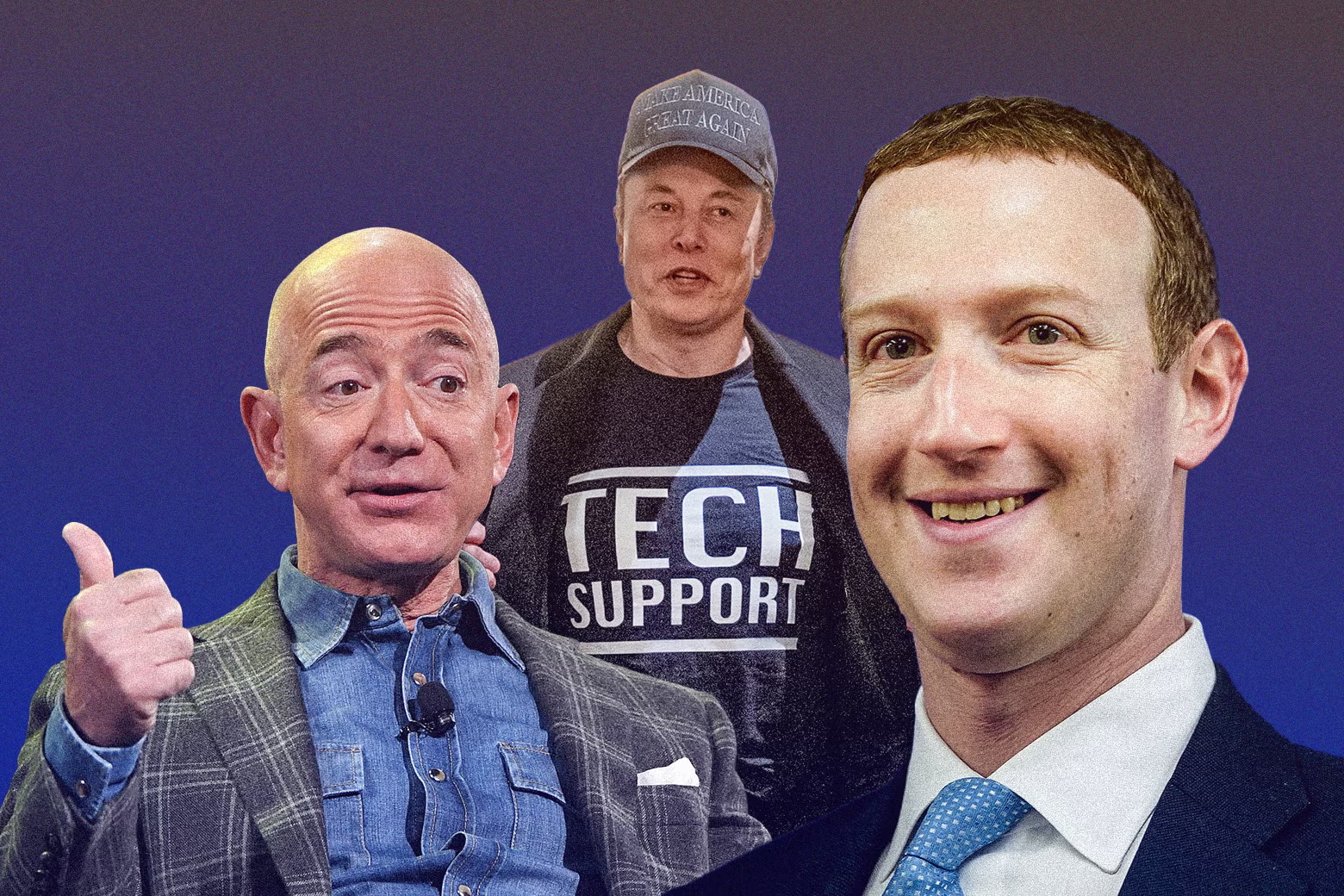
At a time where Musk, Bezos, Zuck and countless other ultra-wealthy tech and finance bros revel in their elitist, vulgar, arrogant lifestyles, he is a reminder of when the tech industry consisted of a few people trying stuff they hoped could help millions grow, express and explore their lives … which is a world away from where we are today, where the tech industry seems to be a few people designing products that enable them to control, contain and restrain millions for their own, fucked-up benefit.
So thank you Mr Woz, you’ve just proved you don’t have to be a prick to be rich.
It just feels that way.
Filed under: 2026, A Bit Of Inspiration, Attitude & Aptitude, Collaboration, Comment, Communication Strategy, Confidence, Context, Craft, Creativity, Culture, Effectiveness, Emotion, Empathy, Focus Groups, Interviews, Leadership, Planners, Planners Making A Complete Tit Of Themselves And Bless, Planning, Resonance, Respect
One of the things that has always bugged me about some strategists is their desire to be academically victorious in every conversation.
To not just be ‘right’, but to be the ‘rightest of right’.
And then expect wild applause for their proclamations and declarations of self-appointed brilliance.
Putting aside the problematic nature of this behaviour, the irony is it stands in the way of them being able to properly understand – and connect to – how others feel, think, believe or behave … because they’re too busy telling others what they ‘really mean or think’.
And here’s the kicker …
The reality is people often do know what they want, think or think … they just don’t know how to express it clearly.
Which is why the key is the ability to listen rather than to judge. Or explain.
And by listen, I mean listen ‘hard’ …
Not just what is said, but how it is expressed … verbally, visually, contextually.
And while I appreciate we’re in a time poor, distraction rich world … the benefit of doing this is that not only will you have a greater appreciation of how they see the world, they will often reveal opportunities that ‘intellectual logic’ may never see, let alone get to.

Maybe that’s why I love that Lucille Ball quote so much … because in a few words, she articulates the difference between clever and smart.
And where strategy is concerned, smart trumps clever.
That doesn’t mean you don’t care about facts, details, knowledge or academic accuracy, it just means you appreciate that being emotionally resonant with others can achieve more than being academically victorious.
Or as my Dad used to say:
“If you need to show how clever you are, you’re probably not”
I say all this because I saw a brief interview with the singer Billy Idol.
In it, he demonstrates the importance – and craft – of emotional resonance.
The act of understanding what others need to be able to give them the space and place to express.
Not manipulation.
Not exaggeration.
But emotional consideration.
Which is why if a true Rockstar – who has lived the equivalent of 100 lives – can do it, then us poxy strategists should be able to, too.
Watch it, you’ll be a better person for it.
Filed under: A Bit Of Inspiration, Advertising, Comment, Creative Development, Creativity, Distinction, Effectiveness, Emotion, Empathy, Marketing, Marketing Fail, Perspective, Planners, Planning, Point Of View, Relevance, Reputation, Resonance, Respect
As it’s Monday, let me start this post with some good news.
This is the last week of posts for a while as I’m flying off to Europe on Friday.
Not for a holiday.
Not for Colenso.
But for a stream of meetings in LA, London, Amsterdam, Milan and Berlin.
All in 8 days. Darrrrrling.
God, what an asshole humble brag. That isn’t even humble.
Which is why I am not asking you to feel sorry for me because [1] I’m not stupid and [2] 8 days or not, it’s a fucking dream gig. However – if it makes you feel any better – while all of these trips are at the invitation of a range of different VIP’s, I’m only going because they want me to be their cat litter tray rather than be a valued guest.
Did that make you feel less loathing towards me?
What about making the darkness of Monday morning feel a bit brighter?
No? OK … better move quickly on.
So not too long ago, I wrote a post about the brilliant Trevor Beattie and his brilliant analysis of the modern Specsavers creative work.
Specifically, the strategic shift from ‘what it was’ to ‘what it is’.
And while he didn’t say the current work doesn’t live up to the standards of the original work, his central point highlights – at least to me – why I don’t think it does, exemplified by this piece of work that I saw near our office recently.

I should point out this gives me no joy to say whatsoever, because:
1. Specsavers played a significant role in saving my sight by recognizing my disease early and then writing a referral letter for me to urgently see a specialist.
2. Specsavers has continually proved the commercial and creative power of s great idea.
3. The shift Trevor highlighted, may – for reasons I don’t quite understand – be deliberate.
But whatever is behind it … going from the comedic potential of not seeing properly to laughing at the incurably stupid … has potentially resulted in moving the brand from friend to foe.
Or worse, bully.
Now whether they meant this to happen or not is anyone’s guess.
I’m assuming not.
Which reinforces the need to always understand the nuance of an idea – because if you don’t do that, you don’t just undermine years of craft, care and rigor, you undermine the very value you are being paid to elevate.
See my recent post about the billboard for the movie, Devil Wears Prada 2.
There’s too much complexity in our business. But solving it with simplistic interpretation doesn’t help anyone either.
Which suggests every creative, strategist, suit and marketer may need to go to Specsavers to see how to do their job properly.
With craft.
With rigor.
With care.
With an ability to actually – ironically – see it.
And with an understanding of the nuance behind the idea so your work – whaever role you play – is always building the brand up rather than tearing it down.
Filed under: A Bit Of Inspiration, Advertising, Apple, Attitude & Aptitude, Auckland, Brand, Brand Suicide, Clients, Clothes, Communication Strategy, Content, Context, Craft, Crap Campaigns In History, Creative Development, Creativity, Culture, Design, Details, Effectiveness, Egovertising, Emotion, Empathy, Entertainment, Fans, Fashion, Film, Management, Marketing, Marketing Fail, Marketing Science, Media, Mediocrity, Metallica, Netflix, New Zealand, Premium, Privilege, Relationships, Relevance, Reputation, Respect, Standards, Steve Jobs
For 50 years, I never dressed particularly fashionably.
I had a ‘style’, but it was never one people looked at and thought, “I want to dress like that”.
Questionable t-shirts, ripped jeans and a pair of birkies tend to have that reaction.
Part of this is because growing up, I was never exposed to anything ‘fancy’. Despite my Mum being Italian and going to Italy a lot … my version of designer clothing was stuff from Burton’s and C&A and nothing more.
But over the years, I got more and more exposed to the high-end fashion houses.
Projects with Prada and Chanel introduced me to people, stories and experiences that taught me there was far more to who they were than big prices and even bigger pretentiousness. But even that was not enough to convince me this was something for me.
Hell, I still remember the utter shock I felt when I heard a mate tell me they’d spent 70 quid on a t-shirt.
Sure, this was a 1000 years ago, but back then I didn’t know how that was even possible.
T-shirts were 3 for a few quid from Asda so what on earth could justify 70 pounds for a single tee???
And that was how things carried on for decades until 2 events happened in my life:
I got healthy and I started working for the most successful and influential luxury and street-fashion investor on the planet.
And with those 2 things, everything changed …
I got to go behind the scenes of the highest level of the industry.
I got to talk to the creative directors of the houses and labels who define global fashion.
I got to meet the people who create, curate and craft the experiences that define how fashion makes us feel.
But most of all, (1) I could now actually fit in their clothes and (2) my client sent me shitloads of them for free.
Of course, I appreciate how lucky I am for that – and I massively appreciate that they were doing it to ‘keep encouraging me on my health journey’. But – and I say this with utter love and respect for them – I can’t help the real reason is because they didn’t want me turning up to their big meetings and fancy events dressed like a trainwreck. What maybe triggered this was the time I found myself sitting next to Phoebe Philo, ex-creative director of Celine and founder of her own label, who – on seeing my t-shirt, featuring a cat logo – said:
“I love this, who is it by?”
To which I replied:
“My son made it, and that’s our cat”.
To be fair, she was brilliant but I can’t help but imagine she was also thinking, “who the fuck is this nutter I’m next to?”
Bit like the time I was in the lift with members of the Prada family.
They were – literally – the best dressed people I had ever seen in my entire life.
Me? I was wearing ripped jeans, some Nike’s and a hoodie probably from Asda.
Again, they were kind, warm and welcoming – and never once did I feel judged, in fact the opposite – but it was not long after that I started receiving a lot of fancy clothes – hahaha.
But the point of this post is not that I am more fashionably dressed person than I’ve ever been in my life.
Nor is it that I am one of the luckiest bastards on the planet.
No, it’s that the last few years have completely changed my perspective of the industry.
Where once I may have just seen it as pricey and poncy, I now have a deep appreciation, understanding and respect it..
The creativity, the craft, the inspiration, the statements, the history, the details, the obsession.
Put simply, the belief that EVERY detail matters, no matter how big or small.
Steve Jobs once talked about the importance of ‘painting behind the fence’ – the belief that even if no one ever sees or recognizes the care and consideration you have put into your work, you know and that matters – and in many ways, he could have been describing the luxury fashion industry.
You only has to watch the Netflix Documentary ‘7 Days’ – specifically the episode about Chanel’s couture catwalk show – and you’ll see how much thought goes into how every single detail is presented.
Not simply because image is important to them, but because they want to honour the work they have created.
Make sure it is represented, seen and felt exactly as intended and created.
It is a similar approach Metallica have to their music.
It’s why they bought the best vinyl printing plants in the World.
It’s why they invested in the best live concert sound-system in the World.
It’s why they own the rights to all the music they create and have ever created.
It’s not ego. It’s not hyping. It’s about ensuring they honour the work they’ve made so everyone experiences it exactly as intended, versus letting someone else determine that.
So where the fuck is this all going?
Well, it’s because recently I saw this.

Yep, it’s a billboard for the movie Devil Wears Prada 2.
BUT WHAT THE FUCK IS GOING ON WITH THAT IMAGE???
How is a movie centered around the world of luxury fashion and media using such a badly designed, stretched and distorted billboard like that?!
Looking online, I can tell you that’s not the official image – at least as far as I can tell – plus I should point out the image has accentuated the lines of the digital billboard, which weren’t visible to the human eye.
But that aside, the image used looks like someone at the local distributor, media agency or billboard company decided, for reasons I don’t understand, to create – or adapt – their own version of the official artwork; the result of which is a visual that makes Devil Wears Prada 2 seems more Poundland than Prada.
Which highlights two very important reminders:
1. Everything communicates who you are and what you value.
2. For the best result, make sure all who work for you – or with you –know who you are and what you value.
I’m not saying price or speed doesn’t matter, of course it does … but what price does sloppiness, misunderstanding or a need-for-speed end up costing?
And to those who say that doesn’t matter, because no one cares … I say this in return.
Not only do you not understand marketing …
Not only do you not care about your company …
You sure as shit don’t understand your customers.
Which gives us one final thing to remember …
For all the systems, processes and marketing practice methodologies you can use … if you forget who its for and what its for, then you’re truly wasting your money.
Filed under: 2026, A Bit Of Inspiration, Aspiration, Attitude & Aptitude, Comment, Corporate Evil, Creative Development, Creativity, Culture, Effectiveness, Efficiency, Emotion, Empathy, Experience, Leadership, Loyalty, Management, Passion, Stress
Over the years I’ve written a lot about companies viewing ‘emotional people’ as problems.
Viewing them as too passionate.
Too dramatic.
Too impatient.
But the reality is, emotion means you give a fuck and I’d rather have that than work with robots who efficiently execute what’s needed without ever wishing to add, elevate or challenge the status quo.
Of course, the irony is the companies who criticise employees for caring deeply about what they do, tend to also expect their people to be disproportionately passionate and loyal about the company – but guess what fuckers, you can’t have one without the other.
Now I appreciate there are different ways to express emotion …
And when it becomes about what YOU want versus what you want the work to be – they’re very different things.
But having people who care … who deeply want to do the right thing, the better thing and the new thing … is creatively and commercialy far more valuable – let alone interesting – than having an entire department of drones. And yet in these optimisation obsessed times, companies have decided the opposite is true.
Which leads to the point of this post.
Recently I saw this clip of Robert Glasper playing Radiohead’s ‘Everything In It’s Right Place’.
In it, you witness Robert crying as he plays the piece.
The emotional impact he feels because of the piece.
It’s not ego.
It’s not performative.
It’s pure, unfiltered emotion. For a piece of music he didn’t write but feels deeply connected to.
So connected, he gives his all in performing it. To honour what it means to him and what he hopes the audience will get from it.
In many ways, it’s one of the most selfless, geneous acts you could ever witness.
Something I am sure Radiohead would feel honoured by, rather than say:
“Robert … Robert … stop being so emotional about the music. It makes us feel uncomfortable and we don’t know how to deal with it”.
Because that’s the thing … the issue of emotion is not about the person feeling it, but the people who never can.
Who are so disconnected to what they do, the only thing they value is the checklist of what has been done.
Because for them, quality isn’t the goal, it’s productivity.
People who care about what they do and what the company does, is a gift.
It’s why we have to put an end to this false narrative of them being a problem … because they provide life to what so many senior leaders destroy.
Enjoy.