
Filed under: A Bit Of Inspiration, Advertising, Agency Culture, Attitude & Aptitude, Audacious, Brands, Comment, Communication Strategy, Creative Development, Creativity, Culture, Differentiation, Distinction, Emotion, Empathy, Experience, Management, Marketing, Marketing Fail, Nike, Perspective, Provocative, Relevance, Resonance, Strategy
Take a look at this photo of Bjorn Borg and John McEnroe.

How good is it?
Two icons of tennis …
Hell, for people of a certain age, they’re still icons, despite this pic being taken in 1978.
But this isn’t about them, this is about McEnroe’s shirt.
McEnroe’s NIKE shirt.
Notice anything about it? Anything different at all?
Well let me put you out of your misery, because the answer is there’s absolutely nothing different about it whatsoever.
It’s the same logo as you see today.
It’s the same font as you see today.
It’s the same flawed genius athlete as you see today.
It is a demonstration of a brand who has always known who the fuck it is, what/who it stands for and what it believes.
A brand that made that logo ‘an asset’ through the decisions it makes and the athletes it associates with.
For over 50+ years.
No ‘relaunch’.
No ‘brand purpose’ statement.
No ‘one colour’ brand systems.
No ‘system 2’ decision making.
Hell, they’re even OK with making mistakes because they are focused on fighting, challenging, pushing and provoking athletes and sport rather than chasing popularity and convenience.
In fact, the greatest irony is the reason they’re currently in the shit is because certain people decided their 50+ years of pushing who they are, what/who they stand for and what they believe was now out of date. Irrelevant. Not ‘optimising or maximising’ their commercial value enough. So they turned their back on who they are to embrace what many modern marketing guru’s said they should be … ignoring the fact these people have never done – or achieved – anything close to what NIKE has and does.
Now it is very true there are certain things NIKE have been slow to embrace. Some are mindblowingly ridiculous and stupid. However, I would argue that is more because they shed so many people who loved and live for sport while replacing them with people who love and live for marketing processes and practices.
Because while there is – if done correctly – value in those things, it’s important to remember they never MAKE a brand, they – at best – help empower it. A bit.
That we’ve chosen to forget this to enable us to profit from an increasing number of companies who seek to disguise the fact they don’t know who they fuck they are, what/who they stand for and what they believe, highlights how much marketing has become an industry of platitudes, not provocation.
Which is why I will always remember what a friend of my Dad once told me.
He was a lawyer, but his words were very pertinent for marketing.
Especially a lot of what passes – or is celebrated – in marketing today.
He basically said: “Great companies don’t change who they are but always fight to change where they are”
Sadly, it feels too many have got things the wrong way around these days.
Filed under: A Bit Of Inspiration, Advertising, Attitude & Aptitude, Brand Suicide, Brands, Business, Comment, Context, Corporate Evil, Creativity, Culture, Differentiation, Distinction, Honesty, Innovation, Management, Marketing, Marketing Fail

I saw these 2 brilliant cats starring each other down when I was in Utrecht a few months ago.
Look at them.
Focused. Determined. Pissed off.
Trying desperately to intimidate each other while obviously being scared of each other.
Maybe not in terms of size … or beauty … but in terms of one being able to pull off something better, quicker or smarter than the other.
Trapped in an endless cycle of statue paralysis or trying to micro ‘one up’ the other.
The cat cold-war so to speak.
And what is funny is this is often how many brands behave.
Looking sideways rather than ahead.
So lost in what one other brand is doing – or could be doing – they ignore what’s going on around them.
What others are achieving without them.
Sometimes this is not simply driven by a competition, but greed.
A desire to make sure nothing is left on the table.
Hoovering up every scrap.
Believing they are in control and in power so nothing can challenge or take them.
So lost in their self-belief that they fail to see they’re being left behind.
Blinkered by ego.
We saw it with Nokia when Apple launched the iPhone.
We saw it with Listerine when Wrigley’s positioned chewing gum as dental care.
We saw it with Kodak when they chose to protect their photo processing profits rather than launch their digital camera.
We have seen it over and over again.
And while sometimes, having a focused enemy can push you to greater heights than you would be able to achieve on your own … driving you to make things better, rather than to look for things never done before [because often, those things are stupid or self-indulgent] like most things in life, the key is knowing when this approach starts to be counter productive.
When the focus is pulling you back than pushing you forward.
Blinkering your view rather than opening your perspective.
Losing your edge rather than fuelling your ambition.
But sadly, too many brands act like those two cats in Utrecht.
Unable to look away but without the looks to make others still want to come to them.
Which is why as much as there’s a lot to be said for exploiting and optimising the failings and learnings of your numero uno foe, there’s also a lot to be said for remembering to keep looking up and out from your blinkered bubble.
Or said another way …
When you ensure you’re focused on where culture is heading, you don’t get lost following where your competition is staying.
Filed under: A Bit Of Inspiration, Advertising, Attitude & Aptitude, Comment, Communication Strategy, Content, Context, Creative Development, Creativity, Culture, Effectiveness, Marketing, Marketing Fail, New Zealand, Nike
There’s been a lot written and said about brand assets over the years.
A lot of claims and over-promises.
Hell, careers have been made from being a cheerleader of it … even though it has also been responsible for a whole lot of terrible advertising.
Contrived, complicit and confused advertising.
That doesn’t mean it doesn’t have a value – or a role – but as I wrote here, the thing rarely talked about is that brand assets don’t happen by themselves. You can’t buy them off the shelf or make them happen by simply repeating their use ad-nauseum.
No, the only way to turn an attribute into an asset is through creativity.
It’s creativity that gives it meaning.
It’s creativity that gives it a purpose and role.
It’s creativity that imbues it with financial value.
I appreciate that might not fit the narrative of certain people, but that’s the reality of the situation … or it is if you want to do it properly. Unfortunately, it appears more and more people don’t. Preferring to outsource their responsibility – which, let’s not forget, they are paid to do – to generalistic and simplistic solutions that are focused on recognition, not value.
Nothing brought this home more than this ad I saw for a new Nike store in Auckland.
Look at this …

What the fuck? Seriously, what the fuck is that?
While they have used a number of NIKE’s ‘brand assets’ – namely the font and swoosh – it’s pretty obvious whoever put this together has no understanding or appreciation of what they represent or how to use them.
Mind you, it also seems they also have no understanding or appreciation of sport, art direction or design.
It’s like they’ve just taken a few pieces and shoved them wherever they like – like a terrible jigsaw puzzle that doesn’t show the picture they need to create.
Which highlights another thing rarely talked about brand assets …
Just because you’ve earned them, doesn’t mean you can’t lose them.
Treat them with distain and you’ll find all that hard work will be for nothing.
Moving from a brand asset to an attribute to a warning sign to stay the fuck away.
Brand assets are made and built over time.
They need nurturing, crafting and supporting.
They’re not something that once earned, can be used any way you choose.
It’s why the people who use them need to understand them.
What they represent.
The context they play in.
Their creative meaning and expression.
How to actually fucking use them in the right way.
Without any of that you don’t just fail to unlock their inherent value and power, you’re killing their credibility and the brand they’re tied to.
That doesn’t mean you can evolve them. Or expand them. Or play with them in different ways. Nike – of all brands – is very good at doing that. But that only happens because generally they’re embraced by people who have a deep understanding of what they stand for and represent … rather than random ‘colours and logos’ that they treat as a range of stickers they believe they can put wherever they want and whenever they choose.
It’s why I get so frustrated with how certain people talk about them. Acting they’re like ‘parts’ that can be replaced, exchanged, adapted or used however someone chooses … which ultimately demonstrates many of the people who talk like this don’t actually understand what a brand is, what it takes to build one or the difference between post-rationalising and creating.
Filed under: A Bit Of Inspiration, Advertising, Airports, Art, Attitude & Aptitude, Australia, Authenticity, Childhood, Comment, Content, Context, Creative Brief, Creative Development, Creativity, Culture, Empathy, Fake Attitude, Humanity, Imagination, Marketing, Marketing Fail, Mediocrity, Point Of View, Provocative, Qantas, Relevance, Reputation, Resonance, Respect
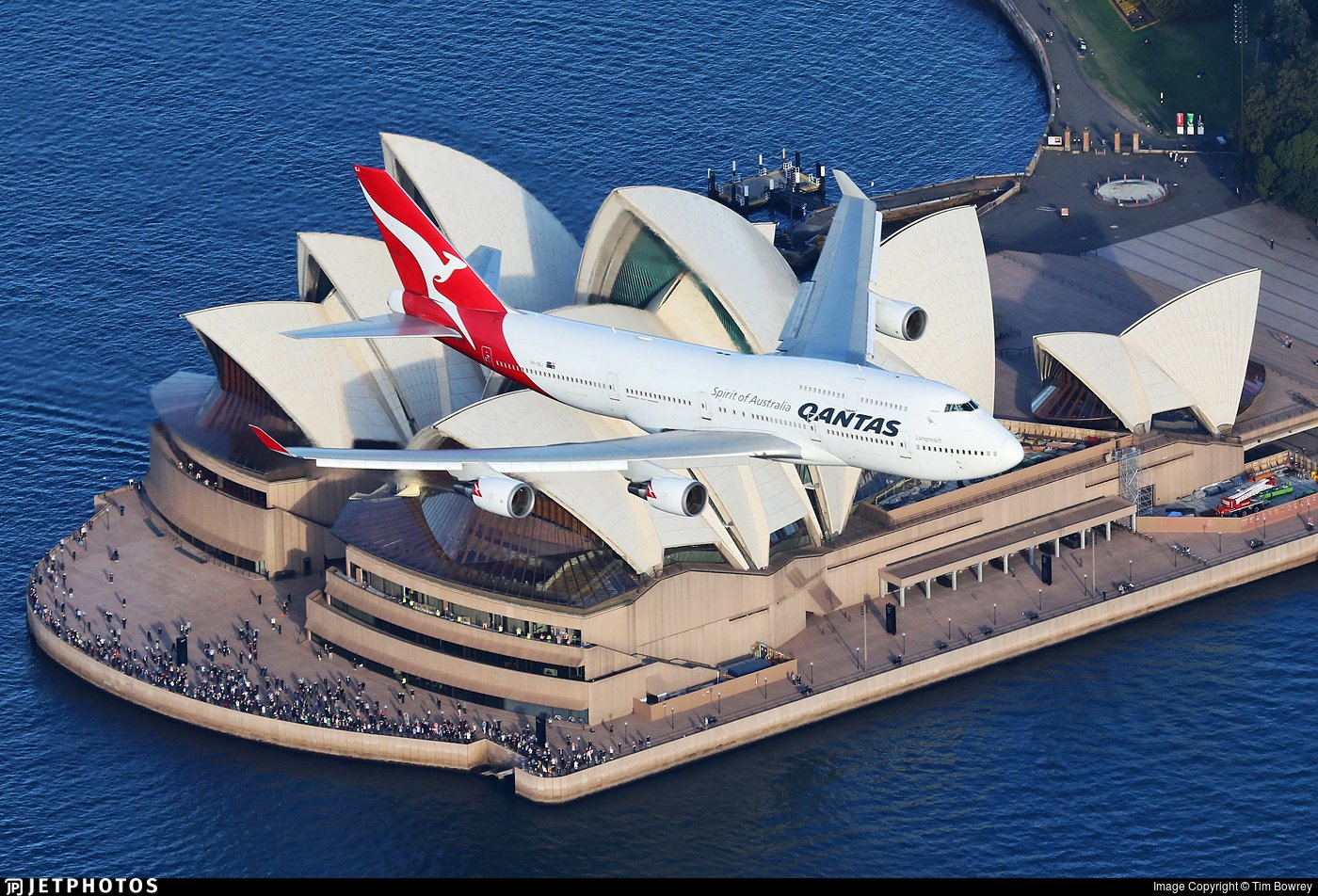
Many years ago – 2009 to be precise – I wrote a take down of Qantas, the Australian Airline.
It wasn’t about their experience or service which – back then – were pretty good, certainly much better than they are today. No, it was about the lyrics to their ‘iconic’ song, ‘Still Call Australia Home‘.
Now I appreciate I’m a Brit.
I appreciate that, at the time, I had an agency called Cynic, so was full of piss and vinegar.
I even appreciate – as my Aussie wife reinforced to me in no uncertain terms – that the song and Qantas’ advertising was pretty special for Aussies so maybe I should shut the fuck up.
And that is good advice. Except 15 years later, I’ve decided to come back with a comeback.
You see recently I saw an ad for another Australian icon …
The difference being this one is worthy of that label annnnnnd – even more significantly – they’ve made a piece of advertising that ignites all the emotion, pride and Australian spirit that Qantas would possibly sacrifice their ‘never had a crash’ reputation, to achieve.
[Please note, this is simply to emphasise the point. I get it’s not a great turn of phrase. And I obviously don’t mean it. So if you prefer, simply replace it with: “… that Qantas would allow themselves to be embroiled in even more financial scandal, to achieve”. Better? Oh god … there’s no pleasing some people is there!]
Anyway, if you’re wondering what I’m talking about, it’s this from the Sydney Opera House for their 50th anniversary.
[Though while it’s being shared a lot at the moment, it actually came out about 8 months ago]
I love it.
I love it so much it made a cynical Brit emotional.
Sure, I have an Aussie wife … a ½ Aussie son … Australian residency and was even a member of the audience in a couple of the historic scenes they show in the film … but I’ve never, ever felt that way about a Qantas ad.
Not once.
Hell, I don’t even like Tim Minchin – the guy who leads every thing in the ad – and yet I still felt connected to the spot.
Part of it could be because The Opera House was to me, a symbol of Australia, decades before I moved there.
I still remember how overawed and overwhelmed I was when I first saw it for real. This incredible place whose image had been burned into my mind from years of seeing it on TV shows, in magazine articles or just everyday imagery.
But it’s more than that, it’s what the place signifies.
The story that underpins the whole film.
A true story.
One where the quest to do something different triumphs over the demands to control and conform. An ode to the majesty of imagination and art rather than the adherence of tradition and regulation.
It all feels – ignoring the fact the Opera House was designed by the Dane, Jørn Utzon – much closer to the ‘Aussie spirit’ than anything Qantas has ever done.
A salute to those who wish to push and challenge rather than seek the comfort of being back ‘where they’re comfortable’.
Now I appreciate that maybe that spirit is more confined to the past than the present.
One look at how the vote for ‘The Voice’ turned out reveals comfort, convenience and control are the words of the day.
But that aside, it’s a very special film.
Helped by the fact the Opera House is a very special place.
Not just for Australia, but for anyone who hopes for something a bit more.
A bit more personal.
A bit more emotional.
A bit more wonderful.
And if you need any more reason why you should love the Opera House far, far more than Qantas … let me tell you, even the Opera House’s cheapest seats offer more leg room than pretty much anything you’ll get on that airline.
Filed under: A Bit Of Inspiration, Advertising, Attitude & Aptitude, Comment, Content, Context, Craft, Creative Development, Creativity, Culture, Emotion, Empathy, Music, Queen, Resonance
Of all the terms banded about by the creative industry … craft is one that is spoken about a lot.
For many people, they interpret this in terms of executional quality and without doubt, that is a part of it, but it is so much more.
In fact, craft starts at the thinking phase … before a single thing has been defined or committed to paper.
I’ve written a lot about craft over the years, but I recently read something that for me, is a wonderful expression of its role and power.
Now, I get there’s going to be a lot of moaning when you see what my example is – or, should I say, – who my example of craft is coming from. But hang in there. Please.
Are you ready?
OK, so it comes from Queen’s Brian May.
I know … I know … but there’s a reason for this.
You see he was recently asked about the lyrics to one of his songs called ’39.
This song appeared on their 1975 album, ‘A Night At The Opera’ and it is a song about space travel through different dimensions.
For haters of Queen, just description probably justifies all your loathing … but there is method in the madness.
You see Brian May has a PHD in astrophysics.
And while he gained that qualification in 2007, the reality is he was a leading researcher in the field prior to joining Queen.
In fact the only reason he didn’t gain his PHD back in the 1970’s is because the band took off and so his studies stopped.
But even then, his love of astrophysics was a key part of who he was – especially the relationship it had with the dimension of time – which is maybe one of the key influences behind this song.
To understand the rest of this post, you should hear it … paying particular interest to the lyrics. So click here.
Did you do it?
Did you bollocks.
OK, then just click here to read the lyrics.
Did you do that?
Hmmmmn, OK … I believe you even if no one else will.
The point of this is because Brian May was recently asked about the story of the song and his reply is fascinating.
Fascinating in terms of where and how song writers get their inspiration …
But – to link back to the point of the post – fascinating in terms of how this crafted how he specifically wrote the lyrics …
How amazing is that?
I love how he explains why the tenses are mixed up in his lyrics.
How it is integral to the idea he had for the song.
How it is an example of craft in motion.
Sure, there’ll be some pricks who will claim its ‘post rationalized justification’, but that’s because they are confusing their ego with their ability.
Because here’s the thing with craft …
In many ways it is not immediately obvious to the recipient … they may not engage with it in the detail and care that went into it. They probably encounter it as a singular, all-encompassing experience. But to the creator, everything will mean something. Not in terms of ‘contrived, focus-group instruction and manipulation, but in terms of ensuring their creativity is crafted to represent their idea in its purest, most honest form. All the while embracing – and valuing – that the recipient may interpret and connect to the work in different ways than intended. Taking it to somewhere new, different and personal.
It’s a beautiful and generous act and why one of the most important questions I ask in any initial creative meeting is ‘what’s the story behind your story?’.
I don’t mean that in terms of them reiterating the brief or conveying some ‘insight’ they’ve defined to answer/justify their solution … but the journey they have been on in terms of inspiration, consideration or history that has led them or shaped what they are going to show.
Mainly because at this stage of proceedings, it’s got less to do with ‘answering’ the brief, but understanding how they see it.
A glimpse into where it could go, rather than what it currently is.
It’s why we need to remember craft isn’t something to wrap an idea in, it’s what informs the entire expression of the idea.
Because even if people don’t recognise it, they will probably feel it … even if they can’t explain why.
And that is the power of creativity … something we need to protect, especially from those who try to present it or define it like its engineering and their master mechanics. Which is ironic, given they’ve never created anything with it.