
Filed under: 2025, A Bit Of Inspiration, Advertising, Agency Culture, Apathy, Aspiration, Attitude & Aptitude, Audacious, Authenticity, Comment, Context, Creative Brief, Creative Development, Creativity, Culture, Effectiveness, Emotion, Empathy, Imagination, Management, Marketing, Marketing Fail, Planning, Play, Point Of View, Process, Provocative, Relationships, Relevance, Reputation, Resonance, Respect, Stupid, Success, Work
So I have good news.
This is the last post for a week.
Yep, I’m away. Again.
Not because of whatever happened with the result I wrote about yesterday – but something else. Though if the result wasn’t good yesterday, the week away for me is going to be very bitter sweet because something that should be full of crazy wonderfulness is going to be infected by sheer fucking panic. But let’s stay positive shall we and ignore the fact I started a company called cynic – hahaha.
[I also, let’s not forget, started a company called Sunshine, which proves I am the living embodiment of a ‘gemini’, haha]
Anyway, I say you have ‘a week’ rest from this blog but I have written a post for next Friday because it’s Halloween and I couldn’t resist posting something truly horrific.
A blast from the past that no one needs seeing again but still makes me laugh.
So apart from that, you’re free from me for one whole week.
What a way to see in the weekend …
So with that, I’m going to leave you with this …

I saw the above recently and it reminded me of a meeting I was in once, where an HR person talked about ‘cultural fit’.
Now I get what they meant – from a theoretical place – but it was what they were trying not to say that bugged me.
Because in essence, they were saying they valued the complicit and consistent over the interesting and challenging.
They didn’t care that people who questioned or pushed were actually doing it because they wanted to help the company be even better … to them, they saw them as ‘problems’ who they could discount or disregard under the guise of being a ‘wrong cultural fit’.
Don’t get me wrong, I appreciate good companies have strong cultures … a set of principals, values and behaviours that the people within shapes who they are and how they act. But too many organisations mistake this for control and complicity when in reality, it’s about expression, standards and possibility.
And it’s why I loved that piece But here’s the thing, these people make great shit a possibility.
Sure, I get they often need to be surrounded by those with the skills and abilities to both interpret what they say and action it … but without them, you are forever lost in the middle.
Yes I get for some that is exactly where they want to be … but for those with hunger, ambition, a desire for originality, craft and possibility, that’s literally the worst place you can find yourself positioned.
And yet too often, it’s these ‘big talking companies’ who have embraced protocols and processes that filter these people out immediately … replacing them with an endless stream of plastic and beige puppets. It’s why as much as these sorts of individuals can cause all manner of headaches and mayhem – and I say this both as someone who fits this description as well as someone who seeks out people of this description – they remain the individuals who I love to work with and hire the most.
And there’s a reason for that …
Because not only do you never know what they’ll come up with – and often they don’t know wither – you can be sure it will be smart and impossible to forget.
Or to be more poetic …
They are like comets flying across a night sky. They might not stay around for long, but boy … do they always shine bright.
Which leads to something else.

Recently London School of Economics [LSE] asked me to write a piece for their business management and strategy curriculum.
I don’t know if was because they thought my perspective would educate their students or serve as a warning of what NOT to do, but it was lovely to be asked.
The one thing they wanted me to specifically talk about was how I have been able to build and lead successful teams wherever I’ve worked.
And without blowing my own trumpet, I have.
Whether it’s been at different agencies or different countries, I’m proud I’ve been able to help nurture strategically intriguing, creatively interesting teams. Where every place I’ve been, has enjoyed a period that has come to define the department, the agency, the client, the category, the work we create or – most importantly – the people who are there.
The reason that’s so important to me is that where strategy is concerned, you can never be sure if you’re making a difference or you’re just riding on the coat-tails of the talent that was – and is – already there.
Or said another way, are you good or are you lucky?
And while I’m definitely lucky – both in terms of where I’ve worked and who I’ve got to work with – I do believe I’m pretty good at developing people and gangs – and I choose the word ‘gang’ very deliberate.
You see the word ‘gang’ means you have a motley crew of different people with different talents and outlooks who are united by a common philosophy, enemy and planning identity … whereas a department tends to be a production line of similar people, doing similar things with similar backgrounds and expectations.
Or as Lee Hill, my mentor and friend once said, “you can choose to partner with people who find interesting ways to open possibilities or people who are only focused on keeping things the same”.
And while there is nothing wrong with being boringly expected, it’s not what I value or what drives the greatest commercial growth … which is why – as part of the piece I was asked to write – I wrote this:

[Click on the image above to read it properly]
_________________________________________________________________________
It’s why I always say you should beware of those who offer convenient answers.
Or solutions that are more complicated than the actual problem.
Because you may find they end up costing you far more than the people who challenge or push you in terms of who you are pr who you want – or could – become.
See you properly a week on Monday – via something stupid on Friday.
Filed under: A Bit Of Inspiration, Advertising, Agency Culture, Aspiration, Attitude & Aptitude, Comment, Complicity, Corporate Gaslighting, Creativity

I once got a job that paid me more money than I ever could possibly have imagined I’d earn.
More money than my parents ever earned – quite possibly in their entire lifetime – which was pretty horrific given they were not just smarter and better people than I’ll ever be, but did jobs that were more meaningful than advertising will ever be.
But within days of starting, I knew the money I earned wasn’t enough.
Not enough for what they expected from me.
By that I don’t mean workload.
Nor do I mean pressure.
But complicity.
When I landed the job, I had assumed the cash was to compensate for my experience.
I was wrong.
Sure, my experience got me their attention … but what the cash was really for was my blind adherence to the rules of what had gone before.
Or said another way: Ask no questions. Provide no challenges. Have no opinions.
Which was a problem given I am a person who always has questions and opinions.
Not to be an asshole – at least most of the time – but to better understand the decisions people were making or thinking of making.
Don’t get me wrong, the people at this company were smart. They were also generally good people. But the way they ran the company was based on very different values and rules that I shared or believed.
That’s on me for not really delving into it in the interview process … but in my defense, I was truly ‘me’ in the interview process whereas they were, errrrm, less so. But they soon realized the error of their ways when they discovered that while they obviously had loved the idea of me, they pretty much hated the reality of me.
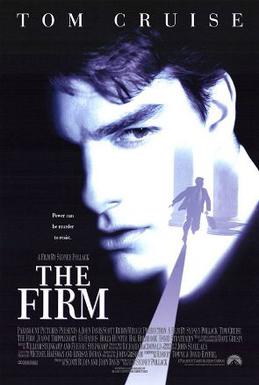
And yet their way of dealing with it was to double-down on control. It’s why I used a photo of the movie The Firm at the top of this post because there were many a day where I honestly thought I was living the advertising version of it.
But if truth be told, I knew even then there were some major red flags even in the interview process – and while I raised them – the money and the situation I was in, tipped my hand in their favour.
It was a lesson that ended up being very costly to me – at least emotionally – but it also was very useful and important, reinforcing the economic value of creative fulfillment.
Now I appreciate I’m hardly on struggle street and am perfectly aware of my good fortune, but in an industry – or maybe a world – where they suggest the only way to deem success is to continually earn more and more cash, the fact is that compared to the salary I was earning then, I’m literally miles and miles and miles away from it and yet I’m also light years ahead in terms of the happiness, creative fulfillment and strategic curiosity I get to enjoy every fucking day.
It’s not all their fault … but a lot it.
And I can’t deny some good did came out of the whole thing …
I got a new life experience of living in yet another country to add to my list of places I’ve lived plus I got the pleasure of meeting and working with some incredibly talented, good humans who are very much still part of my life today. But eve with that, I do look back at the overall experience less positively, ‘topped off’ by the way they tried to fuck with my future when I told them I didn’t want to keep working with them.
But here’s the thing that has left me feeling good about this chapter in my life …
When I was going to resign, I told a friend of mine who was literally earning a single digit percentage of what I was earning.
He knew my salary and just couldn’t contemplate why I would give up my job when – in his mind – I had hit the jackpot.
And I get it … I really do … but I had learned that when a company pays you that much money, it’s not about talent, it’s about control.
Some can do it, I absofuckinglutely can’t.
And while I don’t begrudge those who stick things out for a bigger future, I have to say I now look back and feel very fucking proud that the things that keep me energized and excited are the work, the standards and the values rather than the cash. That doesn’t mean I don’t want my experience to not be financially compensated for, but it does mean the work I do has a value to me that transcends just money.
Of course I get this comes from a real position of privilege – one not many get to enjoy – but it is also a privilege that I can say has cost me to attain … which makes a nice change.
So the point is, money is important, fulfillment is equally important … and too often we ignore that, thinking that the more cash we have the more life we have and I hate to tell you, but that does not actually equate.
So be careful out there.
Money is obviously very important, but loving what you do can change your life just as much.
And with that, you’re free from me till Monday. So have a peaceful time – but hopefully not as peaceful as a particular person out there – who I am thinking of and proud as fuck of. Hopefully they know who they are. If they read this bloody blog, hahaha. See you next week.
Filed under: A Bit Of Inspiration, Advertising, Agency Culture, Attitude & Aptitude, Business, Clients, Collaboration, Colleagues, Comment, Content, Context, Creative Brief, Creative Development, Creativity, Culture, Effectiveness, Egovertising, Emotion, Empathy, Experience, Innovation, Management, Marketing, Marketing Fail, Mediocrity, Relationships, Relevance, Reputation, Resonance, Respect

Imagine you go to the doctor.
You tell them your problem.
They diagnose your issue and prescribe meds.
“No …”, you say, “… that’s not right, you need to give me this”.
The doctor listens patiently then explains why their diagnosis and prescription is right for you.
You – with no medical knowledge or expertise – disagrees, and threaten the doctor with a malpractice suit saying, “I know my body so I know what’s it needs”.
The doctor says their diagnosis is based on what you have told them and what their examination of your body has informed them.
You tell them they have to give you what you want, then – despite keeping the doctor busy with your issue – you refuse to pay the full fee because you say you did all the work and other doctors are offering their services for less fee.
After lots of intimidation from you, they agree to the lower fee and you walk out with your new prescription.
Except a week later you become more ill because the meds you were prescribed – that you demanded – were wrong.
So you go around telling everyone the doctor who treated you was terrible and everyone should take their business elsewhere.
Bullshit isn’t it.
And yet, everyday … many companies do exactly this.
Going to the doctor and prescribing their own medicine.
Using procurement to bully their way to get what they want without realizing what they need.
Don’t get me wrong, ad agencies have a lot of issues … there’s a lot they can do better at … but knowing how to use creativity to connect and engage humans is not one of them.
Which reminds me of the time I did a project for the Red Hot Chili Peppers and they – well, specifically Anthony Kiedis – tried to do the same thing to me.
Just over 5 years ago,. I was asked to do some work for them by their team.
I did the work and presented it and he hated it.
In fact, hate is not a big enough word to describe how much he loathed it.
And me.
Was it bad?
Nope … it was simply a truth that his ego refused to accept and one I stand by to this day.
Anyway,, I was told I could present a response to his ‘comments’ so a few days later, I simply presented this:

Yep … that’s all I presented back.
One slide.
.
To be honest, my memory of what I had written was slightly different so when I saw this on my Facebook memories – it was quite nice to see the original work again,
That said, I do remember showing it my wife prior to presenting to see what she thought … and she said, “Hmmmmn, are you sure that’s what you want to do?”
Now normally, I listen to what she says as she’s much smarter than me, but this time I was adamant I was going to present it as is because of how personal, arrogant and just plain fucking rude he had been to me.
And the result of that?
Bonkers basically. He threw some big insults at me then hung up the call.
The next day I was fired.
And while you can say that is not commercially astute, I still wear it as a badge of honour … because while the other guys in the band couldn’t have been nicer, Kiedis was – and remains – a dick. [Which he futher demonstrated to a Guardian journalist who also questioned him on some home truths he didn’t want to akcknowledge – hahaha]
I was signed to work with Muse a week later. I don’t think this was a coincidence.
So while I am not advocating being an asshole to clients. I would also encourage clients who think they know everything about industries they’ve never worked in, to not be an asshole to those who have studied, worked and achieved the very things they are being engaged for in the first place. It’s why it’s worth remembering, even the best in the world have producers, coaches and mentors … because while the spotlight tends to shine on individuals, it’s the people in the shadows who make it better than they imagined.
_____________________________________________________________________________________
As an aside, the reason I am using that photo at the top of this post is very deliberate.
A few months ago a person I’m very close to suddenly suggested I shared ‘resemblances’ to the old TV character, House. I laughed but found myself casually mentioning it to a few other people who know me well who – much to my surprise – all enthusiastically agreed.
“Sarcastic” and “a bit of a prick” were a couple of the things uttered quite a lot.
And then, in a twist of fate that would suit any Hollywood story, I found myself in the US working with the original writer/runner of the show – the brilliant David Shore. At the end of our time together, I sheepishly told him what certain friends and colleagues had said and asked if he saw any shared traits from our time together.
He paused as if to gather his thoughts and then said what you read below.
[The redaction relates to the person we’re both working for who brought us together]
For what it’s worth, I think he’s being overly generous … but his last sentence nailed me … which means I’m less TV character and more greenhouse. ‘Transparent’. Damnit, ha.

Filed under: A Bit Of Inspiration, Advertising, Agency Culture, Attitude & Aptitude, Brand, Brian Clough, Comment, Communication Strategy, Confidence, Consultants, Craft, Creative Development, Creativity, Culture, Effectiveness, Empathy, Football, Grifting, Management, Marketing, Marketing Fail, Mediocrity, Nottingham Forest, Perspective, Planners, Planners Making A Complete Tit Of Themselves And Bless, Planning, Point Of View, Positioning, Process, Professionalism, Relevance, Reputation, Research, Resonance, Standards, Strategy, Success, Systems, Work
A little while ago, A few months ago, the ‘25/’26 Premiership football season started.
Following an incredible season the year before – which saw Forest get into Europe for the first time in 30 years – their first match was against our bogey team, Brentford.
We won. 3-1.
But this post isn’t about the victory … nor is it about the implosion of the team thanks to the ego of the owner and his disastrous and potentially ruinous hiring of Ange Postecoglou who, at this point, has not won a match in 7 attempts and has seen our European and League dreams already end because he’s shit, arrogant and never cared about Forest, just the money he would get from the job [can you tell I’m bitter?] – it’s about the goal Forest scored when Nuno was still our wonderful, beloved manager.
Specifically, THIS goal.
Now I should point out this post is not about the outrageously brilliant pass from Elliott Anderson to Chris Woods that allowed a goal out of nowhere.
Nor is it about how Chris Woods started sprinting towards goal before Elliott had even reached the ball, let alone made the pass.
It’s actually about what Chris Woods did next …
Yes, he scored, but it’s how he scored that I found interesting.
Truth be told, if it hadn’t been for a post-match interview with an ex-Nottingham Forest player, I may not have realized the significance … but when I heard him talk about ‘the successful strikers mindset’, I suddenly realized how valuable – and relatable – this could be to strategists.
You see in the interview, the ex-player – Gary Birtles – talked about how decisive Chris Woods had been when running towards the goal. How he had decided very quickly how he was going to deal with the on-coming keeper. How once he had made his choice, he was going to stick with it which, according to Gary Birtles, gave him an immediate advantage over the goalie. He went on to say how Brian Clough – the iconic and ridiculously successful Forest manager he played under in the late 70’s/early 80’s and someone I’ve written copious amounts about, over the years – had always told him this:
“When you’re in a one-on-one situation with the goalkeeper, make your decision immediately and don’t second guess it. It might not always come off, but if you wait or hesitate, you give the competition the split second they need to adapt and then you lose the opportunity of even having an opportunity”.
I love that.
I love that because it gets to the heart of what sometimes strategy needs to do.
Because contrary to what many say – especially those who make their money flogging for-profit systems and models – the reality is the ‘answer’ very rarely reveals or presents itself, you come to a point – once you’ve done the hard work and rigor – of making a call on what you think is best.
It may be to enable a fast result.
It may be to enable a more effective outcome.
It may be to enable a more interesting solution.
But at some point, you have to decide which side of the fence you’re going to jump on and back yourself.

We don’t talk about that enough.
We don’t talk about the importance of the independent mind.
We don’t talk about the value of experience, perspective and belief.
Right now, everything we talk about is systems, models and processes. And while there is a role in those – or at least some of those – if we are outsourcing all decisions and choices to that, then not only should we be asking exactly what the fuck we’re adding to the outcome, we also have to ask why on earth we think we’re going to get to a different outcome that every other fucker following the same one-size-fits-all, the-computer-told-me-to-do-it approach.
Look, I appreciate what we do costs a lot of money.
I also appreciate that means companies are seeking more and more certainty in their lives.
But while some may say allowing someone to make a call on what should happen next is a sign of insanity, I’d argue the crazier thing is to do nothing and let others make the choices and decisions for you.
Sure you need to have experience.
Sure you need to have put in the rigor and work.
But at the same time, you can’t play to win, if you follow a system designed to play not to lose.
Given all the gurus in our industry flogging their system on how to do the job – despite having never made any work of note – it probably can’t hurt to repost a talk I did years ago about what we can learn from Brian Clough about how to ‘win better’.
Filed under: A Bit Of Inspiration, Advertising, Agency Culture, Apathy, Aspiration, Attitude & Aptitude, Brand Suicide, Collaboration, Colleagues, Comment, Communication Strategy, Community, Consultants, Creative Development, Creativity, Culture, Politics, Professionalism, Respect
I saw the below image recently and it got me thinking about how it is a perfect representation of how most – but not all – ‘multi-agency’ relationships really work.
As I said, it’s not always the case, but it increasingly feels ‘the norm’, often influenced by a procurement process that places more importance on ‘who will do the most for the least’ rather than who is best equipped to lead.
Just for the record, I’m all for collaboration.
Done properly, it is a powerful way to achieve incredible things in collapsed time.
However to stand a chance of achieving this needs a lot of careful thought and pre-planning.
For a start, you need to ensure the people in the room all have similar standards, experience and seniority or you end up only being as good as the least experienced person in attendance.
Or the loudest voice.
Too often there is a view that all you have to do is shove different organisations inside a room and tell them to get on with it.
And while companies do want the best for their clients … they all have their own agendas, definitions, remuneration structures and egos and to expect that to all be put aside because you want them to work together is naive.
It’s why curation, transparency and clarity on the ultimate goal are vital in enabling a strong outcome … but the problem is too often, collaboration is used because of timing pressures rather than seizing opportunity, which is why so much of what comes out of it feels like the worst of ‘committee thinking’.
When it works, everyone wins.
When it doesn’t, everyone – at best – stands still.
Of course, with companies increasingly turning to AI to ‘optimise’ every element of their business, the future of collaboration will be through bots rather than people. And while that may be music-to-the-ears of leaders who view employees as an frustrating expense … the result of this will be even more ‘lowest-common-denominator thinking’ because in the World of AI, everything is a summary of something else – whereas with well-run human collaboration, it doesn’t conform to where we’ve been, it builds to where we can go.