
Filed under: A Bit Of Inspiration, Advertising, Agency Culture, Attitude & Aptitude, Colenso, Colleagues, Comment, Communication Strategy, Creative Development, Creativity, Culture, Cynic, Empathy, Honesty, Marketing, Media, Perspective, Planning, Point Of View, Provocative, Relevance, Resonance, Wieden+Kennedy
This blog has been going for a loooooooong time.
Which means, it’s had its fair share of April Fool posts.
Some have been very good [even though I say it myself] with different industry people picking it up and commenting on it thinking it’s real.
And some being utterly, utterly shite.
But this year I decided not to do one.
Not because I couldn’t be bothered.
Nor because I couldn’t think of what to do.
Not because it was an Easter holiday on April 1.
But because after a while, it just becomes a bit boring.
I say this because a lot of brands don’t seem to get that. Instead, they keep doing the same thing over and over again without realising the audience have moved on.
That might be because of ego. That might be because of a lack of self-awareness. That might be because they don’t even know who the fuck their audience is … but whatever the reason, they keep doing what they do regardless.
And one of those things they keep repeating is ‘hijacking culture’.
By that I mean either during or after a topical event … they hire a van, slap a billboard on the back, put some headline on it that refers to whatever event they are ‘leveraging’ and then drive back and forth so a photographer can snap it in situ and then send it to the press or put it on the socials.
Hey, sometimes it’s really good.
But often, it just feels pretty sad.
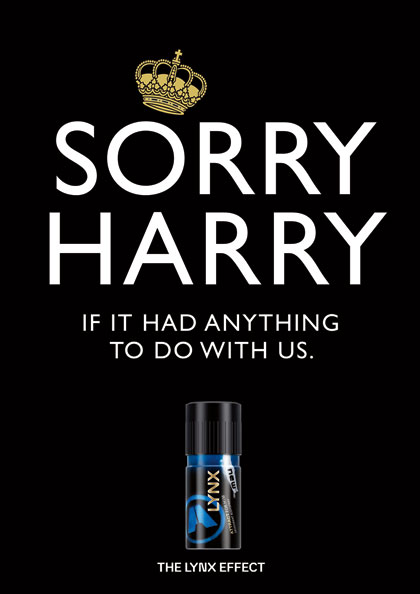
Especially when lots of companies are all trying to do exactly the same thing for the same event at the same time.

Look I get it … it’s a way to get boost attention.
It’s also a way to show your client – or their bosses – you’re ‘on the ball’.
Can’t criticise that … except in many cases, it also seems to have a subliminal admission that they need to borrow from others to make people care about them.
Which is less good.
Yes, I know I’m being a bit of a pedantic asshole here, but here’s the thing … when people expect brands to do this stuff, then you have to accept that you’re no longer ‘hijacking’ anything, you’re simply conforming.
Of course there are ways to do it well.
Wieden were the masters and – arguably – the originators of it.
Which was basically to do stuff that ‘added to the cultural conversation, not just stole from it.
They did it with NIKE for literally decades.
Olympics.
Superbowls.
World Cups.
Winning.
Failing.
Achievements.
Retirements.
Fines.
Spectaculars.
But achieving it wasn’t simply down to great talent, great clients or being quick at doing stuff like this, it was down to 3 things.
Creatives co-run/run the account, not simply make the ads.
They understand the culture around the category, not just the category.
They think in terms of owning the brand voice, not just launching campaigns.
What the combination means is everyone feels there role and purpose is more than just making advertising, but finding how … where … when and who the brand can/should a voice and point of view. It’s more than just being pro-active, it’s a confidence in your preparation.
You know what the brand will say.
You know how the brand will say it.
You know what the culture of the audience want and need.
You’re moving things forward because you’re always moving things forward. Seeing your role as far more than simply fulfilling ‘campaign requirements’ and ‘unexpected opportunities’ but directly and continually driving, shaping and influencing the behaviour and energy of the vision and role of the brand in culture.
Many people will say they do that, few do.
Instead they just churn out stunts or puns that often end up being more for the ego of the people involved than the benefit of the audience it is supposedly for.
Which is the heart of what, in my opinion, separates brands/agencies who get it and those who pretend they do.
Because the wannabes and imposters talk about how they will make the masses love their brand, whereas the real deal know it’s about the brand showing and expressing who they love and who they are for.
Filed under: A Bit Of Inspiration, Advertising, Attitude & Aptitude, China, Chinese Culture, Wieden+Kennedy, Youth

I want to write about something I’ve been thinking a lot about recently.
I turn 54 this year and if truth be told, the life I have is more than I ever could have imagined.
While I’ve worked hard for it, I also accept that I’ve had more than my share of luck.
Right place, right time.
Meeting people I should never have met.
Having some disproportionally believe in me.
Mates who went on to become important in their job.
Basically, a bunch of stuff you can’t really plan for … though if I have any skill, it’s been to be able to run with it and invest in it rather than stop.
Which basically translates to working hard, staying in touch, always being interested in stuff and constantly looking or thinking for new ways to help them win better – even when they don’t want it – hahaha.
It’s a work ethic that frankly was driven by survival and ambition.
Survival … because I knew I couldn’t win on brains – especially having not gone to university – but I could compete on effort. And ambition … because I knew I wanted to see what was possible, even though I didn’t have a plan and didn’t have any idea what ‘the goal’ could be, would be or should be.
I say all this because recently I got asked what advice I would give to someone starting out who doesn’t know what to do and I realised I didn’t really have an answer. Part of it is because my context is about as different as it could be for someone starting out … but also because I wouldn’t want to give advice, I’d like to listen why they feel they don’t know what to do.
But that said, I think their attitude is kind-of brilliant.
Of course I appreciate they don’t feel that way – quite the opposite – but that’s more because of what society and social media has done to make them feel that if they don’t have a plan, then they’re lost … and not only is that shit, I think being open to stuff is the best way to approach life.
That’s not just because we no longer will have one career for our whole lives, but because if you’re open to everything, then anything can happen.
Frankly that last point is one of the driving forces behind everything I’ve done and hope to do … and while I appreciate there’s privilege in that approach and attitude, it is also about openness and comfort with a degree of uncomfortableness.
But I get it is scary.
It’s hard to think of things you may lose … but as I’ve said many times, the other way to look at it is in terms of what you will gain, and literally everything in my life – bar my relationship with Paul – is because of this.
That doesn’t mean it’s for everyone, but it might be for more people than who actually do it – but don’t because they are paralysed in this grip of feeling they should have certainty for their life when the real power is to embrace the lack of it.

I say all this because I was recently on a podcast about this subject called Work Without Borders.
It was a real thrill for me because it was founded by an old Wieden Shanghai colleague – Flora – and her friend, Calvin, which meant I got to talk about very special times in China and beyond.
Listening back to it, I realise how fortunate I have been.
From having parents and family who backed me and encouraged me, to companies being willing to take a chance on me … which is why I hope anyone who listens to it doesn’t think I am suggesting they should be like me, but to be be open to whatever the fuck speaks to them.
And while I appreciate some may be in situations where they have responsibilities that directly influences what they can/can’t do – which means what happens may be different to what they hoped it would be – I believe they will still end up with experiences and lessons they wouldn’t get if they simply followed what everyone had blindly – or meticulously – done before.
You may ask how I can say that … and it’s relatively simple.
Because what companies called ‘the great resignation’ was actually ‘the great reset‘.
Where millions realised the path they had been made to feel was the only path they could follow, was taking them to the exact same place as everyone else.
A place of conformity and pressure rather than curiosity and possibility.
And while there are no guarantees in life, fulfilment is born from openness, not closed mindedness which is why I will always love this quote by Peter Ustinov:
“People who reach the top of the tree are those who haven’t got the qualifications to detain them at the bottom”.
How good is that? God I love it.
Which is why if you’re worried because you don’t have a plan – remember this.
Some people have advantages.
Some people have a plan.
Some people have luck.
But we’re all making it up. Every single one of us.
So while clarity can be a powerful beast, not having it doesn’t also mean it’s bad.
In fact, if you embrace it, you may just find it can take you to even more amazing places.
Filed under: A Bit Of Inspiration, Advertising, Attitude & Aptitude, Authenticity, Brand, Cannes, China, Comment, Complicity, Context, Creative Brief, Creative Development, Creativity, Culture, Differentiation, Distinction, Effectiveness, Honesty, Imagination, Marketing, Martin Weigel, Metallica, Nike, Paula, Planners, Point Of View, Provocative, Succession, Uncorporated, Wieden+Kennedy

When Tiger and Nike recently ended their relationship after close on 3 decades, there was a lot written about why.
Hot takes.
Wild ideas.
Conspiracy theories.
But among them all was a post by Tom Bassett – a brilliant ex-Wieden strategist who was there when so much of what became Nike folklore was written.
The reason his voice stood out is because it wasn’t WHY the relationship ended, but why it started.
At the heart of his story was the brief Phil Knight gave for NIKE Golf.
He said: “Get NIKE to be #1 in golf or we get out the category all together”.
Having had the errrrm, pleasure(?) to meet and present to Mr Knight a few times, I can literally hear him saying/barking this … and what I love about it is the stubborn, blinkered ambition.
We seem to live in a world where the majority of conversation is around optimization … efficiency … brand assets … and basically how to get the most out of what you’ve got.
There’s nothing wrong with that, except it’s all about not being wrong than being as good as you can be.
Or said another way, being comfortable with what you’ve got as opposed to being impatient for what you want to have.
Get to #1 is a proper goal. One where the evaluation criteria is very fucking simple.
No hiding behind incremental growth or internal metrics … #1 is a criteria that dictates decisions and investment rather than the other way around.
Sure, there are ways #1 could be reframed in an attempt to look like you’re doing better than you are . Let’s face it, we see this sort of shit in the ad industry all the time, especially around award time … but Phil Knight wasn’t about skewing results but going right at them … which is why he didn’t place any additional burdens on how to achieve goal, other than demand it was true to the sport and how NIKE see’s the athlete.
Sounds easy, but it isn’t.
To do that takes a lot of confidence.
Confidence in who you are … confidence in your team … confidence in what your company stands for and confidence your company is full of people who know what that translates to in terms of behaviour, consideration and action.
And that’s why we often undermine the value of confidence and right it off as bravado.
Of course it can be that, but it is also about trust, experience, knowledge and openness.
As a chef once told me when we were doing Tobasco research at W+K, “the more confident the chef, the less ingredients they use”
And that’s why I love the clarity of Phil Knight’s objective.
He could have added a million mandatories, but he knew that would add a million reasons why his objective would then be almost impossible to achieve.
At least in a realistic timeline.
Which is why, as difficult as the objective was, he increased its chances of success by being clear as fuck and – to a certain degree – open as fuck. Enabling the team to not just tackle the project head on – rather than tap-dance around politics and restraint – but to also place responsibility back on the company in terms of what it needed them to do to help make it happen.
Not just in terms of money, but action and change.

It is one of the many reasons why I loved my time in China … why I loved Branson’s brief for the Virgin lounge … why I love working for Metallica and Mr Ji.
Sure, in China’s case, it was often more the ambition and scale than the clarity … but for the others, it is/was the single-minded, stubbornness of their objective, the trust they placed in the people they were asking to help them do it, the commitment of the whole organisation to give it the best chance of making it happen and the willingness to walk away rather than accept a poor substitute of what they wanted to change.
We need more of that.
Creative work would be more amazing for that.
Effectiveness would be more powerful for that.
But sadly we’re in a world where it’s all about hedging bets, outsourcing responsibility and managing internal politics rather than being focused, fierce and open on creating change.
Proper change.
Real change.
Massive change.
It all kind of ties in with the ‘Strategy Is Constipated, Imagination Is The Laxative’ talk Martin, Paula and I did in Cannes last year.
The obsession with playing to the process while being continually outsmarted by those who are focused on enabling the possibility.
And while some claimed we were being irresponsible, unrealistic and even unprofessional in what we were saying, the reality is we have – and are – in the incredibly fortunate position of working with brands/people who prove the most responsible way to create powerful and lasting change is not by hedging your bets, but being willing and open to fight for it all.
Filed under: A Bit Of Inspiration, Advertising, Agency Culture, Attitude & Aptitude, Audacious, BBH, Colenso, Colleagues, Comment, Confidence, Creative Development, Creativity, Culture, Management, Marketing, New Zealand, Provocative, Relevance, Resonance, Ridiculous, Wieden+Kennedy

I’ve always had a love/hate relationship with advertising awards.
Of course, it’s nice to have them … but for me, it’s always about who you are competing against and who the judges are who are deciding them.
Oh, and whether those who have won before, won with real work or ‘ultra-niche, ultra-limited edition’ one-offs.
Also known as scam.
You generally can tell when that shit happens because they tend to either:
1. Be a one-off from the clients normal approach to work.
2. Be a one-off from the normal output of the agency.
Fortunately, it is less than it used to be, but still more than it should.
That’s why the agencies who do it properly deserve more credit.
To win awards as a byproduct of the work you make rather than it be the focus of the work you make, is a noble cause.
There’s more of them than we often give credit for … and you can generally tell who they are by how long they’ve been able to play at that level.
A few years ago, I wrote about how W+K and BBH were brilliant examples of this.
How they proved the old adage ‘it’s easier to get to the top than to stay there’.
And it’s so true.
Because without wanting to take anything away from anyone who does well, being able to do it consistently is an even greater achievement.
I say this because I think Colenso is one of these places.

For over 50 years, we’ve consistently made work that has been recognised by the best in the world as some of the best in the world.
NZ has tended to do very well in this area … DDB, Saatchi, Special to name a few … but few have done it with the longevity and sustainability of Colenso.
And a big part of that is because of the culture it cultivates.
From our approach to the work we make to the people we hire to make it … at the heart of everything is a deep love and respect for the power of creativity.
Lots of people will say that.
Lots of agencies will say that.
But you find out who means it through the work that they consistently make.
And that is – like all the places who consistently do good stuff – one of the traits that reveal who we really are.
That doesn’t mean we’re the easiest place to work.
Because even though the place is full of good and talented creative people … it’s also a challenging, demanding, opinionated and provocative environment, because ultimately, we have 50+ years of standards and expectations to honour, live up to and try to push further.
As the picture at the top of this page – from 934843049 years ago – shows.
But what’s interesting is how we want those standards and expectations to manifest.
Because it’s not about playing to be accurate, it’s about doing the right thing in the most interesting, original and audacious ways.
Do we always get it right?
Nope.
But we always strive to get it right and that’s why we are consistently awarded at the highest level for work as varied [and effective] as turning beer into an alternative fuel for cars, creating a radio station for dogs, getting Rick and Morty to explain green energy to youth culture and making a radio campaign that doubled as an outdoor campaign that asked New Zealand to make a radio campaign … to name but a very few.
And while this post sounds unbelievably corporate toady … it’s my way of paying homage to my colleagues and, especially, my partners.

Now I could wax lyrical about Si – our CCO – because he’s not just horribly talented, he is possibly the nicest human I’ve ever worked with.
[Well, I say nice, but he has his moments of evil – but even then, he manages to deliver it with a niceness that makes every Disney character look like a bunch of pricks]
But the reality is, you’d expect the leader of Colenso to be brilliant … otherwise why the hell are they here.
Which is why who I really need to acknowledge is our MD – Ange – because she’s the Ringmaster of the whole Colenso circus.
It can’t be easy.
Not just because she has to deal with me – let alone sit next to me – she also has to work with a bunch of people thinking up ridiculous ideas that challenge and confront on every level.
Not just creatively … but in terms of time, simplicity and possibility.
Yet she manages it.
More than that, she would fight for the death to maintain it.
Which is why the thing that is often forgotten about the agencies who consistently make great work is not just the people behind it … but the people who make it possible.
The people who create the conditions for it to thrive.
From the MD’s and finance people to the IT and support staff.
But – and here is the critical thing – it’s more than them just doing their job well, it’s them doing their job through the lens of what the whole company is striving to do.
Because to paraphrase that famous story of the janitor who met President Kennedy …
They’re not working in a vacuum, immune from the needs and ambitions of everyone around them… they’re helping make the most audacious ideas get out the door.
Here’s to all of them. Every last fucking one of them.
With that, the first month of ’24 is done. And I can tell you, I’m as surprised as anyone that I decided to finish it in such an earnest, generous way.
Let’s hope February is less nice. Even I feel sick with it.
Filed under: A Bit Of Inspiration, Advertising, Agency Culture, Attitude & Aptitude, Comment, Complicity, Confidence, Context, Creative Development, Creativity, Culture, Differentiation, Distinction, Effectiveness, Innovation, Insight, Linkedin, Marketing, Marketing Fail, Mediocrity, Planners, Planners Making A Complete Tit Of Themselves And Bless, Planning, Relevance, Standards, Strategy, Trust, Wieden+Kennedy
There is a lot of talk about a new term in marketing, called ‘UBR’.
UBR stands for Universal Buying Reason and there’s a lot of people seemingly wetting their pants over it. In essence, UBR is when a brand owns a position within a category that arguably, anyone within that category could have had, but they were first or the most consistent or invested in making it their or were simply, the biggest spenders behind it.
If you’re thinking this is not exactly new, you’d be right … but many people seem to be more obsessed with being associated with new terminologies or methodologies than actually making stuff that pushes brands and business to new places.
That’s why UBR feels like the next terminology trope in a long line of terminology tropes …
Brand Assets.
Brand Eco-Systems.
Global Human Truths.
Overly simplicitic labels that promote conformity under the guise of effectiveness or efficiency.
[And yes, I know Dan Wieden used to talk about Global Human Truths … and as I told him, he was wrong. Because while all Mum’s may love their kids, a Mum in Wuhan shows it in very different ways than a Mum in Washington, and to ignore that nuance is to ignore truth for convenience and complicity. And as anyone worth their salt will tell you, often it’s the nuance that is the difference between doing things for people or about them]
Of course, like all trope trends, there’s some value in what is being said about UBR – after all, its hardly a new concept given countless brands and categories have used this approach for literally decades, from alcohol to jewellery.
But what some of the people pushing UBR are seemingly forgetting – or not understanding – is that even at the most functional level of category marketing, it requires depth and consideration to fully release its potential … and frankly the lack of discussion about that highlights the industries obsession with providing clients with easy answers/solutions rather than encouraging/pushing/provoking them to appreciate the rewards [and shareholder benefit, let alone expectation] of putting in the hard work to identify how they can consistently build their value, role and position.
What scares me most is that some of the people ‘fluffing UBR’ – but thankfully not all – are in jobs where they’re paid to help clients with their business … and yet they talk in incredibly generalistic and simplistic terms about something that has context and complexity.
Where the hell is their objectivity?
Where is the understanding?
Where is the nuance?
It all feels like a desperate play to be seen as an industry thought leader, where the goal is to highjack whatever seems to be getting industry traction and then aligning themselves to it.
What’s worse is we’ve seen how this approach works as more and more people value and aspire speed and status over substance and experience … and I don’t really care that makes me sound old, because it actually has nothing to do with age, and everything to do with valuing what our industry can do when we do it with craft, understanding and ambition.
What sums it all up [for me] is how one of the brands the UBR advocates bang on about is Tesco’s.
I get why, because on face value, Tesco’s is a supermarket like every other supermarket.
But …
All it takes is a quick look at Tesco’s history – from their foundation in 1919 through to the many acts and actions they’ve embraced and led over 100 years, from the ‘computers for schools’ program to challenging EU law to give their customers access to products at the same price as their European cousins and a million things in-between – and they’d see the ‘Every Little Helps’ position is not something ‘anyone’ could say, but something far more specific to them specifically … something they’ve continually reinforced and invested in through retail, customer and cultural innovation as opposed to just the repetition of a category trope.
It’s yet another example of people needing to know their history before they can claim they’re creators of it.
Or – said another way – why clients and the industry at large, need to get back to valuing those who have DONE and DO shit, rather than just talk it … regardless how popular or well-meaning they may be.
[OK, ‘talking shit’ is harsh, but it sounded good in that sentence, so forgive me]
Don’t get me wrong, I’m all for pushing knowledge and possibilities, I’m just not for people putting lipstick on a dead sheep and calling it Ms World.
And don’t get me started on how many of these people are ultimately downplaying someone else’s creative excellence to make it all about them.
Wow, that’s like a rant from 2010. Felt good. Thanks industry trope for waking me up.