
Filed under: Agency Culture, Apathy, Attitude & Aptitude, Black Lives Matter, Comment, Complicity, Creative Development, Creativity, Culture, Diversity, Environment, Prejudice

Robin Bonn recently talked to me about what I’d learned about diversity from having lived in so many countries.
To be honest, I was quite apprehensive to do it as I wouldn’t want to suggest I have all the answers or I’m doing it well … however the issue of talent diversity, or more specifically, hiring, championing and elevating People of Colour is nowhere as prominent as it was – or it should be – which is why I agreed to do it.
Not because I have any influence over the industry, but I have real anger about it.
More than that, I feel I have a responsibility for making up for not doing enough, sooner.
And while there’s stuff I am continuing to learn – and stuff I believe – there’s 3 things that I’m absolutely certain about:
1. When you open your eyes, you will see talent literally everywhere.
[and if they don’t come, that says more about how you operate and have acted than them]
2. You need to be impatient and stubborn about making things happen
3. Take personal responsibility for stuff rather than wait/rely on a corporate policy to do it.
As I said, I feel very conscious that as a privileged white male who has not had to suffer to be given chances or taken seriously, I do not and cannot claim to be an expert on issues my lived experience has shielded me from ever having to deal with – even with the honour of living in countless countries around the world.
However I can say the claims of companies wanting DEI is not working – not as it should – and I believe a big part of that is the attitude we have going into it, the policies we create to manage it and the overall approach to why we need it – and all those issues are down to white leadership not People of Colour.
And, to be clear, we need their talent and way of looking at the world.
Not just for relevance but creative possibility, influence and impact.
Personally I think they should just come together and leave us in the dirt.
We deserve it.
But they’re more generous than that. They’re also more dynamic given everything interesting in modern culture originates from them and their creativity.
So while I don’t normally ask you to listen to anything I say, this time I do.
Not because I want it to be about me, but because what you might be able to recognise and change.
And the irony of it all is we all win if we do it.
All of us.
Especially our increasingly stale and out-of-touch industry where we continue to use acronyms like BAME without thinking for a second what we are doing, what that is saying and we are defining.
You can listen to it here and if you want to hear more stuff I’ve learned from the journey I’ve been on, then these posts may be of interest … acknowledging they were born from the lessons from the brilliant and generous people I met rather than anything specifically from me.
__________________________________________________________________
Your perspective is not everyone’s perspective.
[you could also check this one out or this]
The odds are not fair.
It’s not enough to hate racism, you have to fight it.
Agencies are still trying to colonise.
Why we should be more like The Blues Brothers.
Whose house are you asking people to come in?
Don’t let your ego fool you into thinking you know stuff.
Convenient excuses to keep things the same.
Own your own shit don’t ask those you have held down to help you clean it up.
Make space, or we die alone.
__________________________________________________________________
And if you want more, let me know.
I have a bunch of stuff … from our books America in the Raw, China Misunderstood and Dream Small … through to other people, stories and resources I’ve been lucky enough to find or be a part of.
As I said, I don’t have all the answers.
And I certainly make a lot of mistakes.
But I am committed to making up for lost time because I hate that some of my actions of the past – while never intentional – will have added to the situation.
And I owe that to a lot of people for the faith they showed in me. And my hope for what I want to help enable for others.
It’s down to us. Not down to others creating HR policies for it.
Filed under: A Bit Of Inspiration, Advertising, Airports, Art, Attitude & Aptitude, Australia, Authenticity, Childhood, Comment, Content, Context, Creative Brief, Creative Development, Creativity, Culture, Empathy, Fake Attitude, Humanity, Imagination, Marketing, Marketing Fail, Mediocrity, Point Of View, Provocative, Qantas, Relevance, Reputation, Resonance, Respect
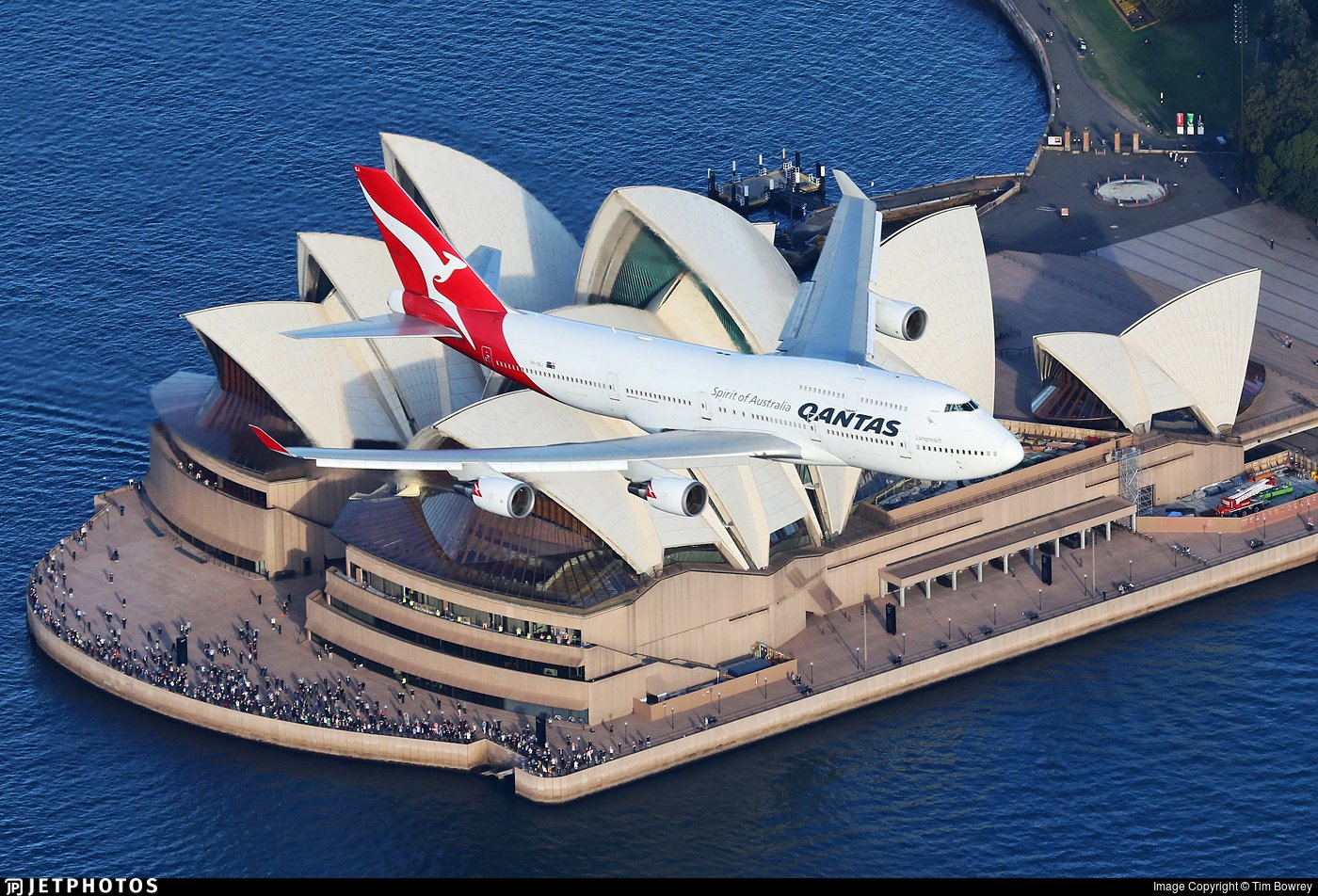
Many years ago – 2009 to be precise – I wrote a take down of Qantas, the Australian Airline.
It wasn’t about their experience or service which – back then – were pretty good, certainly much better than they are today. No, it was about the lyrics to their ‘iconic’ song, ‘Still Call Australia Home‘.
Now I appreciate I’m a Brit.
I appreciate that, at the time, I had an agency called Cynic, so was full of piss and vinegar.
I even appreciate – as my Aussie wife reinforced to me in no uncertain terms – that the song and Qantas’ advertising was pretty special for Aussies so maybe I should shut the fuck up.
And that is good advice. Except 15 years later, I’ve decided to come back with a comeback.
You see recently I saw an ad for another Australian icon …
The difference being this one is worthy of that label annnnnnd – even more significantly – they’ve made a piece of advertising that ignites all the emotion, pride and Australian spirit that Qantas would possibly sacrifice their ‘never had a crash’ reputation, to achieve.
[Please note, this is simply to emphasise the point. I get it’s not a great turn of phrase. And I obviously don’t mean it. So if you prefer, simply replace it with: “… that Qantas would allow themselves to be embroiled in even more financial scandal, to achieve”. Better? Oh god … there’s no pleasing some people is there!]
Anyway, if you’re wondering what I’m talking about, it’s this from the Sydney Opera House for their 50th anniversary.
[Though while it’s being shared a lot at the moment, it actually came out about 8 months ago]
I love it.
I love it so much it made a cynical Brit emotional.
Sure, I have an Aussie wife … a ½ Aussie son … Australian residency and was even a member of the audience in a couple of the historic scenes they show in the film … but I’ve never, ever felt that way about a Qantas ad.
Not once.
Hell, I don’t even like Tim Minchin – the guy who leads every thing in the ad – and yet I still felt connected to the spot.
Part of it could be because The Opera House was to me, a symbol of Australia, decades before I moved there.
I still remember how overawed and overwhelmed I was when I first saw it for real. This incredible place whose image had been burned into my mind from years of seeing it on TV shows, in magazine articles or just everyday imagery.
But it’s more than that, it’s what the place signifies.
The story that underpins the whole film.
A true story.
One where the quest to do something different triumphs over the demands to control and conform. An ode to the majesty of imagination and art rather than the adherence of tradition and regulation.
It all feels – ignoring the fact the Opera House was designed by the Dane, Jørn Utzon – much closer to the ‘Aussie spirit’ than anything Qantas has ever done.
A salute to those who wish to push and challenge rather than seek the comfort of being back ‘where they’re comfortable’.
Now I appreciate that maybe that spirit is more confined to the past than the present.
One look at how the vote for ‘The Voice’ turned out reveals comfort, convenience and control are the words of the day.
But that aside, it’s a very special film.
Helped by the fact the Opera House is a very special place.
Not just for Australia, but for anyone who hopes for something a bit more.
A bit more personal.
A bit more emotional.
A bit more wonderful.
And if you need any more reason why you should love the Opera House far, far more than Qantas … let me tell you, even the Opera House’s cheapest seats offer more leg room than pretty much anything you’ll get on that airline.
Filed under: A Bit Of Inspiration, Advertising, Agency Culture, Attitude & Aptitude, Brand, Business, Comment, Corporate Evil, Creative Brief, Creative Development, Creativity, Culture, Dad, Effectiveness, Loyalty, Management, Marketing, Marketing Fail, Perspective, Professionalism, Relationships, Relevance, Reputation, Research, Respect, Stupid

One of the things I find fascinating is how everything these days is ‘a sprint’.
The urgent need for an immediate solution to enable a brand or business to move forward.
Except it’s not true is it? Not really.
I mean – I get that there are occasions where circumstances demand an extremely quick response.
A terrible event.
A moment of opportunity.
An act forced by an aggressive client.
But in the main, these ‘sprints’ have nothing to do with that.
They’re for a new product launch.
A brand campaign.
An annual event.
If they need a sprint for those, then surely that means they haven’t [or just as likely, their bosses, bosses haven’t] got their shit together because those things don’t ‘just happen’ do they? It’s not like the Paris authorities are going to wake up on the 1st of July and suddenly realise they have to hold the Olympics in a few weeks time so need construction companies to engage in ‘a sprint’ to knock up a few stadiums in time.
Now if my Dad was alive and found himself in this situation he would say – as I often heard him tell clients who had failed to plan appropriately – “your emergency is not my problem” … however in adland, we tend to jump in and try to help.
Yay us!
Except quite often, when we do this, we’re made to feel like we’re the reason they’re in this mess and so rather than see us as someone trying to help, we’re seen as someone holding them back.
It’s so weird.
Even more so when they then question our hours and fees.
Which is why my attitude is that unless there is a real reason for the urgency – and a respect for what you’re asking people to do – you should probably say no. I get it may be unpopular, but you’re not going to win in this situation.
And don’t get me started when companies brief agencies before a major holiday.
OH MY GOD.
I used to see this in China a lot … and we [as in Wieden Shanghai] would always say no.
Sure, if it was a client of ours who was in a pickle for legit reasons, we’d do all we could to help them … but if it was about ego or mismanagement, we’d politely decline.
And yet, from what I see and hear from others – and occasionally experience – this situation seems to be happening more and more often … the defecto rather than the exception.
What’s even more bizarre is that the supposed urgency for a solution gets more and more delayed as additional contexts, mandatories, and approval processes get added to the list of deliverables … resulting in you wondering how urgent this really was as a supposed ‘sprint’ turns into a marathon.
Of course, the reality of these situations is it’s actually about money and time.
Or said another way, the desire to reduce it.

I get it, developing work can be time-consuming and expensive … but here’s the thing, shortening the time doesn’t automatically mean it makes it the work better.
Cheaper, maybe.
But not better.
In my experience, there are 3 main reasons this situation continually and persistently occurs:
1. The client doesn’t value creativity.
2. The client doesn’t understand creativity.
3. The client doesn’t actually know what they want or need.
For far too many, creativity is seen as expressing what you want people to know about your brand/product before adding ‘some wrapping paper’ around the messaging to make it ‘creative’.
I’ve talked about the folly of this ‘wrapping paper’ analogy before … but that perspective continues to grow. Worse, some agencies actively reinforce it in an attempt to show ‘they get the client’ or they ‘get business’, all the while undermining their single most valuable asset.
Which means that maybe they don’t know business as much as they think.
Don’t get me wrong, it is entirely possible to spend too much time on something. But there sure-as-hell can be too little. And when you’re dealing with someone who doesn’t know what they want – so use creativity to try and work it out and then judge it as if its your fault – then any length of time is too much time.
And yet it feels like ‘quality’ has now become defined by the speed it takes to create rather than the effect it creates … often reinforced, as I said a couple of days ago, by ‘for profit’ research companies and gurus who focus on clarity not interest.
No wonder so many clients are asking agencies about what their AI approach is.
Now as I said at Cannes, I think AI – and tech as a whole – offers a whole world of possibilities and opportunities for brands to evolve, grow and connect. Hell, we just did it with our Pedigree Adoptables campaign that literally wouldn’t be possible without it. But that’s not what a lot of clients mean when they ask that, they’re looking for cheaper and quicker output. Optimising the optimized.
The great irony of this is that when you talk about AI affecting their business – especially if the competition embrace it against them – many react like you’ve just tazered them.
They’ll say there’s no comparison.
That their product price-point is based on the value of their expertise, craft and innovation.
And for some, that’s true. But it’s some … not all.
Which is very similar to the post I wrote a while back about how many brands like to think of themselves as premium, but their actions and values are all about how cheap they can be.
A while back I spoke to someone who is one of the most influential luxury expert in the world.
They own, invest and consult with the best of the best … new and old, classic and innovative.
And they said to me they believe the future of luxury will be about recognizing the value of humanity.
The custom, craft and care.
Because in a world that is increasingly about speed, scale and optimization, the brands who will command the greatest value, influence and price will be the ones who offer their customers the most human interaction, engagement and service experience.
It’s a fascinating thought … one that could separate the real from the wannabes.
Or, said another way, the companies who those who talk about valuing their brand and audience and those who actually do. Because one only cares about the sprint, where others appreciate the jog.
Filed under: A Bit Of Inspiration, Advertising, Attitude & Aptitude, Authenticity, Comment, Creativity, Culture, Insight

A few years ago, the APG asked me to do a presentation about how to get to interesting work and I summed it up by saying, ‘live an interesting life’.
While I appreciate that is a relatively superficial answer, there’s truth in it.
Put simply, what you find interesting is directly related to the experiences you have and the people you meet. The more experiences – and people – you have, the more interesting the possibilities.
But when I look around, it can feel like a cultural echo chamber.
Everyone reading the same things. Following the same people. Commenting on the same issues.
Sometimes I wonder if people even look at life outside of work. Hell, there were people over the festive season who used social media to only talk about ‘ad issues’.
WHAT THE FUCK?
Look, I get strategy means everything can have some sort of professional value … but there’s a big difference between looking at life with ‘professional blinkers’ and just doing shit for the sheer curiosity and interest of it.
It’s why I think there’s huge value in the messy stuff.
The weird … the strange … the ‘makes no sense’ …
That’s where you find the new and the different.
That’s where you gain understanding rather than answers.
That’s where you learn about people not ‘consumers’.
Of course it’s rare these days.
Now everyone is looking for short-cuts.
From online surveys to AI driven chat bots.
Optimise … maximise … squeeze every inch of efficiency out of what you’re doing.
And while some of that has value, it’s no where near as good as running with reality.

It’s why Wieden – despite being all about the work – has always been so good at strategy.
Because they celebrate those who are more than just professionally curious, but culturally.
The people who have a hunger and desire to get ‘in it’.
To get messy and lost in the opinions, behaviours, actions, viewpoints and nuance of the communities and subcultures they’re exploring and working with. Which is why they value being among them as much as reading every possible book about them.
A commitment to authenticity over advertising.
A commitment to adding to culture not just stealing from it.
A commitment to finding the interesting rather than repeating the tropes.
A commitment to fucking around and finding out rather than playing where you’ve always been.
Sure it takes more work. Sure it takes more time. Sure it probably adds more initial cost.
But putting aside the fact this helps get to better work – that plays to where the culture/subculture is heading rather than where it currently is, or worse, was – there’s the simple fact of doing things right. Because, as my Dad once said to me, if you’re not interested in doing that, then what’s the fucking point of doing it at all?
Filed under: A Bit Of Inspiration, Advertising, Attitude & Aptitude, Comment, Communication Strategy, Content, Context, Creative Development, Creativity, Culture, Effectiveness, Marketing, Marketing Fail, New Zealand, Nike
There’s been a lot written and said about brand assets over the years.
A lot of claims and over-promises.
Hell, careers have been made from being a cheerleader of it … even though it has also been responsible for a whole lot of terrible advertising.
Contrived, complicit and confused advertising.
That doesn’t mean it doesn’t have a value – or a role – but as I wrote here, the thing rarely talked about is that brand assets don’t happen by themselves. You can’t buy them off the shelf or make them happen by simply repeating their use ad-nauseum.
No, the only way to turn an attribute into an asset is through creativity.
It’s creativity that gives it meaning.
It’s creativity that gives it a purpose and role.
It’s creativity that imbues it with financial value.
I appreciate that might not fit the narrative of certain people, but that’s the reality of the situation … or it is if you want to do it properly. Unfortunately, it appears more and more people don’t. Preferring to outsource their responsibility – which, let’s not forget, they are paid to do – to generalistic and simplistic solutions that are focused on recognition, not value.
Nothing brought this home more than this ad I saw for a new Nike store in Auckland.
Look at this …
What the fuck? Seriously, what the fuck is that?
While they have used a number of NIKE’s ‘brand assets’ – namely the font and swoosh – it’s pretty obvious whoever put this together has no understanding or appreciation of what they represent or how to use them.
Mind you, it also seems they also have no understanding or appreciation of sport, art direction or design.
It’s like they’ve just taken a few pieces and shoved them wherever they like – like a terrible jigsaw puzzle that doesn’t show the picture they need to create.
Which highlights another thing rarely talked about brand assets …
Just because you’ve earned them, doesn’t mean you can’t lose them.
Treat them with distain and you’ll find all that hard work will be for nothing.
Moving from a brand asset to an attribute to a warning sign to stay the fuck away.
Brand assets are made and built over time.
They need nurturing, crafting and supporting.
They’re not something that once earned, can be used any way you choose.
It’s why the people who use them need to understand them.
What they represent.
The context they play in.
Their creative meaning and expression.
How to actually fucking use them in the right way.
Without any of that you don’t just fail to unlock their inherent value and power, you’re killing their credibility and the brand they’re tied to.
That doesn’t mean you can evolve them. Or expand them. Or play with them in different ways. Nike – of all brands – is very good at doing that. But that only happens because generally they’re embraced by people who have a deep understanding of what they stand for and represent … rather than random ‘colours and logos’ that they treat as a range of stickers they believe they can put wherever they want and whenever they choose.
It’s why I get so frustrated with how certain people talk about them. Acting they’re like ‘parts’ that can be replaced, exchanged, adapted or used however someone chooses … which ultimately demonstrates many of the people who talk like this don’t actually understand what a brand is, what it takes to build one or the difference between post-rationalising and creating.