
Filed under: A Bit Of Inspiration, Advertising, Agency Culture, Attitude & Aptitude, Comment, Consultants, Culture, Empathy, Management, Relevance, Resonance

It’s August.
Month 8 of 2021.
Month 17 for so many of my mates working from home.
It’s quite interesting sitting in New Zealand and reading all these companies releasing reports about ‘the future of work’ when they are doing it from a position of semi-blindness.
Yes, there are many, many benefits from working from home.
For a lot of people, the hours saved on commuting are incredible.
And there’s definitely a lot of benefits for companies having people work of home.
The savings on office space alone do that.
But the reality is after a year of that, being back in an office – albeit in a country that has dealt with COVID better than anyone – the impact has been huge on me.
It reminded me of the thrill of working with other people.
Debating ideas.
Discussing issues.
Talking bollocks.
There’s a camaraderie that you don’t get on a video conference.
In addition you don’t have to always be ‘on’.
Always look like you’re busy.
Always look like you’re paying attention.
Always look like you’re on top of everything.
That doesn’t mean you can be a slack bastard in an office, but it means the pressure of ‘being on’ reduces. That may seem counter-intuitive in an environment where you are always seen, but it is because of that you let your human side come out. The different forms of your energy and presence.
What all these companies banging on about having fixed ‘the future of work’ are actually saying is what is the future of THEIR work. What they want THEIR environment to be. What THEIR individual category allows them to do.
They can put out as many survey monkeys as they like to their employees, if doesn’t mean they know the future of work.
It’s also laughable these organisations are proclaiming they have all the answers when they were often the ones who encouraged/forced people to come to their offices every day … and would then actively fight against anyone who wanted to operate under slightly different terms.
If we want to learn what the future of work is, we’d be far better off listening and learning from companies or organisations who operated this way since before COVID forced change than anyone else. Which means I’d trust Mary Kay Cosmetics or even Anonymous more than many of the big talkers out there right now.
The reality is people can adapt more easily than companies have ever given us credit for. But what the future of work is for them and us is going to dependent on many factors … of which one is remembering what it is like to be in an office again.
At the end of the day it will likely be a balance – something that works for the 3 main parties of people, clients and company – but what I’ve found interesting from the people I’ve spoken to who don’t want to go back to the office, is they’re not just saying it for financial/commute reasons, but because they hated how the company made them feel constantly oppressed and judged when they were inside their 4 walls.
In fact, having spoken to a number of people on Corporate Gaslighting … many have said that working from home would have saved them from the worst of bad management.
Which is the real lesson about the future of work for companies post covid.
Do you have a culture people want to be a part of or want to stay away from?
Filed under: Advertising, Attitude & Aptitude, Authenticity, Brand, Comment, Consultants, Creativity, Culture, Customer Service, Emotion, Empathy, Loyalty, Management, Marketing, Marketing Fail, Relationships, Relevance, Resonance
I hear so much about brand experience these days.
How the focus is to ‘remove the friction of purchase for the customer’.
That they genuinely believe this means they’re being valuable to their audiences.
And while that is rather misguided – given it is done to ultimately be in their own interests – if brands genuinely want to do right by their customers, then all they have to do is something their customers find valuable.
I’ve written a ton about this over the years.
From Timpson dry-cleaning suits/dresses for free if you have a job interview to the Co-op ensuring their food delivery staff make time to talk to lonely householders and almost everything in-between … but nothing made an impact on me like the experience I had with Texas Instruments.
Brand experience isn’t something you simply outsource to an ecosystem.
Sure, that can help improve overall efficiency or engagement … but in terms of offering an experience that helps people actually connect to the brand, then the brand has to do something that actually connects to the customer.
Something personal.
Something valuable. [To the customer, not just to themselves]
Something that demonstrates going out of normal practice.
Something like this.
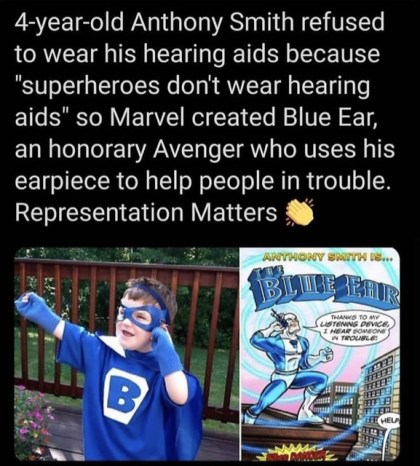
Now I know what you’re thinking.
“But brands can’t do this sort of thing on an ongoing basis”.
And you’re probably right.
This sort of thing costs money.
But there’s two sides to this.
1. As H&M have shown with their free suit hire campaign, the return of acts like this can be significant both in terms of driving affinity and awareness.
2. If everything you do is based on the perceived ‘value exchange’ you’re making between brand and customer [which is always bollocks, because brands always over-estimate how much their actions are worth in the eyes of the people they’re dealing with] then you don’t really care about your audience, you only care up to a set amount of money and/or time.
Don’t get me wrong, I appreciate there are many aspects brands need to manage to keep their business going. But like companies who claim their staff are their greatest asset before treating them like shit, brands better know that they can’t say they care about their customers when they evaluate them purely by a financial transactional value.
It doesn’t mean you have to go crazy, but it does mean you have to actually give a shit about what they value not just what you want them to value.
Which is why I love the Marvel example so much.
Because they did it.
More than that, they did it and didn’t make a huge song and dance out of it.
No wonder they’re the home of the superhero.
Filed under: A Bit Of Inspiration, Advertising, Attitude & Aptitude, Authenticity, Comment, Confidence, Consultants, Content, Creativity, Culture, Digital, Fake Attitude, Innovation, Management, Perspective, Planners, Point Of View, Professionalism, Relevance, Resonance, Respect
I used to think it took a lot of hard work to be simple.
A lot of thinking.
Evaluating.
Sharpening.
Changing.
But maybe I was wrong because I literally cannot imagine how much time it took to create this:

It’s a masterclass in nonsensical.
A blueprint for showing a company who doesn’t know what they actually do.
A celebration of the buzzword bingo bullshit that permeates so many organisations.
Basically, imposters talking to imposters with words they’ve so bastardised the meaning of, that you’d be hard pressed to recognise their original definition if you were left alone with them in a bar overnight with only a dictionary for company.
The verbal equivalent of Mickey Rourke.
Or Lara Flynn Boyle.
Hence now …
Innovation means ‘we’ve made something average a little bit better’.
Revolution means ‘we’ve never done this before though others have’.
Experience means ‘we offer our customers boring and average’.
Transformation means ‘we’ve caught up to everyone else’.
[hence ‘digital transformation’ is simply code for, ‘not being left so far behind’ as opposed – as many in the industry also like to position it – as reinventing the whole category]
And while adland is the cause of a lot of this bullshit, the consultancies – or worse, the wannabe-consultancies – are taking it to a whole new level. Continually creating nonsensical language and definitions in an attempt to feel intellectually superior to those around them. Believing this sort of language acts as a sort-of ‘code’ that helps identify other delusionists, wannabe’s and/or victims … so they can revel and reward themselves with their Emperors New Clothes bullshit.
Until they can’t.
What is particularly amusing is these companies still celebrate the old adage of ‘quality over quantity’ … even though they show up with a level of excessive vulgarity that would put Donald Trump to shame.
Talking in plain English – or plain any language – is not a bad thing.
If anything, it is the most powerful.
Not just because it is easier to communicate and relate to.
Nor because it shows you can identify the core problem that needs addressing.
But because it captures something my old man used to say to all his young lawyers:
“If you want to show how intelligent you are, you’re not that intelligent”.
Filed under: A Bit Of Inspiration, Advertising, Agency Culture, Attitude & Aptitude, Comment, Emotion, Empathy, Management, Respect, Talent
I have always believed that bad news can be delivered in ways that don’t create bad feelings.
I know … that probably sounds mad coming from me, especially given I was once described as someone who could start a fight in an empty house … but it’s true.
In fact, I believe there’s a way where you can deliver bad news that makes the recipient feel even more positively about you.
I remember when I lived in Sydney and bought a brand new VW Golf GTI.
Within 6 weeks, the turbo blew and the gear box collapsed.
In a carpark.
At the entrance.
Stopping all the cars behind me from being able to get in and forcing my car to be dragged out backwards [while stuck in first gear] because the tow-truck couldn’t get in front of it.
Obviously I wasn’t pleased about this, especially when the dealership said they would not lend me a car while mine was being repaired.
Pissed off, I sent as many variations of what I thought the global CEO of VW’s email would be, explaining that while I appreciate it wasn’t their policy to lend cars to customers, it wasn’t my policy to buy a new car that collapses in 6 weeks.
Within 48 hours, I was told my car had been fixed as VW had flown in a new gear box from Germany.
While I should not have had to deal with that situation, the [eventual] approach meant I felt an even greater loyalty to the brand than I may otherwise of had. Though this was before they admitted to emission scandals and gassing animals for ‘research’.
Now I appreciate there may be times where you want to deliver bad news in a way that leaves bad feelings … but the ability to use each challenging situation as an opportunity to build a better relationship is generally always there, which is why I love how comedian Steve Martin dealt with fan mail.

I’ve written about the opportunity of rejection before but I do feel it’s something we could all do with practicing more. Especially as our industry is so small that you can be sure any person, or agency, you reject will likely come back into your life.
Which is why one of the most valuable things to remember at points of rejection is it’s never ‘just business’, it’s always personal.
Filed under: A Bit Of Inspiration, Advertising, Agency Culture, Attitude & Aptitude, Authenticity, Business, Colenso, Comment, Confidence, Corporate Gaslighting, Creativity, Culture, Distinction, Emotion, Empathy, Equality, Honesty, Management, Marketing, New Zealand, Point Of View, Relevance, Resonance
This is Angela.
Her official title is the Managing Director of Colenso.
But actually she’s the boss.
Not just because of how she is sitting, but because of how she operates.
Leading without dictating.
Encouraging without patronising.
Liberating without restricting.
The great, great thing about Angela is that for all the experience and success she’s gained, she is open and hungry to let the energy, ambition and values of youth to keep shaping and changing where we are going.
Angela’s strength is she wants everyone to win.
She opens the door to opportunities for talent to run in and do their thing rather than closing it behind her so she can have all the power.
But then female leadership has always seen winning differently to a lot of men.
Progress for all rather than power for one.
And before certain men start spouting their sexist shit at me like they did when I wrote about how more female leadership will give the industry a real chance to grow, I appreciate not all male leaders are like this.
But a hell of a lot are.
And – if you look at Corporate Gaslighting and/or read Zoe Scaman’s brilliant, brave but totally unsurprising Mad Men and Furious Women – many of them are doing stuff … and are being allowed to get away with stuff, often by companies that talk about their commitment to their staffs wellbeing and mental health … that is a fuckload worse.