

It feels wrong to write about my birthday when I honestly feel I had one of the best presents of my life with my recent trip to Europe, but the reality is, it is my birthday on Sunday and I’ll be 52 whether I like it or not.
And while there’s a bunch of things I don’t like about ageing, the older I get the more I realise it’s your attitude towards it.
Fortunately I have always been blessed with a big dollop of immaturity.
I’ve had people tell me it’s a weakness, but it’s served me pretty well.
It makes sure I don’t get too lost in the seriousness of life.
It helps me love and chase the daft.
It reminds me people are a bundle of emotions, regardless how hard they try to hide it.
But as I’ve got older, another trait has started to reveal itself.
Impatience.
I realised it when I was in a conversation with the wonderful Lee Hill recently.
He asked if I was becoming more patient in my older years and I told him it was the opposite.
I am not prepared to spend my time on things I think are a waste of my time.
Now I get how arrogant that sounds.
I also get that just because I don’t think something is important, doesn’t means someone else does. And that’s cool.
It’s just I’m not able to invest my time in it.
I appreciate there’s implications with that – from work to relationships – but I’m good with that.

The irony is I’ll do any amount of menial tasks if it’s in the quest to take leaps rather than move inches. I’ll work the longest hours if it creates the conditions for change rather than complicity. And I’ll jump through any amount of annoying process hoops if fights for craft and creativity rather than the contrived and confusing.
But age is refusing me to do any of that if it hasn’t got those goals attached.
It’s not being a diva. Or a prick.
Life’s too short for any of us to be doing that stuff.
As I said, I get it’s important to someone … but I can’t help but feel for all the supposed focus on efficiency and effectiveness that the industry is obsessed with, so much of what we do ends up being about looking busy rather than making a real difference.
Or as I wrote a while back …
The whole industry is engaged in creating different forms of remuneration landfill.
Imagine how much impact we would have economically, creatively and culturally if we were evaluated on what we changed rather than what we produced?
On what we encouraged rather than what we controlled.
What we learned rather than optimised.
And that’s why I have come to the realisation that while ageing may have many problems, impatience isn’t one of them.
In fact, it may be the thing that makes the back half of life, at least as exciting as the front.
So happy 52nd to me on Sunday.
Filed under: A Bit Of Inspiration, Age, America, Attitude & Aptitude, Comment, Culture, Insight, Jill, Love, Mum, Mum & Dad
A few weeks ago, I walked into our lounge to see Jill watching the very first edition of The Golden Girls. For those of you too young to know what it is, have a look at this ‘best bits’ compilation.
After a couple of minutes, Jill asked me to guess how old the main characters were supposed to be in the show.
Given the name of the program and the style of fashion they were wearing, I suggested in their early to late 60’s.
I was wrong.
Jill told me that the ages were 47,53 and 55.
Or said another way, I was older than one and just a few years behind the others.
Then she hit me with this …
The characters were supposed to be the same age as the women in the reboot of Sex And The City.
To help explain why this news impacted me, have a look at this.
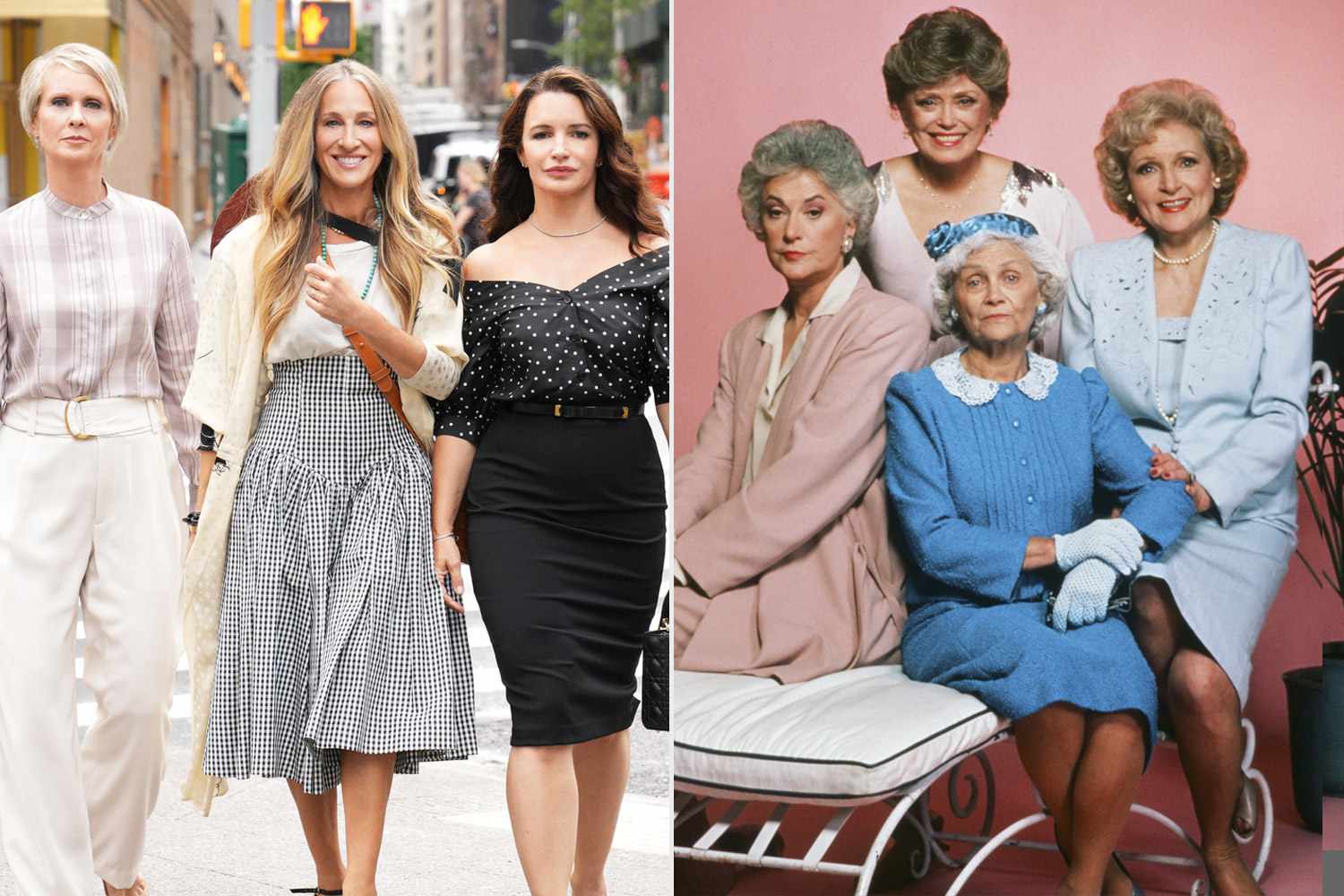
Now we are talking about ‘character age’ not real age … plus the ‘backgrounds’ of each show are about as different as you can get … but still.
Then a few days later, this was posted featuring Dorothy from the Golden Girls and Lisa Rinna from The Real Housewives of Beverly Hills.

Again, one is in character and the other is … OK, probably also in character … but the shift in age perception – or presentation of it – is startling.
On one hand there’s something awesome about it.
While I – and society – absolutely don’t want to see me sashaying down the street wearing designer clothes and botox lips … the idea that people in their 50’s don’t have to hide themselves away and can feel they are an active member and contributor to society is awesome.
However by the same token, the thought you may need to match the look and behaviour of people much younger than you, just so you can be ‘validated’ is terrifying.
Now of course women have been facing this situation for centuries, which is why the older I get, the more I realise what a brilliant role model I had in my Mum.
You see she always believed age didn’t defy you, your interest in what was happening in culture did.
It’s why she followed emerging artists in film, music, art, literature and politics.
It’s why she would go to a classical concert as well as watch new comedians.
It’s why she viewed ‘growing old gracefully’ as being interested in what others are interested in rather than extracting yourself from modern life because ‘it was easier that way’.
Now this didn’t mean she always like what she saw and learned – and she most certainly wasn’t going to dress in the latest trends and fashions – but she wanted to contribute to life rather than criticise it simply because it was continually evolving.
Which helps explain why I found the Golden Girls/Sex And The City comparison so amazing.
Because dramatic shift in terms of fashion and looks aside, the reality is ageing – especially for women – hasn’t really evolved at all.
Sure, you may not have to ‘hide yourself away’ as much as you used to, but looks are still the foundation of validity and fashion is still the criteria for relevance.
How utterly fucked is that?
For all the talk of modernity, the reality is not much has changed. In fact, it’s arguably even worse now as there is the illusion it’s actually better.
But it’s not.
White men are still born with inherent advantage.
As a 51 year old, badly dressed man, I still receive incredible benefits.
So don’t let the exposure of older, female actresses sway you from the reality.
Sexism and ageism is alive and well.
It’s something perpetuated by the media and championed by society the world over.
In simple terms, if you have to ‘look’ the part to be seen by others, something is fucked up.
And women have to do that more than men. Fact.
Growing old is enough of a pain in the arse without having to deal with that shit.
Which is why it would be so much better if we valued interest rather than image.
Another thing I need to thank my Mum for.

Filed under: A Bit Of Inspiration, Attitude & Aptitude, Comment, Communication Strategy, Creative Brief, Creative Development, Creativity, Education, Insight, Internet, Northern, Planners, Planning, Point Of View

Ad blogging was once a rich, vibrant community.
It was amazing how much people looked out for each other.
A lot was driven by Russell Davies … but the effect of it was something pretty special.
I met a lot of people because of that community … some, still even come on here.
Occasionally.
But when you compare it to the toxic, ego-filled bullshit of ad twitter … I can’t help but feel the blogging community was a much more valuable and positive resource for adland.
Especially if you were a junior.
While there are many positives of social media, learning the strategy discipline through 280 letter tweets is not really going to drive the craft forward.
Nowadays there seems to be only 2 people still blogging.
Martin and me.
Or said another way …
Nowadays, only Martin writes a blog that has real value and depth for the industry and discipline.
One of the people I am saddest at having stopped blogging is Andrew Hovells. Better known as Northern Planner.
I’ve written about him a lot in the past.
From how much I respect him to how much I liked trolling him by sending him to see Queen in concert, when he absolutely hates the band.
But I revisited his blog recently and there’s just so, so much amazing stuff on there.
Stuff for people curious about planning.
Stuff for people just starting planning.
Stuff for people having a career in planning.
Stuff for people leading work and teams in planning.
Stuff for every level and need in planning.
And while there are many other resources for this sort information on the internet, Northern Planner’s is especially good for 3 reasons:
1. It comes from someone who could have worked at pretty much any of the best agencies in London, but didn’t and instead chose to stay ‘oop North’ and bring the planning discipline to a part of England that [i] didn’t have it and [ii] needed a lot of convincing to see it’s value. Not only did he achieve that – and validate the discipline for more people in the region to become a part of it – his work gave the supposed London ‘superstars’ a run for their money.
[He also turned down coming to cynic, which still devastates me, because he would have made such a difference to us. But it also shows how smart he is. Unfortunately]
2. He doesn’t give you a process to follow, he gives you a way to look at the discipline and the roles within it. Meaning you’re developing your own planning style and voice … not regurgitating someone else’s.
3. All of it is free. Every last bit of it.
Given the amount of amateurs ‘flogging’ their questionable, superficial and inauthentic courses that don’t have the right to even be in the same universe – let alone industry – as Andrew’s generous, considered and carefully explained lessons and insights … I know who I recommend people spend their time learning from.
I really miss Northern and his blog.
But the planning community should be missing it even more.
Filed under: A Bit Of Inspiration, Advertising, Attitude & Aptitude, Authenticity, Brand, Brand Suicide, Comment, Communication Strategy, Crap Marketing Ideas From History!, Creativity, Culture, Egovertising, Management, Marketing, Marketing Fail, New Zealand
Love it or loathe it, but Wordle has captured the world’s attention. Whether it will continue to do that now the NYTimes has bought it, is anyones guess, but right now, it’s peak popularity.
Hell, even I love it and I HATE word games.
Crosswords? Hate.
Scrabble? Hate.
And yet whether it’s the last thing I do before I go to sleep or the first thing I do when I wake up, I’m playing the days challenge. And I’m brilliant at it. Hahaha.
Anyway, I was on Twitter when I recently saw this from Air New Zealand.

Look, I get it’s a competitive world.
I get brands are looking for anything that can help them stand out.
And I get ‘hijacking culture’ is a cheat way of doing this.
But there’s 2 reasons why this approach is tragic rather than magic.
First is it’s Air New Zealand.
Of all the airline brands out there, they are a pioneer. An innovator. A leader.
They’ve created, influenced and changed the airline industry in ways few have come close.
From being the first to make ‘in-flight safety videos’, entertainment to creating economy seats that turn into beds.
Ripping off Wordle doesn’t represent any of this.
If anything, it does the opposite.
But then, when I see the work they are putting out these days, maybe it all makes sense.
When a nation that prides itself as explorers and adventures has their National Airline promote their role in a post-covid world as being ‘we fly for you’ … you have to question if they realise what they’ve done or if they made a conscious effort to ditch the approach that made them great and forward thinking in favour of the sort of bland, contrived, unrealistic and meaningless twaddle of big corporation 90’s advertising.
Like this.
From 1991.
God I hope not. They are better than that and NZ needs them to be better than that.
Which leads to the other reason.
Hijacking culture.
What’s interesting is that so many brands do it.
As I said, I get why … but 99% of them have failed to understand how it really works and so we now live in a world where the approach is so common, it doesn’t surprise anyone.
If anything, it un-hijacks culture.
So how does it really work?
Well having worked with the brand and agency that arguably created the approach – or at least mastered it – the secret is to do something that adds to culture, not just steals from it.
Which means having an actual right to be there.
Then do something that opens things up, not just repeat what’s already happened.
Adding a point of view to the situation not just adding more noise and clutter to it.
Of course, even with all that, it still doesn’t mean it will work … but its definitely going to be better than the desperate amateur hour that so many brands favour.
Who think it makes them look cool but forgetting if you’re trying to be that, you’re definitely not ever going to be that.
Filed under: A Bit Of Inspiration, Attitude & Aptitude, Comment, Communication Strategy
I’m back.
Sorry.
Anyway, a little while ago, a respected marketing guru – a real one, not one of the self-appointed pretenders out there – wrote a post about the situation in Ukraine.
While what they were saying was right – ie: we should resist giving brands who actively choose to still trade with Russia, our time or money – the way they said it bothered me as it gave the impression people working for these companies – regardless of situation or circumstance – should focus on getting a new job.
I pointed out not everyone has the privilege, money or time to be able to do that – many are just trying to survive, even if they are against the war – so it might be good to mention that for both context and understanding.
The individual in question saw my comment and came back at me.
In their eyes, they were saying exactly that in their comment [they weren’t] … and then questioned why I would even raise this.
So I replied saying I was happy they didn’t mean it as I read it but it was because of how it read, that I commented.
To which they came back again …
This time they used a tone that suggested I was idiotic to question them because of their highly regarded status in the industry.
OK, so that last bit is my interpretation of their tone, but at no point did they show any understanding or desire to understand my point of view. They disregarded it immediately, as if being challenged – especially someone like me – was an outrageous act of impertinence.
At this point I showed a degree of maturity, because I could have said …
… the burden of responsibility for communication is on the author not the reader.
… we all make mistakes – even professors of marketing – so they didn’t need to get so upset.
… their response was so disproportionate, it was bordering on white fragility.
But then I realised I didn’t have to, because they kind-of said it all themselves.
There is a lot of talk about white privilege – and so there should be – but today I saw privileged white privilege. By that I who believe their level of education, status or wealth deems them to be untouchable due to being perfect.
Now don’t get me wrong, this person is very clever.
They have a huge amount of knowledge and experience and have built a platform that means they are heard and followed by many.
All brilliant.
However, as clever as they are, on this occasion they weren’t very smart.
Which gives us a good lesson to remember.
As much as we may not want to, we all make mistakes … but those who refuse to entertain the possibility of that happening often discover that they become the mistake.